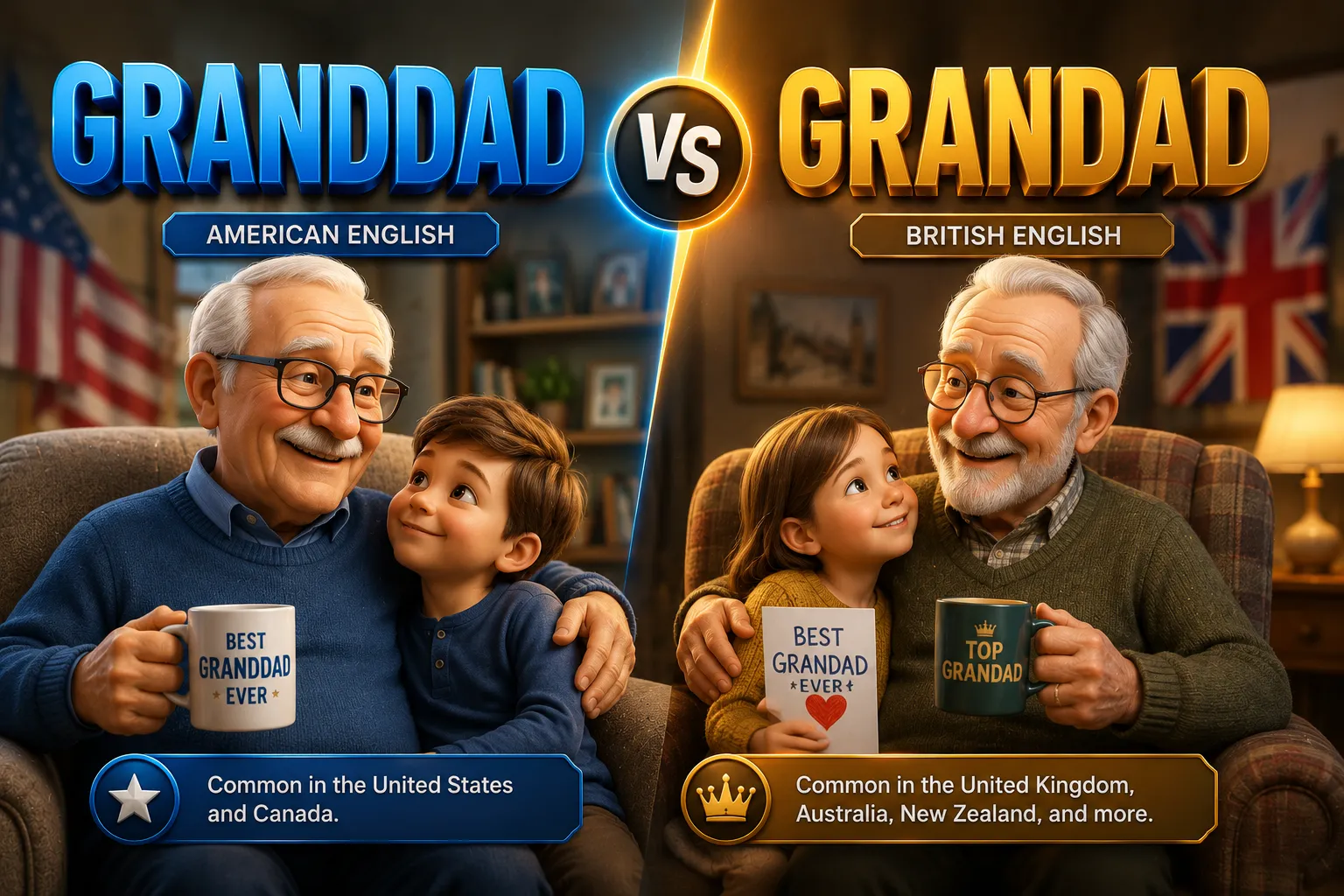
Both granddad and grandad are correct informal spellings of the same word. Grandad is more common in British English, while granddad is also widely used and slightly more emphatic in spelling. Both refer to your grandfather.
I remember writing about my grandfather and stopping for a moment because I could not decide whether to spell it “granddad” or “grandad.” Both versions looked familiar, and I had seen each one used in books, conversations, and online writing. That made me wonder if one spelling was actually correct.
The good news is that both “granddad” and “grandad” are correct. They have the same meaning and both refer to your grandfather. The difference is mainly a matter of spelling preference, regional usage, and personal style, rather than grammar.
In this guide, we’ll explore the difference between granddad and grandad, where each spelling is commonly used, which form is more popular, and how to choose the best spelling for your writing.
Granddad or Grandad Quick Answer
Both words are informal terms for grandfather.
- Grandad → more common in British English
- Granddad → also correct, slightly more emphatic spelling, common in both UK and US usage
For example:
- I visited my grandad yesterday. ✅
- I visited my granddad yesterday. ✅
Both sentences are correct and natural.
The Meaning of Granddad and Grandad
Both granddad and grandad are affectionate, informal words for your grandfather.
They come from shortening:
- Grandfather → Granddad / Grandad
These forms are used in everyday speech and writing when referring to family in a warm, personal way.
Dictionaries such as Cambridge confirm that grandad is an informal word meaning grandfather. The spelling granddad is also widely used in English writing and speech.
Granddad vs Grandad Explained: Key Differences
| Term | Meaning | Style | Usage Context |
| Grandad | Grandfather | Informal | Common in British English |
| Granddad | Grandfather | Informal | Common in UK & US writing |
Grandad
Grandad is the more commonly seen spelling in British English.
Examples:
- My grandad lives in London.
- I’m going to visit my grandad this weekend.
- My grandad tells the best stories.
It feels slightly simpler and more traditional in UK usage.
Granddad
Granddad is also correct and widely used.
Examples:
- My granddad taught me how to fish.
- I stayed with my granddad during the holidays.
- My granddad is turning 80 this year.
The double “d” spelling can feel a bit more expressive or affectionate in tone.
Is Granddad or Grandad More Correct?
Neither is more correct in terms of grammar.
However:
- Grandad → slightly more common in British English writing
- Granddad → equally correct, often used for emphasis or personal style
In formal writing, both are considered informal words, so they are usually replaced with grandfather.
When to Use Grandad or Granddad
Use Grandad or Granddad in:
- Personal writing (diaries, stories)
- Informal messages
- Social media posts
- Family conversations
- Creative writing
Avoid in:
- Academic writing
- Formal reports
- Professional documents
In formal contexts, use:
grandfather
Common Mistakes with Grandad and Granddad
| Mistake | Correct Form | Why |
| My granddads house | My granddad’s house | Missing apostrophe |
| My grandad’ss car | My grandad’s car | Double possessive error |
| My granddad is a man | My granddad is a man | Correct but unnecessary wording |
| My grandad is my grandfather | My grandad is my grandfather | Redundant phrasing |
Mistake 1: Forgetting the Possessive Apostrophe
When showing ownership:
- My grandad’s house ✅
- My granddad’s car ✅
Mistake 2: Mixing Spellings in One Text
Choose one spelling style and stay consistent.
Grandad or Granddad in Real-World Examples
Personal Writing
- I spent the weekend with my grandad.
Social Media
- Missing my granddad today ❤️
Storytelling
- My grandad always told me stories about his childhood.
Informal Conversation
- I’m going to my granddad’s house later.
Grandad or Granddad Usage Overview
The keyword “granddad or grandad” is mainly informational, meaning people want to know which spelling is correct and whether there is a difference.
Search Intent
Users typically want to know:
- Which spelling is correct: grandad or granddad?
- Is one British and the other American?
- Are both acceptable?
- Which one should I use in writing?
Simple Answer
- Both are correct
- No difference in meaning
- Grandad is slightly more common in British English
- Granddad is also widely used and fully acceptable
Frequently Asked Questions
Q: Is grandad correct spelling?
A: Yes. Grandad is a correct informal spelling of grandfather.
Q: Is granddad correct spelling?
A: Yes. Granddad is also correct and widely used.
Q: Which is more common, grandad or granddad?
A: Grandad is slightly more common in British English, but both are widely used.
Q: Is there a difference in meaning?
A: No. Both mean the same thing—your grandfather.
Q: Is grandad formal or informal?
A: It is informal. In formal writing, use grandfather.
Q: Can I use granddad in essays?
A: Only in informal or creative writing. Otherwise, use grandfather.
Q: Is grandad American or British English?
A: It is used in both, but more commonly associated with British English.
Conclusion
The difference between granddad and grandad is simple:
- Both are correct
- Both mean grandfather
- Both are informal
- The choice depends on style and preference
If you prefer a slightly more traditional British spelling, use grandad. If you like a more expressive or widely used form, granddad is equally correct.
In everyday writing, both are perfectly natural.
So whether you write:
I love my grandad
or
I love my granddad
you are absolutely correct either way.
Bookmark this guide so you never second-guess granddad or grandad again.
Read More:
Drug or Dragged: Which Is the Correct Past Tense of Drag?
I’m **Rubab Naaz**, an English language content writer with over 10 years of experience creating educational and SEO-focused articles. I specialize in spelling comparisons, grammar, vocabulary, synonyms, commonly confused words, and English usage. My passion is helping students, writers, and professionals improve their language skills through accurate, well-researched, and easy-to-understand content. Every article I write is designed to make learning English simple, practical, and engaging.