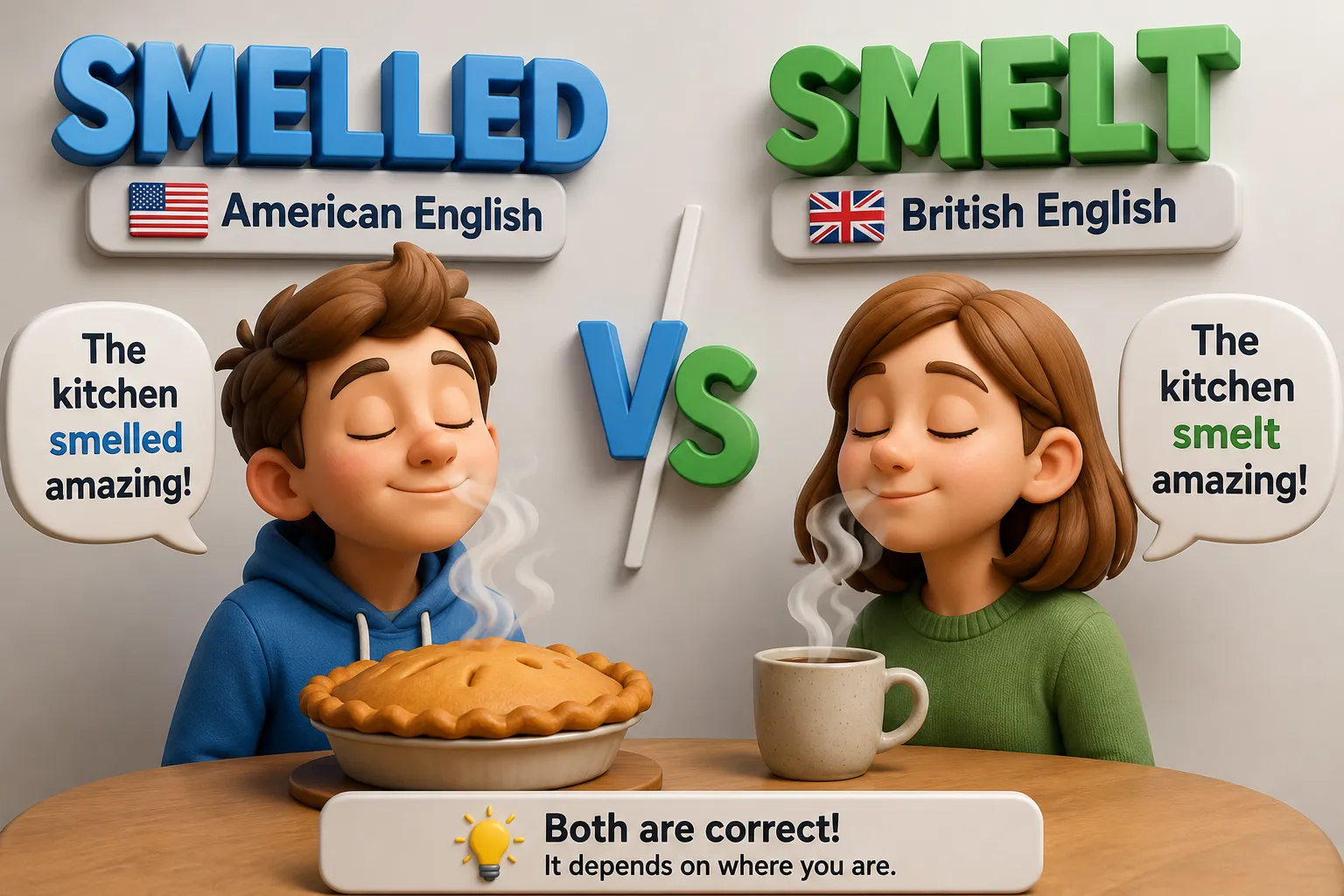
Smelled and smelt are both correct past tense and past participle forms of smell. Smelled is more common in American English, while smelt is more common in British English.
The first time I edited a story written by a British author, I noticed the sentence, “The kitchen smelt of fresh bread.” It sounded perfectly natural in context, but I had grown up seeing smelled more often. That small difference made me realize how easily English can vary by region.
Many people wonder whether smelled or smelt is correct because both forms appear in real writing and speech. Since English often has regional spelling and usage differences, it’s common to question which version you should use.
The good news is that both forms are acceptable. Once you understand where each one is preferred, you’ll know exactly when to use smelled and when to use smelt.
In this guide, you’ll learn the difference between smelled and smelt, where the forms come from, when each is appropriate, common mistakes to avoid, and real-world examples.
Smelled or Smelt Quick Answer
Both smelled and smelt are correct.
- Smelled is more common in American English
- Smelt is more common in British English
Simple examples
- The flowers smelled wonderful.
- The flowers smelt wonderful.
Both sentences are correct, but the first is more typical in American English and the second in British English.
The Origin and Background of Smelled or Smelt
The verb smell has long had two past forms in English.
Historically, many English verbs developed different regional forms over time. Smelt became common in British English, while smelled became more widely used in American English.
Today, both forms remain standard, though smelled is generally preferred in the United States and smelt is more common in the United Kingdom and some other varieties of English.
It’s also worth noting that smelt can mean something completely different in another context: to extract metal from ore by heating it. In this article, however, we’re focusing only on smell as in using your nose.
Smelled or Smelt Explained Key Differences
The difference is mainly about regional preference, not correctness.
| Term | Meaning | When to Use | Region/Context |
| Smelled | Past tense/past participle of smell | Common in informal and formal writing | Mainly American English |
| Smelt | Past tense/past participle of smell | Common in informal and formal writing | Mainly British English |
Examples of Smelled
- I smelled smoke in the hallway.
- She smelled the perfume before opening the box.
- The soup smelled delicious.
Examples of Smelt
- I smelt smoke in the hallway.
- She smelt the perfume before opening the box.
- The soup smelt delicious.
Which Version Should You Use?
The answer depends on your audience and writing style.
For students
If you’re writing for a class in the United States, smelled is usually the safer choice. If you’re following British English conventions, smelt is acceptable.
For professionals
Match the style of your workplace, publication, or audience.
- American audience → smelled
- British audience → smelt
For everyday writing
Use whichever form feels natural for your region. Both are correct.
For international readers
If you’re writing for a global audience, smelled is often the more widely recognized form, especially in American-influenced content.
Common Mistakes with Smelled or Smelt
| Mistake | Correct Version | Why It Happens |
| Smelt is wrong | Smelt is correct in British English | Some people assume only one form exists. |
| Smelled is wrong | Smelled is correct in American English | Regional variation causes confusion. |
| The room smelted bad | The room smelled bad / smelt bad | Smelted is a different verb entirely. |
| I have smelt smoke yesterday | I smelled smoke yesterday / I smelt smoke yesterday | Tense consistency matters. |
| Mixing styles randomly | Stay consistent | Helps maintain a clear tone. |
Smelled or Smelt in Real-World Examples
Professional Email
“The laboratory smelled strongly of chemicals after the experiment.”
News Headline
“Residents Report That the Building Smelt of Gas Before Evacuation”
Social Media Post
“My kitchen smelled amazing after baking cookies all afternoon!”
Formal Report
“The storage room smelt of mildew when inspectors entered the building.”
Smelled or Smelt Data, Trends & Usage
Many people search for smelled or smelt because English usage changes depending on region.
Most common search intent
- Informational
- Grammar help
- English usage
- Regional differences
- Writing style
Regions with high interest
- United States
- United Kingdom
- Canada
- Australia
- India
Why this topic matters now
As English content reaches global audiences, writers often need to choose between American and British forms. Knowing that both smelled and smelt are correct helps you write confidently and consistently.
Comparison Table
| Term/Variant | Meaning | Region/Context | Best Used When |
| Smelled | Past tense/past participle of smell | American English | Writing for U.S. audiences |
| Smelt | Past tense/past participle of smell | British English | Writing for U.K. audiences |
| Smell | Present tense | Worldwide | Talking about the current action |
| Smelted | Heated ore to extract metal | Technical/industrial context | Metallurgy, not odor |
Frequently Asked Questions
Q: What does smelled mean?
A: Smelled is the past tense and past participle of smell. It is the more common form in American English.
Q: What does smelt mean?
A: Smelt is also the past tense and past participle of smell, especially in British English.
Q: Smelled vs smelt — what’s the difference?
A: Both are correct. Smelled is preferred in American English, while smelt is preferred in British English.
Q: Is smelt correct in formal writing?
A: Yes. Smelt is correct in formal British English. In American English, smelled is usually preferred.
Q: Which version is correct — smelled or smelt?
A: Both are correct. The best choice depends on your audience and regional style.
Q: Can I use smelled and smelt interchangeably?
A: Yes, but it’s best to stay consistent within one piece of writing and match the variety of English you’re using.
Q: Does smelt mean something else?
A: Yes. Smelt can also refer to a process in metallurgy, where metal is extracted from ore by heating.
Conclusion
Choosing between smelled or smelt is simple once you know the regional difference. Both forms are correct, but smelled is more common in American English and smelt is more common in British English.
Remember these key points:
- Smelled and smelt are both correct.
- Smelled is preferred in American English.
- Smelt is preferred in British English.
- Stay consistent with the style of your audience.
- Do not confuse smelt with the unrelated metalworking verb smelt.
With this simple rule, you’ll never second-guess the past tense of smell again. Bookmark this guide so you always remember the difference between “smelled” and “smelt,” and share it with anyone learning English grammar.
Read more:
Calfs or Calves: The Complete Guide to the Correct Plural

I’m **Rubab Naaz**, an English language content writer with over 10 years of experience creating educational and SEO-focused articles. I specialize in spelling comparisons, grammar, vocabulary, synonyms, commonly confused words, and English usage. My passion is helping students, writers, and professionals improve their language skills through accurate, well-researched, and easy-to-understand content. Every article I write is designed to make learning English simple, practical, and engaging.