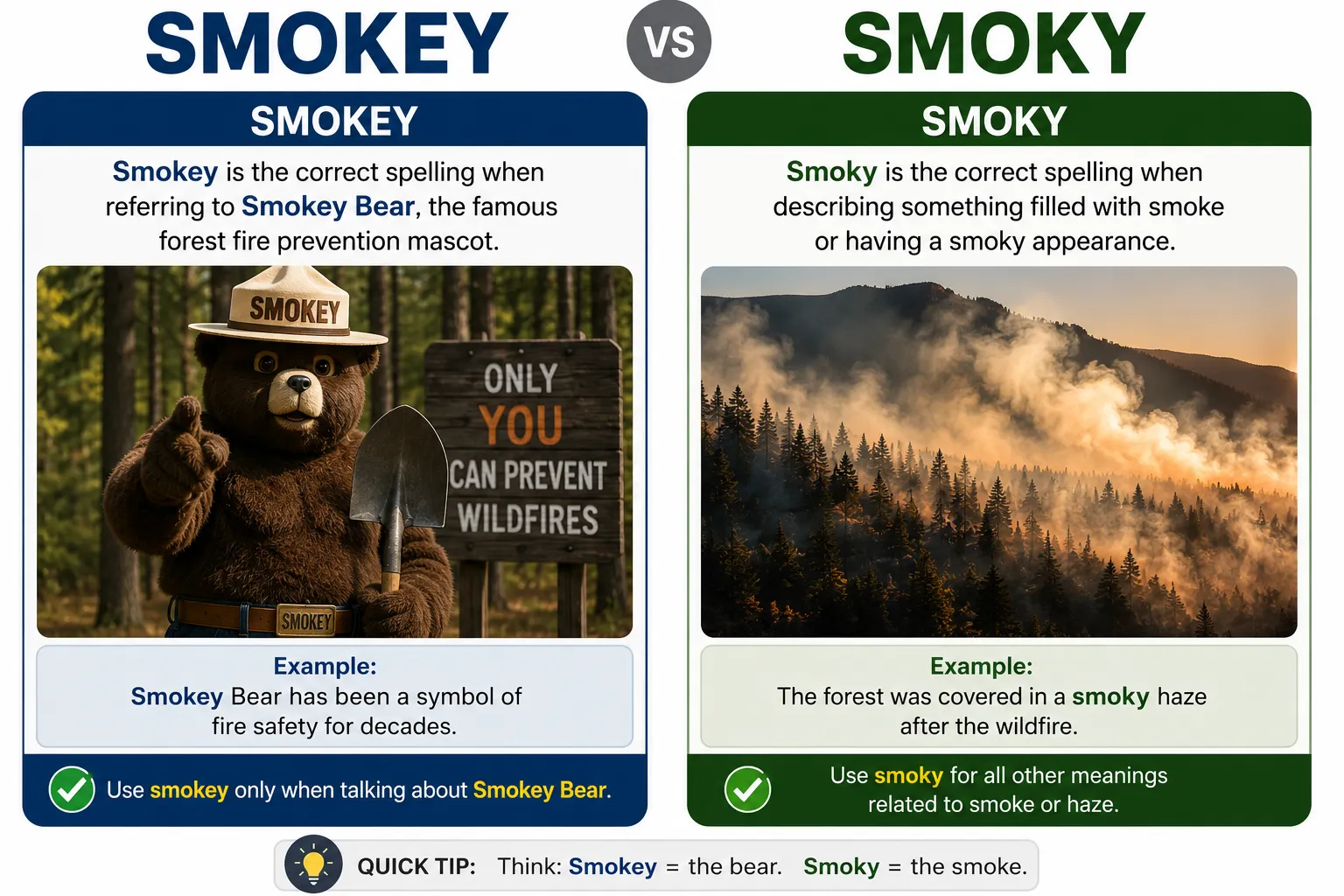
Quick Answer: Smoky is the correct standard spelling of the adjective meaning full of smoke or having the taste, smell, or appearance of smoke. Smokey is usually a misspelling in standard English, though it can appear in proper names, brands, or informal writing.
A single letter can make English spelling look more confusing than it really is. That is exactly why many writers pause when they see smokey and smoky used side by side. Both forms look similar, but only one is the standard spelling in everyday English.
Many people wonder whether smokey or smoky is correct because the words sound the same and are often used in similar contexts. Since English spelling does not always match pronunciation, it is easy to see why this word causes confusion.
The good news is that the rule is simple. In standard English, smoky is the correct spelling. Smokey may appear in names, titles, or branding, but it is not the usual spelling for the adjective.
In this guide, you’ll learn the difference between smokey and smoky, where the word comes from, how to use it correctly, common mistakes to avoid, and real-world examples.
Smokey or Smoky Quick Answer
The correct standard spelling is smoky.
- Smoky is the standard adjective used in both American and British English
- Smokey is usually a nonstandard spelling, though it may appear in proper names or informal usage
Simple examples
- The room was smoky after the fire.
- The soup had a smoky flavor.
- The mountains looked smoky in the distance.
These sentences are correct because smoky is the accepted spelling.
The Origin and Background of Smokey or Smoky
The word smoky comes from smoke and has long been used in English to describe something filled with smoke, smelling like smoke, or resembling smoke in color or atmosphere.
The standard adjective form is smoky, not smokey. English often adds -y to nouns to form adjectives, as in:
- Cloud → Cloudy
- Wind → Windy
- Fog → Foggy
- Smoke → Smoky
The spelling smokey sometimes appears because people assume the word should follow the pattern of names like Smokey Bear or because they are influenced by pronunciation. However, in standard writing, smoky is the correct form.
Examples:
- The kitchen was smoky after dinner.
- The air felt smoky near the campfire.
- She wore smoky eye makeup.
Smokey or Smoky Explained Key Differences
The difference is mainly about standard spelling versus variant or proper-name usage.
| Term | Meaning | When to Use | Region/Context |
| Smoky | Full of smoke, resembling smoke, or flavored with smoke | Standard adjective | Worldwide |
| Smokey | Usually a misspelling of smoky; sometimes a proper name | Names, brands, informal usage | Worldwide |
Examples of Smoky
- The bar had a smoky atmosphere.
- He ordered smoky barbecue ribs.
- The sky looked smoky at sunset.
Examples of Smokey
- Smokey Robinson is a famous singer.
- Smokey Bear is a well-known fire safety character.
- The spelling smokey may appear in a brand name or nickname.
Which Version Should You Use?
The answer depends on whether you are writing standard English or a proper name.
For students
Use smoky in essays, homework, and exams when describing smoke, flavor, color, or atmosphere.
For professionals
Use smoky in reports, articles, marketing copy, and formal writing.
- Formal writing → smoky
- Everyday writing → smoky
- Proper names or brands → Smokey only if that is the official spelling
For everyday writing
If you are describing something that looks, smells, or tastes like smoke, smoky is the correct choice.
For international readers
If you’re writing for a global audience, smoky is the safest and most widely accepted spelling.
Common Mistakes with Smokey or Smoky
| Mistake | Correct Version | Why It Happens |
| Smokey room | Smoky room | The adjective is spelled with -y, not -ey. |
| Smokey flavor | Smoky flavor | Standard English uses smoky. |
| Smokey air | Smoky air | The spelling follows the noun smoke. |
| Thinking smokey is always correct | Smoky is the standard form | Smokey is usually only correct in names. |
| Using Smokey in formal writing | Smoky | Formal English prefers the standard spelling. |
Smokey or Smoky in Real-World Examples
Professional Email
“The restaurant is known for its smoky grilled dishes.”
News Headline
“Wildfire Leaves the City Under a Smoky Sky”
Social Media Post
“I love the smoky flavor of this barbecue sauce!”
Formal Report
“The building had a smoky odor after the electrical fire.”
Smokey or Smoky Data, Trends & Usage
Many people search for smokey or smoky because the words sound identical, but only one spelling is standard in English.
Most common search intent
- Informational
- Spelling help
- English usage
- Vocabulary clarification
- Writing improvement
- Grammar rules
Regions with high interest
- United States
- United Kingdom
- Canada
- Australia
- India
Why this topic matters now
Clear spelling matters in school, business, publishing, and online communication. Using smoky correctly helps your writing look polished and professional, while avoiding confusion with proper names like Smokey Bear.
Comparison Table
| Term/Variant | Meaning | Region/Context | Best Used When |
| Smoky | Full of smoke or resembling smoke | Worldwide | Standard adjective |
| Smokey | Usually a misspelling of smoky | Worldwide | Proper names, brands, or nicknames |
| Smoke | Noun meaning visible gas from fire | Worldwide | Referring to the substance itself |
| Smoked | Past tense of smoke; also cured with smoke | Worldwide | Verbs or food descriptions |
Frequently Asked Questions
Q: What does smoky mean?
A: Smoky means full of smoke, smelling like smoke, or having the appearance or flavor of smoke.
Q: Is smokey a real word?
A: Smokey is usually not the standard spelling of the adjective. It may appear in proper names, nicknames, or branding.
Q: Smokey vs smoky what’s the difference?
A: Smoky is the correct standard spelling. Smokey is usually a variant spelling used in names or informal contexts.
Q: Is smoky correct in formal writing?
A: Yes. Smoky is the standard and preferred spelling in formal writing.
Q: Which version is correct smokey or smoky?
A: Smoky is correct for the adjective. Smokey is generally only correct when it is part of a proper name.
Q: Can I use smokey and smoky interchangeably?
A: No. In standard English, use smoky. Use Smokey only if you are referring to an official name or brand.
Q: Why do people spell smoky as smokey?
A: People often spell it that way because the pronunciation sounds like it could end in -ey, but the standard spelling is smoky.
Q: Is smoky used in both American and British English?
A: Yes. Smoky is standard in both American and British English.
Q: What are some common phrases with smoky?
A: Common phrases include smoky room, smoky flavor, smoky sky, smoky air, and smoky mountains.
Q: Does smoky describe only smell?
A: No. Smoky can describe smell, taste, appearance, color, or atmosphere.
Conclusion
Choosing between smokey or smoky is simple once you know the rule. Smoky is the correct standard spelling in English, while smokey is usually a misspelling unless it is part of a proper name or brand.
Remember these key points:
- Smoky is the standard spelling.
- Smokey is usually incorrect in ordinary writing.
- Use smoky in formal, academic, and professional contexts.
- Use Smokey only when referring to an official name.
- Stay consistent with the spelling throughout your document.
With this simple rule, you’ll never second-guess the spelling again. Bookmark this guide so you always remember the difference between “smokey” and “smoky,” and share it with anyone learning English spelling or improving their writing.
Read More:

I’m an English language educator and SEO content writer having experience creating clear, accurate, and engaging English learning content. I specialize in spelling differences, grammar, vocabulary, synonyms, commonly confused words, and English usage. My goal is to publish well-researched, easy-to-understand articles that help students, writers, educators, and professionals improve their English with confidence through practical explanations and real-world examples.