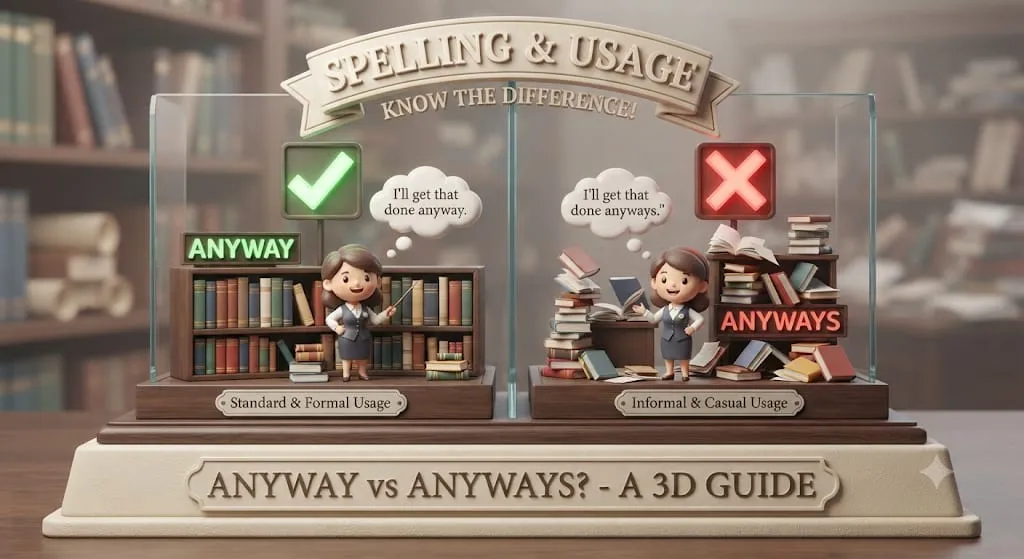
Anyway is the standard and correct word in formal and most everyday English. Anyways is an informal variant, mainly used in casual speech and texting.
If you’ve ever paused while writing an email or social media post and wondered whether to use “anyway” or “anyways,” you’re not alone. I’ve seen this question come up often when reviewing student assignments and professional emails. Many people hear “anyways” in conversations and assume it’s the correct choice everywhere.
The truth is that both words exist, but they are not equally appropriate. One is accepted in all types of writing, while the other is best kept for informal conversations.
In this guide, you’ll learn the difference between anyway and anyways, when to use each one, common mistakes to avoid, and plenty of real-world examples.
Anyway or Anyways Quick Answer
Anyway is the standard English form and is correct for formal, academic, and professional writing.
Anyways is an informal variant. It appears mainly in casual conversation, text messages, and social media.
Examples
✅ Anyway, let’s continue the meeting.
✅ I didn’t enjoy the movie, but I finished it anyway.
✅ Anyways, I’ll call you later. (Casual conversation)
The Origin / Background of “Anyway”
The word anyway has been part of English for centuries. It means:
- In any case
- Regardless
- Moving on to another topic
The form anyways also has a long history, but it became associated with informal speech rather than standard written English.
That’s why many teachers, editors, and style guides recommend using anyway in writing.
Anyway Explained Key Differences
| Term | Meaning | When to Use | Region/Context |
| Anyway | In any case; regardless | Formal and informal writing | Worldwide |
| Anyways | Informal version of “anyway” | Casual conversation, texting | Mostly North American informal English |
Examples
Anyway
- Anyway, let’s get back to work.
- She went anyway, despite the rain.
Anyways
- Anyways, see you tomorrow!
- Anyways, that’s my opinion.
Which Version Should You Use?
For Students
Use anyway in essays, assignments, and exams.
For Professionals
Use anyway in emails, reports, and presentations.
For Casual Conversations
Anyways is acceptable when chatting with friends or posting informally online.
For Global English
Choose anyway. It is widely understood and accepted everywhere.
Recommendation
If you’re unsure, use “anyway.” It is always the safer and more professional choice.
Common Mistakes with Anyway
| Mistake | Correction |
| Anyways in a formal report | Anyway |
| Using “anyways” in academic writing | Anyway |
| Confusing “any way” with “anyway” | Use the correct form based on meaning |
Difference Between “Anyway” and “Any Way”
- Anyway = regardless or moving on.
- Anyway, let’s begin.
- Any way = any method.
- Is there any way to fix this?
Anyway in Real-World Examples
Professional Email
Anyway, I’ll send the revised report by this afternoon.
News Headline
Storm Continues, Flights Depart Anyway
Social Media Post
Missed the bus. Anyway, coffee makes everything better. ☕
Formal Report
The committee decided to proceed anyway despite the delays.
Anyway Data, Trends & Usage
Most Common Search Intent
Informational
People search this topic to learn:
- Which version is correct
- Whether “anyways” is proper English
- Which form is suitable for formal writing
Who Searches Most?
- Students
- English learners
- Content writers
- Professionals
- Job applicants
Why It Matters
Using anyway instead of anyways in formal writing helps your communication appear more polished and professional.
Standalone Comparison Table
| Term/Variant | Meaning | Region/Context | Best Used When |
| Anyway | Regardless; in any case | Worldwide English | Formal and informal writing |
| Anyways | Informal variant | Casual speech, texting | Friendly conversations |
| Any way | Any possible method | Worldwide English | Asking about methods or possibilities |
Frequently Asked Questions
Q: Which is correct: anyway or anyways?
A: Anyway is the standard and preferred form. Anyways is informal and best avoided in professional or academic writing.
Q: Is “anyways” a real word?
A: Yes. It appears in dictionaries, but it is marked as informal or nonstandard in many contexts.
Q: Can I use “anyways” in an email?
A: For professional emails, use anyway. Reserve anyways for casual conversations.
Q: What’s the difference between “anyway” and “any way”?
A: Anyway means “regardless” or “in any case.” Any way refers to any method or manner.
Q: Is “anyways” wrong?
A: It isn’t always wrong, but it is considered too informal for academic, business, or formal writing.
Q: Which version should students use?
A: Students should use anyway in assignments, exams, and essays.
Q: Is “anyway” acceptable in formal writing?
A: Yes. Anyway is fully acceptable in formal, academic, and professional English.
Conclusion
The choice between anyway and anyways is mostly about formality. Anyway is the standard form and is appropriate in almost every situation. Anyways is an informal alternative that fits relaxed conversations but should generally be avoided in formal writing.
Remember these key points:
- Anyway is the preferred choice.
- Anyways is informal.
- Use anyway in school, business, and professional communication.
- Use any way only when talking about a method or possibility.
Now you know exactly when to use anyway and when to avoid anyways. Bookmark this guide so you never hesitate over this common English question again.
Read More:
Separate or Seperate: The Complete Guide to the Correct Spelling

I’m **Rubab Naaz**, an English language content writer with over 10 years of experience creating educational and SEO-focused articles. I specialize in spelling comparisons, grammar, vocabulary, synonyms, commonly confused words, and English usage. My passion is helping students, writers, and professionals improve their language skills through accurate, well-researched, and easy-to-understand content. Every article I write is designed to make learning English simple, practical, and engaging.