Blanky or blankie? Both spellings are used in informal English, but “blankie” is more common and widely recognized. Learn the meaning, spelling, usage, examples, and easy rules for choosing the right form.
Have you ever seen blanky or blankie and wondered which spelling is correct? You are not alone. These two forms look almost identical, and both are used to describe a small or comforting blanket, especially one that a child becomes attached to.
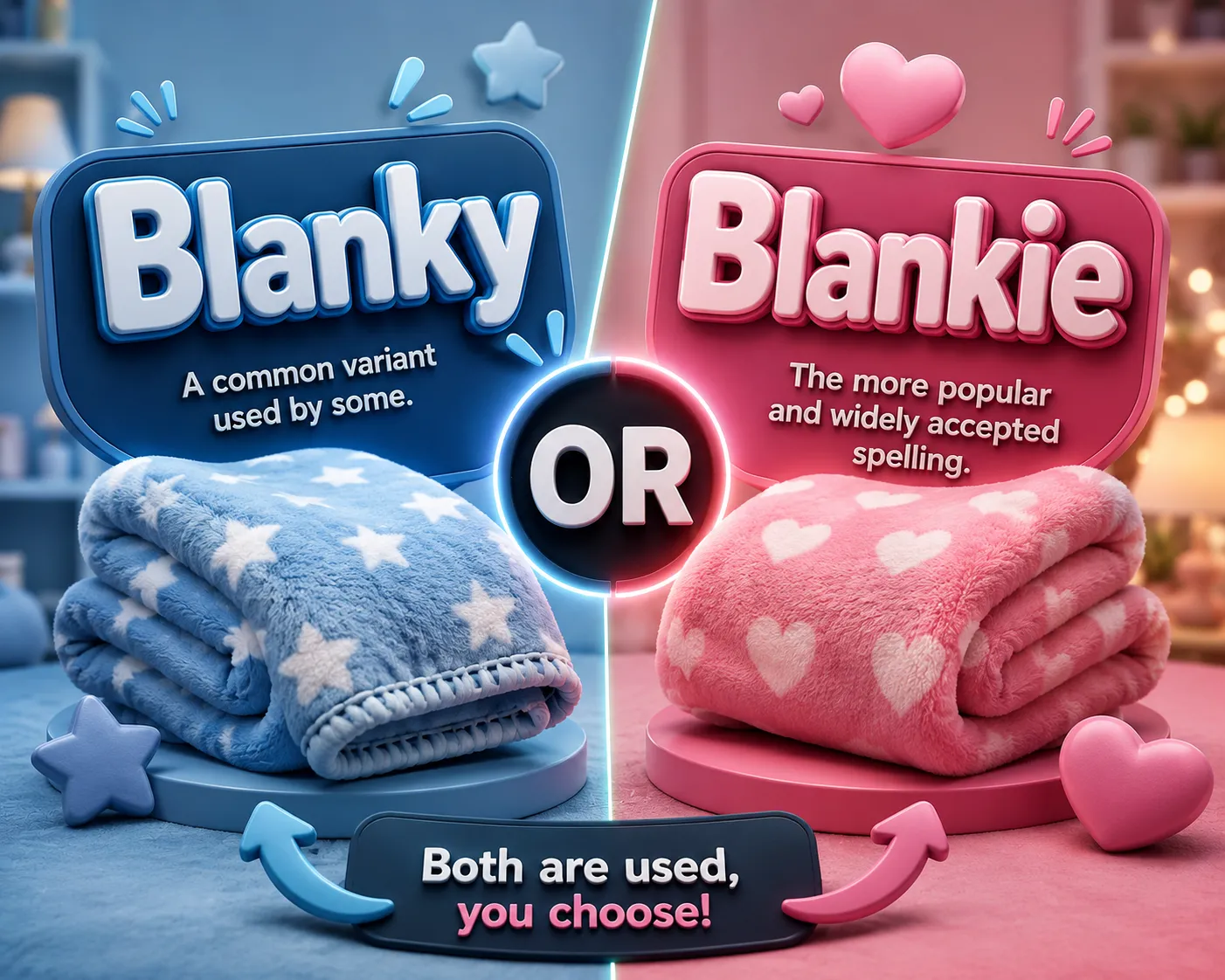
The good news is that the difference is simple. Blankie is the more common spelling in modern informal English, while blanky is a less common variant. Neither is normally used in formal writing. If you need a standard word for professional or academic writing, simply use blanket.
In this guide, we will explore blanky vs. blankie, what each word means, why both spellings exist, how they are used, and which form you should choose.
Blanky or Blankie: Quick Answer
Blankie is the more common and widely recognized spelling.
Blanky is also used, but it is less common and more casual.
Both words refer to a small, soft, or comforting blanket, often associated with babies and children.
Examples
- My daughter cannot sleep without her blankie.
- The little boy carried his blanky everywhere.
- She packed her favorite blankie for the trip.
- He left his blanky at home.
There is no major difference in meaning between the two forms. The main difference is how commonly each spelling is used.
| Spelling | Meaning | Style | Commonness |
|---|---|---|---|
| Blankie | A small or comforting blanket | Informal, affectionate | More common |
| Blanky | A small or comforting blanket | Informal, casual | Less common |
| Blanket | A covering used for warmth | Standard | Common |
If you want the spelling that is most familiar to readers, blankie is usually the better choice.
What Does Blankie Mean?
Blankie is an informal and affectionate word for a blanket. It is especially common when talking about a child’s favorite blanket or a soft object that provides comfort.
For example:
The toddler refused to go to bed without her blankie.
In this sentence, blankie does not simply mean any blanket. It suggests a special or comforting blanket that the child feels attached to.
The word is often used in:
- Parenting conversations
- Children’s stories
- Family conversations
- Casual messages
- Informal online writing
- Product descriptions for children
You may also see phrases such as favorite blankie, baby blankie, security blankie, or soft blankie.
Because the word has a warm and child-friendly feeling, it is especially useful when the emotional value of the blanket matters.
What Does Blanky Mean?
Blanky has essentially the same meaning as blankie. It is an informal form of blanket used to describe a small, soft, or comforting blanket.
For example:
The child took his blanky with him on the family trip.
The meaning is clear, but blanky is generally less common than blankie.
You may encounter blanky in casual speech, personal writing, social media, texts, or situations where a writer prefers the -y ending.
So, if you see someone write blanky, it does not necessarily mean they have misunderstood the word. It is simply a less common informal spelling.
Where Do Blanky and Blankie Come From?
Both forms are related to the standard English word blanket.
English often creates informal or affectionate forms of familiar words. These forms can make a word sound smaller, friendlier, younger, or more affectionate.
Common examples include:
- dog → doggy / doggie
- kitty → kitten/cat
- pig → piggy
- sweet → sweetie
- blanket → blankie / blanky
The endings -y and -ie are especially common in informal English. They are not normally required by grammar. Instead, they develop through everyday speech and spelling preferences.
This explains why more than one informal spelling can exist.
Why Is Blankie More Common Than Blanky?
One reason is the popularity of the -ie ending in affectionate words.
English speakers often use -ie to create words that sound soft, cute, or familiar. Words such as sweetie, cookie, and doggie show how this pattern appears in informal language.
The spelling blankie fits naturally into that pattern.
The -y spelling is also possible, but it may feel more like a phonetic or personal spelling. As a result, blanky is understood but tends to appear less often.
It is important to remember that informal words do not always follow one fixed spelling rule. Usage, pronunciation, family habits, children’s language, and personal preference can all influence spelling.
Blanky vs. Blankie: Key Differences
The easiest way to understand blanky vs. blankie is to compare them directly.
| Feature | Blankie | Blanky |
|---|---|---|
| Meaning | Small or comforting blanket | Small or comforting blanket |
| Grammar | Informal noun | Informal noun |
| Pronunciation | Usually similar | Usually similar |
| Usage | Very common in informal contexts | Less common |
| Tone | Cute, affectionate | Casual, affectionate |
| Formal writing | Avoid | Avoid |
| Recommended choice | Yes | Acceptable variant |
The words are not different in the object they describe. The main distinction is spelling preference and frequency of use.
Which Spelling Should You Use?
Use “Blankie” for Most Informal Writing
If you want the spelling that most readers will recognize immediately, choose blankie.
For example:
- Bring your blankie before bedtime.
- Her favorite blankie is pink.
- The baby held onto his blankie during the flight.
This spelling works well in casual conversations, parenting content, children’s stories, and friendly messages.
Use “Blanky” If It Fits Your Style
Blanky is not meaningless or incomprehensible. It is a recognized informal variant.
You can use it if:
- It matches a character’s speech.
- You are quoting someone.
- It is part of a product or character name.
- You prefer the spelling.
- You are writing deliberately casual dialogue.
For example:
“Where is my blanky?” the child asked.
In creative writing, either spelling can work depending on the voice you want.
Use “Blanket” in Formal Writing
Neither blankie nor blanky is the best choice for formal or academic writing.
Instead, use blanket.
For example:
Informal:
The child brought his blankie to school.
More formal:
The child brought his blanket to school.
The standard word is clearer and more appropriate when you are writing for a professional audience.
Blankie in Everyday English
The word blankie is especially common in contexts involving children and comfort.
Parenting
Many toddlers become attached to a favorite blankie.
Children’s Stories
The little girl hugged her blankie as she fell asleep.
Family Conversations
Have you packed the baby’s blankie?
Travel
We should remember his blankie before leaving.
In each example, the word adds a sense of familiarity and affection.
Blanky in Everyday English
Although less common, blanky can be used in similar situations.
Examples include:
- Don’t forget your blanky.
- Where did you put the baby’s blanky?
- He carried his blanky around the house.
- Her old blanky is still her favorite.
The meaning remains clear because the connection to blanket is easy to understand.
Common Spelling Mistakes
Because blankie and blanky are informal words, writers sometimes create additional spellings.
| Incorrect or Unusual Form | Recommended Form |
|---|---|
| blankey | blankie |
| blancky | blankie |
| blanketie | blankie |
| blanky | blankie if you want the more common form |
The most important point is not to overthink the spelling. If you need a standard English word, blanket is always the safest choice.
An Easy Trick to Remember Blankie
Here is a simple memory trick:
Blanket → Blankie
Think of the -ie ending as making the word sound softer and more affectionate.
So:
blanket → blankie ✅
If you are writing a casual sentence about a child’s favorite comfort blanket, blankie is usually the most natural choice.
Frequently Asked Questions
Is blanky or blankie correct?
Both blanky and blankie are used as informal spellings. However, blankie is the more common and widely recognized form.
Is blankie a real word?
Yes. Blankie is an informal English word used for a small or comforting blanket, especially a child’s favorite blanket.
Is blanky a real word?
Yes. Blanky is also used as an informal variant of blankie. It is less common but generally easy to understand.
Is there a difference between blanky and blankie?
There is no significant difference in meaning. Both refer to a small, soft, or comforting blanket. The main difference is spelling and frequency of use.
Which spelling is better: blanky or blankie?
Blankie is generally the better choice when writing informal English because it is more familiar and widely used.
Can I use blankie in formal writing?
It is better to avoid blankie in formal writing. Use the standard word blanket instead.
Why do people spell blanket as blankie?
The spelling blankie is an affectionate, informal form of blanket. The -ie ending is often used in English to make words sound softer, friendlier, or more childlike.
Blanky or Blankie: Final Verdict
So, blanky or blankie which spelling should you choose?
Both forms are used, and both generally have the same meaning. However, blankie is the more common and recognizable informal spelling. It is especially natural when talking about children, favorite comfort objects, parenting, and casual conversation.
Blanky is a valid informal variant, but it is less common. You may use it when it suits your personal style, a character’s voice, or a particular context.
For formal writing, however, neither informal form is necessary. Simply use blanket.
Quick Rule to Remember
Blankie = preferred informal spelling ✅
Blanky = less common informal variant ✅
Blanket = standard/formal word ✅
If you want the safest choice for everyday informal English, go with blankie.
Read More:
True or False: The Correct Spelling Made Easy

I’m an English language educator and content writer with more than 10 years of experience helping learners improve their English skills. I specialize in spelling differences, grammar, vocabulary, synonyms, commonly confused words, and English usage. My goal is to create accurate, easy-to-understand articles that make learning English simple, practical, and enjoyable for students, writers, and professionals around the world.