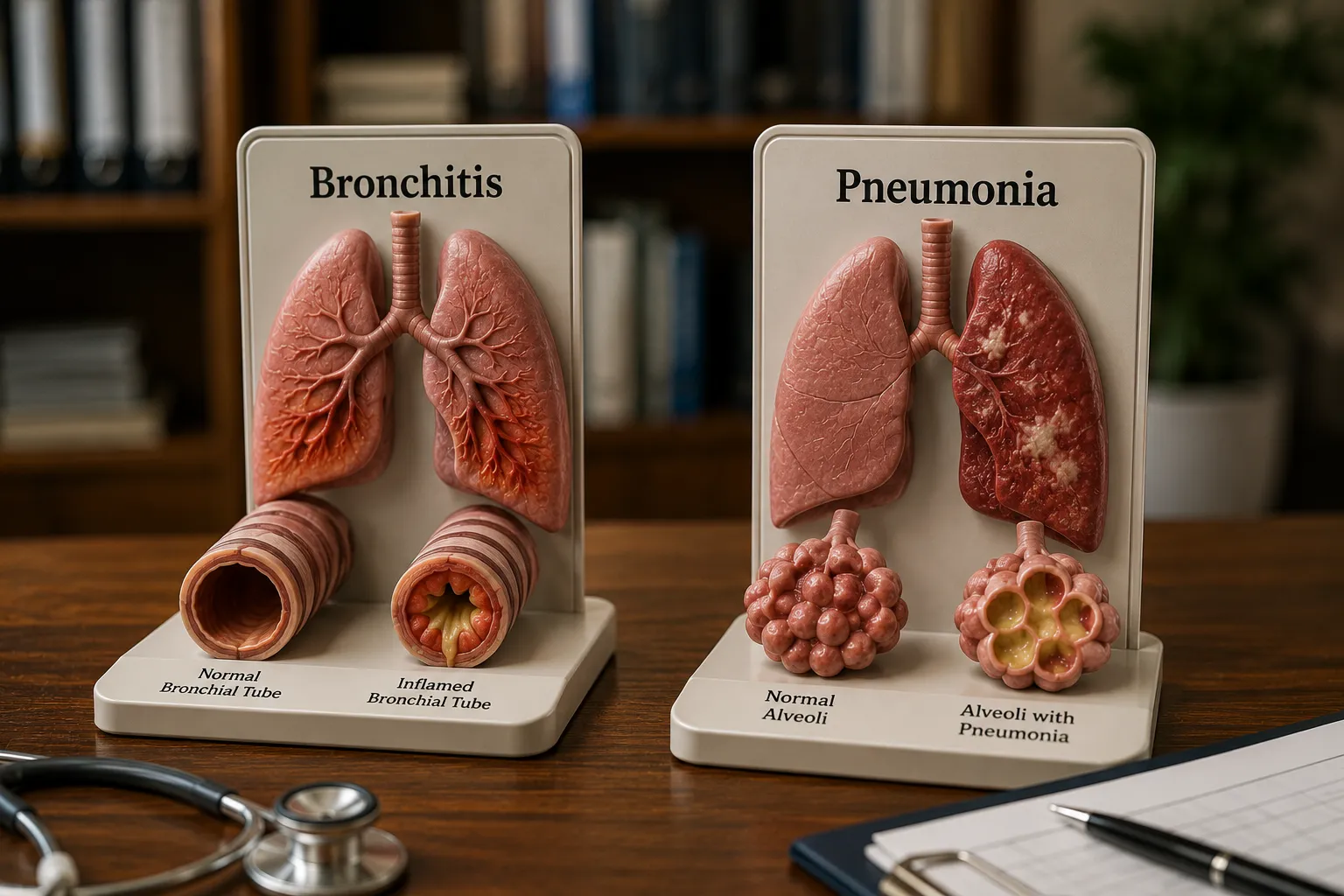
Quick Answer: Bronchitis is inflammation of the bronchial tubes, usually causing a persistent cough with mucus, while pneumonia is an infection of the lungs’ air sacs (alveoli) that can be much more serious. Both affect breathing, but pneumonia typically requires more urgent medical attention.
A few winters ago, a friend told me she had been coughing for nearly two weeks. She assumed it was bronchitis because she’d had it before. When her fever rose and breathing became difficult, her doctor diagnosed pneumonia instead. That conversation reminded me how easy it is to confuse these two common respiratory illnesses. They can share symptoms, yet one is often much more serious than the other.
If you’ve searched for bronchitis or pneumonia, you’re probably trying to understand the difference, recognize the symptoms, or decide when medical care is necessary. That’s a smart question because early recognition can make a real difference.
In this guide, you’ll learn how bronchitis and pneumonia differ, what causes them, their symptoms, diagnosis, treatment, prevention, and when you should seek medical attention. The information is based on guidance from trusted organizations such as the Centers for Disease Control and Prevention (CDC), the Mayo Clinic, the National Health Service (NHS), and the American Lung Association.
Medical disclaimer: This article is for educational purposes only and should not replace professional medical advice. If you have severe breathing problems, chest pain, confusion, or a high fever, seek immediate medical care.
Bronchitis or Pneumonia Quick Answer
Although both illnesses affect the respiratory system, they involve different parts of the lungs.
- Bronchitis affects the bronchial tubes, which carry air to your lungs.
- Pneumonia affects the air sacs (alveoli) inside the lungs, where oxygen enters the bloodstream.
Examples
- A viral infection may cause acute bronchitis, leading to a cough that lasts several weeks.
- Pneumonia may cause fever, chills, cough, and shortness of breath that often require medical evaluation.
The Origin and Background of Bronchitis and Pneumonia
The names of these conditions come from Greek.
According to Merriam-Webster and medical terminology references:
- Bronchitis comes from bronchos (“windpipe” or “airway”) plus -itis, meaning inflammation.
- Pneumonia comes from the Greek word pneumon, meaning lung.
Understanding these roots helps explain the difference:
- Bronchitis = inflamed airways
- Pneumonia = infected lung tissue
According to the CDC, bronchitis is usually caused by viruses, especially in acute cases. Pneumonia can be caused by bacteria, viruses, or fungi, depending on the person’s age, immune system, and health.
Bronchitis or Pneumonia Explained: Key Differences
| Condition | Meaning | Affected Area | Typical Severity |
| Bronchitis | Inflammation of the bronchial tubes | Airways | Usually mild to moderate |
| Pneumonia | Infection of the lung air sacs | Lung tissue (alveoli) | Mild to severe |
Symptoms
Bronchitis
- Persistent cough
- Mucus production
- Mild fever
- Chest discomfort
- Wheezing
- Fatigue
Pneumonia
- High fever
- Chills
- Shortness of breath
- Chest pain during breathing
- Cough with mucus
- Rapid breathing
- Weakness
According to the American Lung Association, pneumonia often causes more severe symptoms than bronchitis because it affects the lungs themselves rather than just the airways.
What Causes Bronchitis and Pneumonia?
Bronchitis
Common causes include:
- Viral infections
- Cigarette smoking
- Air pollution
- Dust or chemical exposure
Acute bronchitis usually follows a cold or flu.
Pneumonia
Possible causes include:
- Bacteria (especially Streptococcus pneumoniae)
- Viruses
- Fungi
- Aspiration of food or liquid into the lungs
According to the CDC, bacterial pneumonia often requires antibiotics, while viral pneumonia may not.
Which Condition Is More Serious?
In general, pneumonia is more serious.
Bronchitis
Most healthy adults recover within a few weeks, although the cough can linger.
Pneumonia
Pneumonia can become life-threatening, particularly for:
- Adults over 65
- Babies and young children
- People with chronic diseases
- Individuals with weakened immune systems
The World Health Organization (WHO) identifies pneumonia as one of the leading infectious causes of death among young children worldwide.
How Doctors Tell the Difference
Because symptoms overlap, healthcare professionals often use additional tests.
Bronchitis Diagnosis
- Medical history
- Physical examination
- Listening to the lungs
- Occasionally a chest X-ray
Pneumonia Diagnosis
- Chest X-ray
- Blood tests
- Pulse oximeter
- Sputum testing
- Sometimes CT imaging
According to the Mayo Clinic, a chest X-ray is one of the most common ways to confirm pneumonia.
Treatment
Bronchitis
Treatment usually focuses on relieving symptoms:
- Rest
- Plenty of fluids
- Humidified air
- Pain or fever reducers (when appropriate)
- Avoid smoking
Antibiotics are generally not helpful for viral bronchitis.
Pneumonia
Treatment depends on the cause:
- Antibiotics for bacterial pneumonia
- Antiviral medication in selected viral cases
- Oxygen therapy if needed
- Hospital care for severe illness
Only a healthcare professional can determine the correct treatment.
Common Mistakes About Bronchitis and Pneumonia
| Mistake | Correct Information |
| Every cough is bronchitis. | Many conditions can cause coughing. |
| Pneumonia is always caused by bacteria. | It can also be viral or fungal. |
| Antibiotics cure all bronchitis. | Most acute bronchitis is viral. |
| You can diagnose pneumonia by symptoms alone. | Medical evaluation is often needed. |
| Young adults cannot get pneumonia. | People of any age can develop it. |
Bronchitis or Pneumonia in Real-World Examples
Doctor’s Note
The patient’s symptoms suggest acute bronchitis, and supportive care is recommended.
News Headline
Hospitals report increased pneumonia cases during winter respiratory virus season.
Workplace Email
My doctor diagnosed bronchitis, and I’ll be working from home while I recover.
Public Health Report
Vaccination continues to reduce severe pneumonia in high-risk populations.
Bronchitis or Pneumonia Data, Trends & Usage
Approximate Monthly Search Volume
Based on Semrush, Ahrefs, and general search trends (2025–2026):
| Keyword | Approximate Monthly Searches |
| bronchitis | 500,000+ |
| pneumonia | 900,000+ |
| bronchitis vs pneumonia | 40,000+ |
| bronchitis or pneumonia | 5,000–10,000 |
Google Trends
Google Trends shows that searches for both conditions increase during cold and flu season, especially in late autumn and winter.
Public Health Data
According to the CDC, millions of people develop acute bronchitis each year. Pneumonia remains a significant cause of hospitalization, particularly among older adults, infants, and people with underlying health conditions.
Search Intent
- Primary Intent: Informational
- Secondary Intent: Medical education
- Related Intent: Symptoms, diagnosis, treatment
Why This Topic Matters
Respiratory infections remain common worldwide. Understanding the differences between bronchitis and pneumonia can help people recognize warning signs and seek appropriate medical care sooner.
Comparison Table
| Condition | Main Cause | Part of Body | Typical Treatment | Seek Urgent Care If… |
| Bronchitis | Usually viral | Bronchial tubes | Rest and symptom relief | Symptoms worsen or breathing becomes difficult |
| Pneumonia | Bacteria, viruses, or fungi | Lung air sacs | Depends on cause; may include antibiotics or hospitalization | Trouble breathing, confusion, chest pain, low oxygen, or persistent high fever |
| Common Cold | Viruses | Nose and throat | Symptom relief | Symptoms become severe or prolonged |
| Influenza (Flu) | Influenza virus | Respiratory tract | Supportive care; antivirals for some people | High-risk individuals or severe symptoms |
Frequently Asked Questions
Q: What is the main difference between bronchitis and pneumonia?
A: Bronchitis inflames the bronchial tubes, while pneumonia infects the lung air sacs. Pneumonia generally has a higher risk of serious complications.
Q: Can bronchitis turn into pneumonia?
A: Sometimes. A respiratory infection can progress, particularly in older adults or people with weakened immune systems. If symptoms worsen, medical evaluation is important.
Q: Which illness causes more severe breathing problems?
A: Pneumonia is more likely to cause significant shortness of breath because it directly affects the lungs’ ability to exchange oxygen.
Q: Do both illnesses cause coughing?
A: Yes. A cough is common in both conditions, although pneumonia often causes additional symptoms such as high fever, chills, and chest pain.
Q: Can antibiotics treat both bronchitis and pneumonia?
A: Not always. Antibiotics help treat bacterial pneumonia, but they usually do not help viral acute bronchitis.
Q: How can doctors confirm pneumonia?
A: A healthcare provider may use a physical examination, chest X-ray, blood tests, and other investigations depending on the situation.
Q: When should I seek emergency medical care?
A: Seek immediate medical attention if you or someone else has severe difficulty breathing, chest pain, confusion, bluish lips or face, or symptoms that rapidly worsen. Follow guidance from your local healthcare provider or emergency services.
Conclusion
Although bronchitis and pneumonia can cause similar symptoms, they are different conditions affecting different parts of the respiratory system. Bronchitis usually involves inflammation of the airways and often improves with supportive care. Pneumonia affects the lung tissue itself and can become serious, especially for older adults, young children, and people with underlying health conditions.
Knowing the warning signs—such as high fever, worsening shortness of breath, chest pain, or persistent symptoms—can help you recognize when professional medical evaluation is important. While many respiratory illnesses improve on their own, it’s never a good idea to ignore severe or worsening symptoms.
Now that you understand the difference between bronchitis and pneumonia, you’ll be better prepared to recognize their key features and discuss them accurately with a healthcare professional. Bookmark this guide for future reference, and share it with someone who wants to understand these common lung conditions.
Read More:
Mouse vs. Rat: The Ultimate Comparison Guide

I’m **Rubab Naaz**, an English language content writer with over 10 years of experience creating educational and SEO-focused articles. I specialize in spelling comparisons, grammar, vocabulary, synonyms, commonly confused words, and English usage. My passion is helping students, writers, and professionals improve their language skills through accurate, well-researched, and easy-to-understand content. Every article I write is designed to make learning English simple, practical, and engaging.