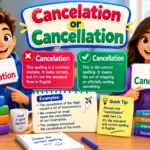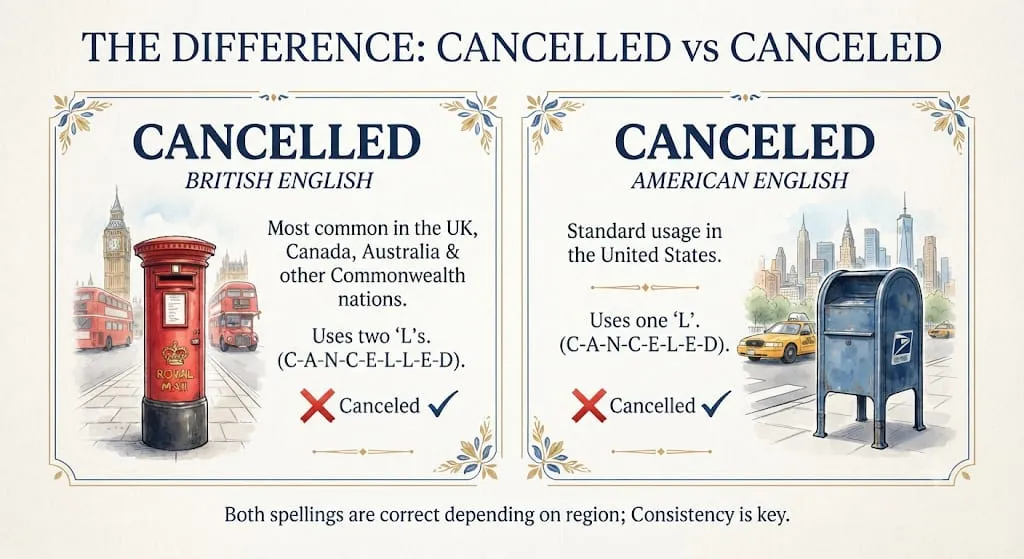
Cancelled and canceled are both correct spellings. Canceled is the preferred spelling in American English, while cancelled is the standard spelling in British, Canadian, Australian, and most other forms of English.
A few years ago, I was editing an English article for an international website. Everything looked perfect until I noticed two different spellings in the same paragraph: cancelled and canceled. I paused for a moment because both looked correct.
That experience reminded me how often English spelling changes depending on where you are writing. Students, bloggers, business owners, and even professional writers ask the same question: Should I write cancelled or canceled?
The confusion comes from the difference between American English and British English, not because one spelling is wrong. Choosing the correct version depends on your audience.
In this guide, I’ll explain the difference in simple language. You’ll learn where each spelling comes from, when to use it, common mistakes to avoid, and plenty of real examples. By the end, you’ll never have to guess which spelling fits your writing again.
Cancelled or Canceled Quick Answer
The answer is simple.
- Canceled = American English
- Cancelled = British English
Both words mean that something has been called off, stopped, or decided not to happen.
Examples
- The meeting was canceled because of bad weather. (American English)
- The football match was cancelled after heavy rain. (British English)
The meaning stays exactly the same. Only the spelling changes.
The Origin and Background of Cancelled or Canceled
The verb cancel comes from the Latin word cancellare, meaning to cross out or erase.
As English developed, different spelling rules appeared.
British English usually doubles the final l before adding endings like -ed or -ing.
Examples:
- travel → travelled
- label → labelled
- cancel → cancelled
American English often keeps only one l.
Examples:
- traveled
- labeled
- canceled
Neither spelling is newer or more correct. They simply follow different spelling conventions.
Cancelled or Canceled Explained
The biggest difference is the audience you are writing for.
| Term | Meaning | When to Use | Region/Context |
| Canceled | Called off or stopped | American writing | United States |
| Cancelled | Called off or stopped | British writing | UK, Canada, Australia, New Zealand, Ireland |
American English
Use canceled if your readers are mainly in the United States.
Examples:
- My flight was canceled.
- School was canceled because of snow.
British English
Use cancelled if your audience is in the UK or follows British spelling.
Examples:
- The concert was cancelled.
- Our holiday was cancelled at the last minute.
Which Version Should You Use?
Choosing the right spelling is easy once you know your audience.
For American readers
Use canceled because it matches American spelling rules.
Best for:
- US businesses
- American schools
- US newspapers
- American blogs
For British readers
Use cancelled because it follows British English.
Best for:
- UK websites
- British universities
- Australian businesses
- Canadian publications
For international readers
Pick one spelling and use it consistently throughout your article.
Consistency matters more than the spelling itself.
Common Mistakes with Cancelled or Canceled
Many writers make small mistakes because they mix spelling styles.
| Mistake | Correct Version | Why It Happens |
| Using both spellings in one article | Choose one version | Mixing English styles |
| Using cancelled for American writing | Canceled | Wrong regional spelling |
| Using canceled for British writing | Cancelled | Wrong regional spelling |
| Changing spelling halfway through a document | Stay consistent | Lack of proofreading |
| Assuming one spelling is incorrect | Both are correct | Regional differences |
Quick Tip
Always check your website, company, or school’s preferred style guide before publishing.
Cancelled or Canceled in Real-World Examples
Professional Email
Your appointment has been canceled due to unforeseen circumstances.
British version:
Your appointment has been cancelled due to unforeseen circumstances.
News Headline
Festival Canceled After Severe Storm
British version:
Festival Cancelled After Severe Storm
Social Media Post
We’re sorry! Today’s livestream has been canceled. We’ll announce a new date soon.
Formal Report
The project was cancelled after management reviewed the annual budget.
Cancelled or Canceled Data, Trends & Usage
Search interest in this topic stays high throughout the year because millions of English learners write emails, reports, essays, and online content every day.
Who searches this topic?
- English learners
- Students
- Teachers
- Bloggers
- Content writers
- Business professionals
- Editors
Regions with the most interest
- United States
- United Kingdom
- Canada
- Australia
- India
- Pakistan
Search Intent
Primary Intent: Informational
People simply want to know:
- Which spelling is correct?
- Which version should I use?
- Is one spelling wrong?
- What does my audience expect?
Why It Matters Today
More people write for international audiences than ever before. Using the right spelling helps your writing look professional and builds trust with readers.
Standalone Comparison Table
| Term/Variant | Meaning | Region/Context | Best Used When |
| Canceled | Called off | American English | Writing for US readers |
| Cancelled | Called off | British English | Writing for UK and Commonwealth readers |
Frequently Asked Questions
Q: What does cancelled or canceled mean?
Both words mean that something has been stopped, called off, or will no longer happen. The meaning never changes.
Q: How do you use canceled correctly?
Use canceled when writing in American English. It is the preferred spelling in the United States.
Q: How do you use cancelled correctly?
Use cancelled in British English and in countries that follow British spelling, such as the UK, Australia, and Canada.
Q: Is canceled or cancelled correct?
Yes. Both spellings are correct. The right choice depends on the English style you are using.
Q: Is canceled acceptable in formal writing?
Yes. It is completely acceptable in formal American English writing, including academic papers, business documents, and newspapers.
Q: Why does British English use cancelled?
British spelling often doubles the final l before adding endings like -ed and -ing, which is why cancelled is standard.
Q: Can I use both spellings in the same article?
No. Choose one style and stay consistent. Mixing spellings can confuse readers and make your writing look less professional.
Conclusion
The debate over cancelled or canceled is easier than many people think. Both spellings are correct, and neither is better than the other.
Remember these simple rules:
- Canceled is the standard spelling in American English.
- Cancelled is the preferred spelling in British English and most Commonwealth countries.
- The meaning is exactly the same.
- Always match your spelling to your audience.
- Stay consistent throughout your writing.
Once you know who will read your work, choosing the correct spelling becomes simple. Whether you’re writing an email, a school assignment, a blog post, or a business report, using the right version helps your writing look polished and professional.
Now you know exactly how to use cancelled and canceled with confidence. Bookmark this guide so you never second-guess the spelling again, and share it with someone who still wonders which version is correct.
Read More:
Greatful or Grateful: Know the Correct Spelling

I’m **Rubab Naaz**, an English language content writer with over 10 years of experience creating educational and SEO-focused articles. I specialize in spelling comparisons, grammar, vocabulary, synonyms, commonly confused words, and English usage. My passion is helping students, writers, and professionals improve their language skills through accurate, well-researched, and easy-to-understand content. Every article I write is designed to make learning English simple, practical, and engaging.