The words “fulfill” and “fulfil” often confuse writers because they look almost identical. The only difference is a single letter, yet that small change reflects two major varieties of English. Despite the spelling variation, both words carry the same meaning and are used in similar contexts around the world.
In this article, we will explore what “fulfill” and “fulfil” mean, where they come from, how they are used in different English dialects, and how you can confidently choose the correct spelling in your writing.
The Basic Meaning of “Fulfill” and “Fulfil”
At their core, both fulfill and fulfil mean:
- to complete something successfully
- to achieve a goal or purpose
- to carry out a duty or promise
- to meet expectations or requirements
For example:
- She worked hard to fulfill her dreams.
- He hopes to fulfil his ambition of becoming a doctor.
In both sentences, the meaning is identical. The only difference is spelling, not definition.
Fulfill or Fulfil Quick Answer
The simplest way to understand the difference is:
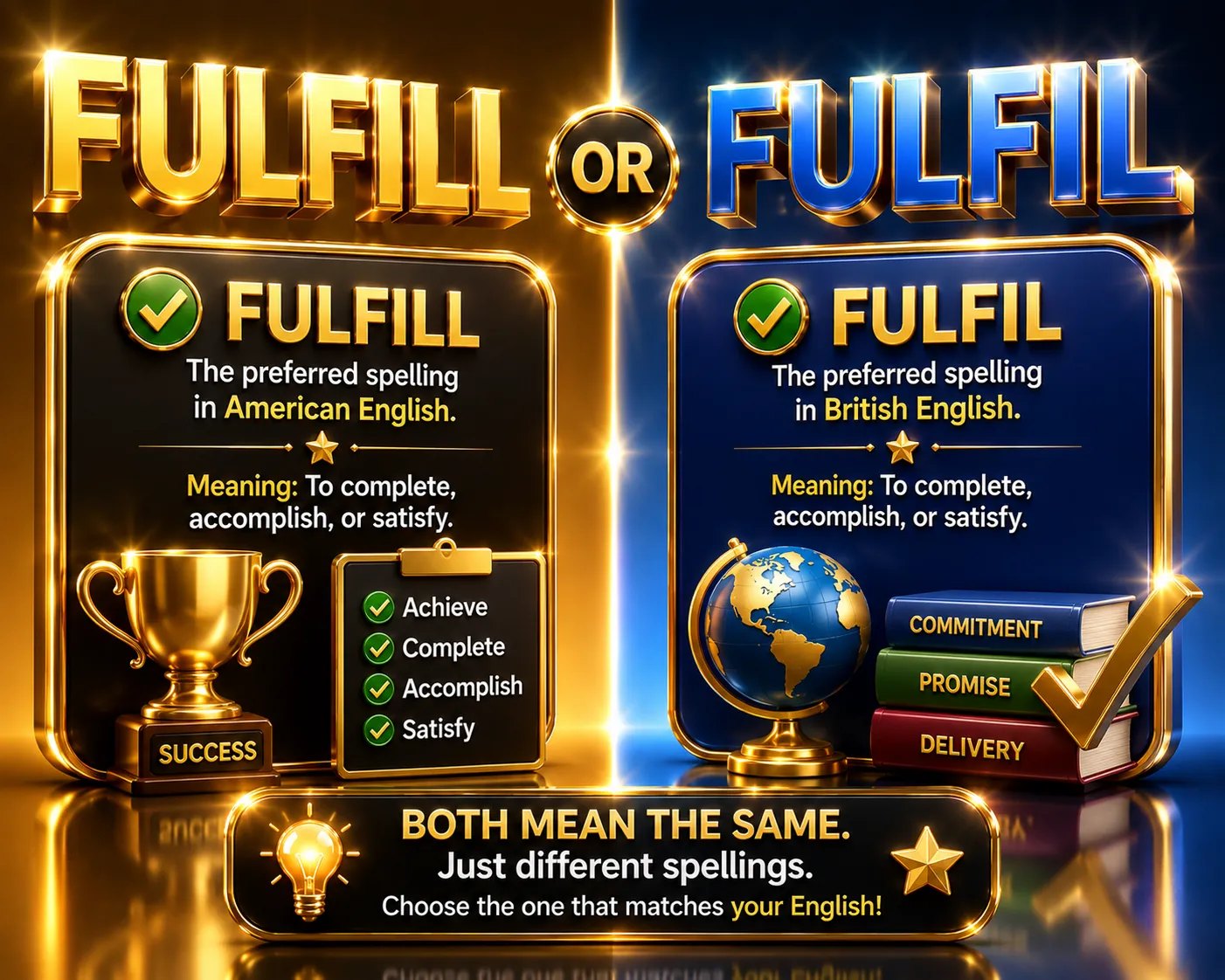
- Fulfill = American English
- Fulfil = British English
For example:
- She wants to fulfill her goals. (American English)
- She wants to fulfil her goals. (British English)
So the rule is straightforward:
Fulfill = US spelling
Fulfil = UK spelling
The Origin and Background of Fulfill and Fulfil
The word “fulfill/fulfil” has deep historical roots in the English language. It comes from Old English and Middle English combinations of:
- full (meaning complete or whole)
- fillen (meaning to fill or complete)
Originally, the idea behind the word was “to make something full” or “to complete something entirely.”
Over time, English spelling evolved differently in various regions. When English spread across the world, especially to North America, spelling reforms simplified many words. One of the most noticeable changes was the reduction of double consonants in certain words.
That is why:
- British English kept the older form: fulfil
- American English simplified it: fulfill
This pattern is common in English. Similar examples include:
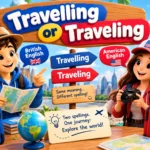
- travel → travelled (UK) vs traveled (US)
- cancel → cancelled (UK) vs canceled (US)
- fulfil → fulfill (UK vs US variation)
Despite these differences, both forms remain correct in their respective regions.
Fulfill or Fulfil Explained in Detail
Although the spelling differs, the meaning and usage remain the same. Let’s break it down clearly.
1. Fulfill (American English)
Fulfill is the standard spelling in American English.
It is used in contexts such as:
- completing tasks or duties
- achieving goals
- meeting expectations
- carrying out promises or responsibilities
Examples:
- She worked hard to fulfill her dreams.
- The company must fulfill its obligations.
- He finally fulfilled his lifelong ambition.
In the United States, this spelling is used in education, business, media, and formal writing.
2. Fulfil (British English)
Fulfil is the standard spelling in British English and many Commonwealth countries such as:
- the United Kingdom
- Australia
- New Zealand
- India (often mixed usage)
- South Africa
It carries the same meaning as “fulfill.”
Examples:
- He hopes to fulfil his dream of becoming a writer.
- The organization aims to fulfil its mission.
- She worked hard to fulfil her responsibilities.
In British writing, this spelling is preferred in both formal and informal contexts.
Comparison Table
| Word | Meaning | Region | Example |
| fulfill | To complete or achieve | American English | Fulfill a promise |
| fulfil | To complete or achieve | British English | Fulfil a promise |
Which Version Should You Use?
The correct spelling depends entirely on your audience and writing style.
If you are writing for American English:
Use fulfill
Example:
- The team worked hard to fulfill the contract.
If you are writing for British English:
Use fulfil
Example:
- The team worked hard to fulfil the contract.
If you are writing professionally or academically:
The most important rule is:
👉 Be consistent. Do not mix both spellings in the same document.
Common Mistakes with Fulfill and Fulfil
Even though the rule is simple, writers often make a few common errors.
Mistake 1: Mixing both spellings
❌ She wants to fulfill her dream and fulfil her goals.
✅ She wants to fulfill her dream and goals. (American English)
✅ She wants to fulfil her dream and goals. (British English)
Mistake 2: Thinking one spelling is incorrect
❌ “Fulfil is wrong.”
✅ Both spellings are correct depending on region.
Mistake 3: Switching styles in one document
❌ Using “fulfill” in one paragraph and “fulfil” in another.
✅ Choose one style and stay consistent throughout.
Mistake 4: Overthinking meaning differences
❌ Assuming “fulfill” and “fulfil” have different meanings.
✅ They mean exactly the same thing.
Fulfill or Fulfil in Real-World Examples
Let’s see how both forms appear in real usage.
American English (fulfill)
- The company aims to fulfill customer expectations.
- She worked hard to fulfill her potential.
British English (fulfil)
- The company aims to fulfil customer expectations.
- She worked hard to fulfil her potential.
Academic writing
- Students must fulfill/fulfil all course requirements before graduation.
Everyday conversation
- “I finally fulfilled my dream of traveling the world.”
- “He hopes to fulfil his ambition one day.”
Fulfill or Fulfil Usage Insights
This spelling difference is a classic example of regional variation in English.
A simple memory trick:
- Fulfill = double “l” = American English
- Fulfil = single “l” = British English
This makes it easy to remember which version to use.
Why Do These Spelling Differences Exist?
English spelling differences between the US and UK developed over time due to language reform and simplification.
In the 18th and 19th centuries, American English writers like Noah Webster promoted simplified spelling rules. One of their goals was to make English easier to learn and more consistent.
As a result, many words lost extra letters in American English, including:
- colour → color
- honour → honor
- fulfil → fulfill
British English, on the other hand, preserved older spellings.
Standalone Comparison: Fulfill vs Fulfil at a Glance
| Word | Meaning | Usage Type | Best Used When |
| fulfill | Complete or achieve | American English | US-based writing |
| fulfil | Complete or achieve | British English | UK/Commonwealth writing |
Frequently Asked Questions
Q: What does “fulfill” mean?
A: Fulfill means to complete, achieve, or carry out something successfully, such as a promise, duty, or goal.
Q: What does “fulfil” mean?
A: Fulfil has the same meaning as fulfill but is used in British English.
Q: Is “fulfill” or “fulfil” correct?
A: Both are correct. The choice depends on whether you are using American or British English.
Q: Why are there two spellings?
A: English evolved differently in the US and UK, leading to spelling variations like fulfill/fulfil.
Q: Can I mix both spellings?
A: It is not recommended. Always choose one style and remain consistent.
Conclusion
The difference between fulfill and fulfil is simple: it is not about meaning, but about regional spelling conventions.
Both words mean to complete, achieve, or carry out something successfully. The only distinction is:
- Fulfill = American English
- Fulfil = British English
If you remember one rule, make it this:
👉 Fulfill = US spelling (double “l”)
👉 Fulfil = UK spelling (single “l”)
Once you understand this, you can use both forms confidently without confusion.
Whether you are writing an essay, email, article, or business document, consistency is the key. Choose your style, stick with it, and your writing will always look polished and professional.
Read More:
Innie or Outie: What’s the Difference?

I’m **Rubab Naaz**, an English language content writer with over 10 years of experience creating educational and SEO-focused articles. I specialize in spelling comparisons, grammar, vocabulary, synonyms, commonly confused words, and English usage. My passion is helping students, writers, and professionals improve their language skills through accurate, well-researched, and easy-to-understand content. Every article I write is designed to make learning English simple, practical, and engaging.