Quick Answer: Mama and momma are both correct spellings, but mama is the standard and more widely used form in English. Momma is an informal spelling that often reflects regional dialects, especially in the Southern United States, or adds a warm, affectionate tone.
Have you ever paused while writing a birthday card or social media post and wondered whether to write “I love you, Mama” or “I love you, Momma”? You’re not alone. I once helped a student edit a personal essay where she used both spellings in the same paragraph without realizing it. She wasn’t making a grammar mistake she was mixing two accepted forms with different styles and cultural meanings.
Because mama and momma sound almost identical, many people assume one must be wrong. In reality, both spellings are correct, but they are used in different contexts. Understanding the difference can make your writing feel more natural and authentic.
In this guide, you’ll learn when to use mama or momma, their origins, regional differences, real-world examples, common mistakes, and simple tips to choose the right spelling with confidence.
Mama or Momma Quick Answer
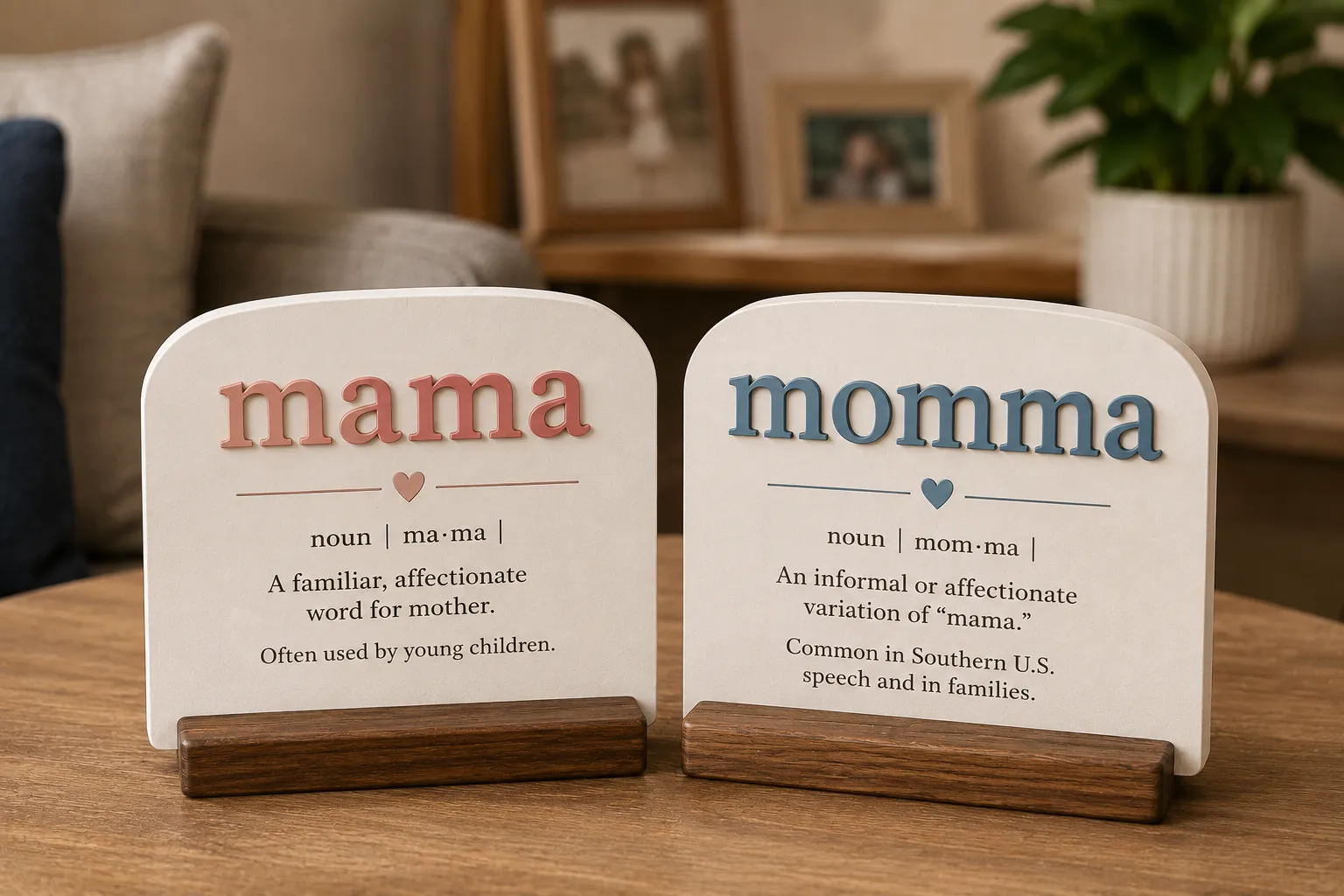
Mama is the standard spelling used worldwide and appears more often in dictionaries, books, and everyday writing. Momma is an alternative informal spelling that is especially common in Southern American English and in dialogue meant to reflect speech.
Examples
- Mama, can you help me with my homework?
- My momma always made the best apple pie.
Both sentences are correct. The choice depends on style, audience, and regional preference.
The Origin of Mama and Momma
According to Merriam-Webster, mama is an affectionate word for mother and has been used in English for centuries. Similar forms appear in many languages because the simple “ma” sound is one of the first sounds babies learn to pronounce.
The Oxford English Dictionary notes that words like mama, mamma, and similar variants have long histories across European languages.
Momma developed later as a spelling that reflects pronunciation in certain English dialects. It became especially popular in the Southern United States and often appears in novels, songs, movies, and everyday speech to create a warm, family-centered voice.
Because these words are terms of affection rather than strict grammatical forms, usage varies across families and cultures.
Mama vs. Momma Explained
Although both words refer to a mother, they are not always used in exactly the same way.
| Term | Meaning | When to Use | Region/Context |
| Mama | Affectionate term for mother | Everyday writing, books, conversations | International English |
| Momma | Informal spelling of mama | Casual writing, dialogue, regional speech | Mostly Southern U.S. |
Example 1
Mama, dinner is ready!
A natural, standard way to address your mother.
Example 2
My momma taught me to always be kind.
Often used to reflect Southern American speech or add emotional warmth.
Which Version Should You Use?
For Everyday Writing
Use mama.
It is the most widely recognized spelling and works well for readers around the world.
For Fiction
Use momma if you want dialogue to sound authentic for a Southern U.S. character or to capture a particular speaking style.
For Greeting Cards
Either spelling is appropriate if it matches what your family actually uses.
For Academic or Professional Writing
Avoid both unless you’re directly quoting someone or discussing family relationships. Use mother in formal contexts.
Common Mistakes
| Mistake | Correct Version | Why |
| Mixing mama and momma in the same story | Choose one spelling consistently | Consistency improves readability. |
| Thinking momma is incorrect | Both are correct | They differ mainly in style and regional use. |
| Using momma in formal reports | Use mother | Formal writing prefers standard vocabulary. |
| Assuming mama is only for children | Adults use it too | Many adults continue calling their mother “Mama.” |
Easy Memory Trick
- Mama = the standard spelling used almost everywhere.
- Momma = think of “country momma” or Southern storytelling.
Real-World Examples
Professional Email
I’m taking leave next Friday to celebrate my mama’s birthday.
Novel Dialogue
“Momma, I’ll be home before sunset,” Jake promised.
Social Media Post
Happy Mother’s Day to the strongest Mama in the world! ❤️
Song Lyric Style
My momma always believed in me, even when I didn’t believe in myself.
These examples show how context influences the preferred spelling.
Mama or Momma Data, Trends & Usage
General language trends show that mama appears far more frequently than momma in books, news articles, and educational materials.
Approximate search behavior from SEO tools such as Google Trends, Ahrefs, and Semrush suggests:
| Keyword | Approximate Monthly Searches |
| mama | 500,000+ |
| momma | 100,000+ |
| mama or momma | 5,000+ |
Searches for momma are especially common in the United States, while mama is more common globally.
Search intent is primarily informational, with users wanting to know which spelling is correct or more appropriate.
Standalone Comparison Table
| Term | Meaning | Region/Context | Best Used When |
| Mama | Affectionate name for mother | Global English | Everyday writing |
| Momma | Informal spelling of mama | Southern U.S., casual speech | Fiction and dialogue |
| Mother | Formal term | Universal | Academic and professional writing |
Frequently Asked Questions
Q1. Is mama or momma correct?
Both are correct. Mama is the standard spelling, while momma is an informal regional variant.
Q2. Which spelling is more common?
Mama is generally more common in dictionaries, books, and international English.
Q3. Is momma considered slang?
Not exactly. It is an informal spelling that reflects pronunciation and regional speech rather than slang.
Q4. Can adults say mama?
Yes. Many adults continue to call their mother Mama throughout their lives.
Q5. Is momma used outside the United States?
It appears occasionally elsewhere but is most strongly associated with Southern American English.
Q6. Which spelling should I use in a novel?
Choose the form that matches your character’s background and speaking style. Consistency is more important than the specific spelling.
Q7. Is mama appropriate in formal writing?
If you’re referring to your own mother in a personal context, it is acceptable. Otherwise, formal writing usually prefers mother.
Conclusion
Both mama and momma are correct, but they serve slightly different purposes. Mama is the standard, widely accepted spelling that works in most situations and is recognized around the world. Momma is a warm, informal variant often used to reflect Southern American speech, family traditions, or emotional storytelling.
The best choice depends on your audience and the tone of your writing. If you want a neutral, universally understood option, choose mama. If you’re writing dialogue or capturing a specific regional voice, momma may feel more authentic.
Now you know the difference between mama and momma. Save this guide so you’ll always choose the spelling that fits your message perfectly.
Read More:-
Javascript or Python : What you should learn?

I specialize in English grammar, spelling, word choice, and language usage. My content is based on research from grammar references, style guides, dictionaries, and real-world usage to ensure it is accurate and practical.
At Spelling Comparison, I write guides that explain why words are confused, how they are used, and which form is correct in context. I also include proofreading tips, examples, and writing advice readers can apply immediately.
My goal is to publish clear, reliable content that helps readers make better writing decisions. Each guide is written for accuracy, clarity, and usefulness in school, work, business, and everyday communication.