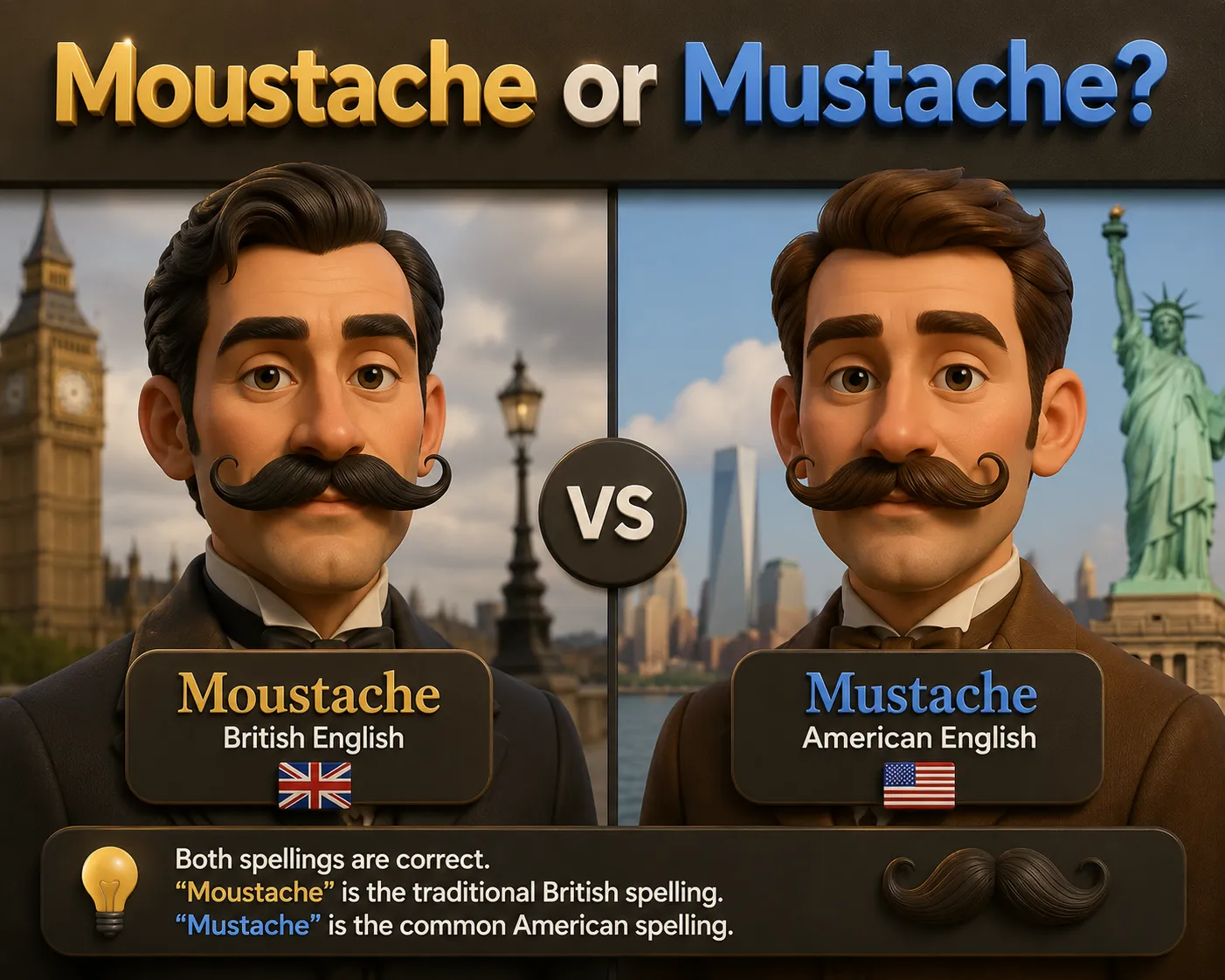
Both moustache and mustache are correct spellings of the same facial hair. Mustache is the preferred spelling in American English, while moustache is more common in British English and many other English-speaking countries.
A few years ago, I was editing a men’s grooming article for an international website. The writer from the United States consistently used mustache, while an editor in the United Kingdom changed every instance to moustache. At first glance, it looked like a disagreement over spelling. After checking several major dictionaries, I discovered something interesting: both versions were correct.
This confusion affects more people than you might think. Whether you’re writing a blog post about facial hair styles, creating marketing content for a grooming brand, or simply describing someone’s appearance, choosing between moustache and mustache can feel surprisingly tricky.
The good news is that the answer is straightforward. The two words mean exactly the same thing. The difference comes down to regional spelling preferences, much like color/colour or favor/favour.
In this guide, you’ll learn the history of both spellings, when to use each one, common mistakes to avoid, and what modern language data reveals about their usage around the world.
Moustache or Mustache Quick Answer
Moustache and mustache are alternative spellings of the same noun: hair that grows on a person’s upper lip.
According to Merriam-Webster, mustache is the standard American English spelling. The Cambridge Dictionary and many British references commonly use moustache, although both forms are widely understood.
Examples
- His thick mustache became his signature look.
- The actor grew a moustache for his role in a historical drama.
Both sentences are correct.
The Origin and Background of Moustache or Mustache
The history of the word is surprisingly international.
According to Etymonline, the word entered English from the French moustache, which itself came from Italian and ultimately from Greek roots referring to the upper lip.
The original French spelling included the letters “ou”, which explains the traditional spelling moustache.
As American English developed, many words were simplified. Similar to:
- colour → color
- honour → honor
- favour → favor
the spelling mustache became increasingly common in the United States.
The Oxford English Dictionary recognizes both forms, while noting their regional preferences.
This spelling variation is an example of how languages evolve differently across countries while preserving the same meaning.
Moustache or Mustache Explained Key Differences
The only difference between these words is spelling.
| Term | Meaning | When to Use | Region/Context |
| Mustache | Hair on the upper lip | American English | United States |
| Moustache | Hair on the upper lip | British English | UK, Australia, New Zealand, Canada (often) |
Example using mustache
The detective’s neatly trimmed mustache gave him a classic look.
Example using moustache
The portrait showed a gentleman with a long Victorian moustache.
The meaning remains identical regardless of spelling.
Which Version Should You Use?
Your audience should determine your choice.
For American readers
Use mustache.
This is the spelling most commonly found in American newspapers, websites, books, and style guides.
For British readers
Use moustache.
It aligns with standard British English spelling conventions.
For bloggers and marketers
Match the spelling to your target audience.
- U.S. audience → mustache
- UK audience → moustache
For international audiences
Either spelling works. However, mustache tends to appear more frequently online due to the influence of American English.
Best advice
Choose one spelling and remain consistent throughout your content.
Common Mistakes with Moustache or Mustache
Many writers make small but avoidable spelling errors.
| Mistake | Correct Form | Why It Happens |
| moustash | moustache | Pronunciation confusion |
| mustash | mustache | Missing letters |
| mixing mustache and moustache | Choose one version | Inconsistent regional style |
| assuming one is wrong | Both are correct | Lack of awareness of regional spelling |
| changing brand spellings | Follow official branding | Brand names may use either version |
Tips to Remember
- Mustache = American English
- Moustache = British English
- Both spellings have the same meaning.
- Stay consistent in the same document.
Moustache or Mustache in Real-World Examples
Professional Email
Please update the character illustration to include a neatly groomed mustache that matches the historical reference image.
News Headline
World Championship Celebrates Creative Moustache Styles and Grooming Skills
Social Media Post
Finally grew the mustache I’ve wanted for years. Time for a new profile picture! 😎
Formal Report
Survey participants associated a well-maintained moustache with professionalism and personal style.
Moustache or Mustache Data, Trends & Usage
Search Intent
Primary Search Intent: Informational
Most users want to know:
- Which spelling is correct?
- Is there a difference between mustache and moustache?
- Which version should I use?
Approximate Search Volume
Based on general patterns from Semrush, Ahrefs, and Google Trends (2025–2026 estimates):
| Keyword | Approximate Monthly Searches |
| mustache | 200,000+ |
| moustache | 40,000–100,000 |
| moustache or mustache | 1,000–3,000 |
| mustache styles | 50,000+ |
Search volumes are approximate and can change over time.
Google Trends Insights
Google Trends shows a strong regional preference.
Higher interest in mustache
- United States
- Philippines
- Puerto Rico
Higher interest in moustache
- United Kingdom
- Australia
- New Zealand
- South Africa
Google Books Ngram Viewer
According to Google Books Ngram Viewer, moustache dominated English-language books during the 19th century because of its French spelling. During the 20th century, mustache became increasingly common, especially in American publications.
Why This Topic Matters Today
Facial hair trends continue to influence fashion, grooming, entertainment, and social media. As global audiences consume content from different English-speaking countries, understanding spelling variations helps writers communicate more effectively.
Standalone Comparison Table
| Term/Variant | Meaning | Region/Context | Best Used When |
| Mustache | Upper-lip facial hair | American English | U.S. publications and audiences |
| Moustache | Upper-lip facial hair | British English | UK and Commonwealth audiences |
| Beard | Facial hair on chin and cheeks | Universal English | Referring to broader facial hair growth |
Frequently Asked Questions
Q: What does moustache or mustache mean?
Both words refer to hair that grows on the upper lip. The spelling varies by region, but the meaning is exactly the same.
Q: How do you use moustache or mustache correctly?
Use mustache in American English and moustache in British English. Keep the spelling consistent throughout your writing.
Q: Mustache vs. moustache what’s the difference?
The only difference is spelling. There is no difference in meaning, pronunciation, or grammar.
Q: Is moustache acceptable in formal writing?
Yes. Moustache is the standard spelling in British English and is fully acceptable in formal writing.
Q: Which version is correct mustache or moustache?
Both are correct. Major dictionaries such as Merriam-Webster, Cambridge Dictionary, and the Oxford English Dictionary recognize both spellings.
Q: Where does the word moustache come from?
According to Etymonline, it comes from the French word moustache, which traces back through Italian to Greek linguistic roots.
Q: Can I use mustache in the UK?
People in the UK will understand mustache, but moustache is generally the preferred local spelling.
Conclusion
Choosing between moustache and mustache is easier than it seems. Both spellings describe the same facial hair and are accepted by major dictionaries. The key difference is regional preference. Mustache is standard in American English, while moustache remains the traditional spelling in British English and many Commonwealth countries.
When writing, think about your audience first. Matching their preferred spelling helps your content feel natural and professional. Whether you’re discussing grooming trends, historical figures, fashion, or personal style, consistency is more important than the specific variant you choose.
Understanding spelling differences like mustache/moustache, color/colour, and behavior/behaviour can also improve your confidence as a writer and editor.
Now you know exactly when to use mustache or moustache. Bookmark this guide so you never second-guess the spelling again, and share it with someone who loves language or grooming culture.

I’m **Rubab Naaz**, an English language content writer with over 10 years of experience creating educational and SEO-focused articles. I specialize in spelling comparisons, grammar, vocabulary, synonyms, commonly confused words, and English usage. My passion is helping students, writers, and professionals improve their language skills through accurate, well-researched, and easy-to-understand content. Every article I write is designed to make learning English simple, practical, and engaging.