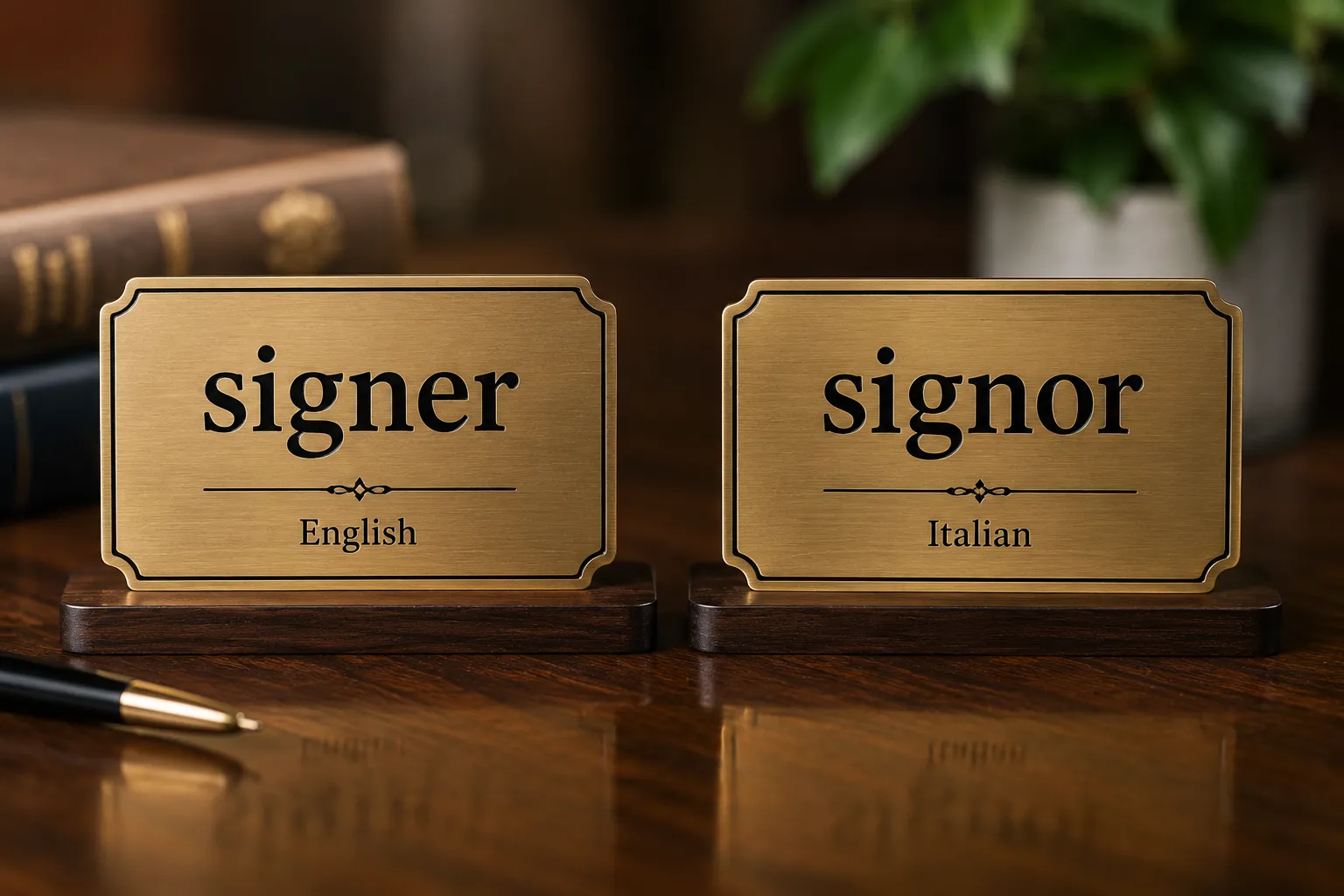
Signer is the correct English word for a person who signs a document or, in some contexts, a person who uses sign language. Signor is an Italian title meaning Mr. and is not the correct English word for someone who signs.
I once edited a business email that referred to the person who signed the agreement as a signor. The writer clearly meant signer, but the word choice was off. That small mistake made the sentence sound less natural and less precise.
People often search for signer or signor because the words look similar, and both seem like they could be correct. Since English borrows many words from other languages, it’s easy to confuse an English noun with a foreign title.
The good news is that the difference is simple once you know the meaning. Signer is the standard English word, while signor is an Italian honorific used before a man’s name.
In this guide, you’ll learn the difference between signer and signor, where each term comes from, common mistakes to avoid, and real-world examples.
Signer or Signor Quick Answer
The correct English word for a person who signs something is signer.
Signor is an Italian title meaning Mr. and should only be used in Italian-name contexts.
Simple examples
- The signer reviewed the contract carefully.
- Signor Rossi arrived at the meeting on time.
The Origin and Background of Signer or Signor
The word signer comes from the English verb sign plus the suffix -er, which is commonly used to form nouns for people who do an action.
Examples include:
- teach → teacher
- write → writer
- sing → singer
- sign → signer
The word signor comes from Italian and is related to signore, a respectful title meaning Mr. or Sir. It is used before an Italian man’s surname or full name.
So while the two words look similar, they come from different languages and have different meanings.
Signer or Signor Explained Key Differences
The difference is mainly about meaning and language context.
| Term | Meaning | When to Use | Region/Context |
| Signer | A person who signs a document or, in some contexts, a person who uses sign language | In standard English | Worldwide English |
| Signor | Italian title meaning Mr. | Before an Italian man’s name | Italian/English mixed usage |
| Signers | Plural of signer | When referring to multiple people who sign | Worldwide English |
Examples of Signer
- The signer must provide identification.
- Each signer agreed to the terms.
- The signer used a digital signature.
Examples of Signor
- Signor Bianchi will speak at the conference.
- We met Signor Rossi in Florence.
- The invitation was addressed to Signor Marco Conti.
Notice that signor is not used to mean a person who signs a contract.
Which Version Should You Use?
The answer depends on what you mean.
For students
If you’re writing about someone who signs a form, contract, or document, use signer.
For professionals
Use signer in legal, business, administrative, and accessibility-related writing.
- Contract signer → signer
- Document signer → signer
- Person using sign language → signer in some contexts
Use Signor only when referring to an Italian title before a man’s name.
For everyday writing
Ask yourself:
Am I talking about someone who signs something, or am I using an Italian title?
- Someone who signs → signer
- Italian honorific → Signor
For international readers
If you’re writing in English, signer is the safest and most widely recognized choice unless you specifically need the Italian title Signor.
Common Mistakes with Signer or Signor
| Mistake | Correct Version | Why It Happens |
| The signor signed the contract. | The signer signed the contract. | Signor is an Italian title, not an English noun for a person who signs. |
| Dear signor Smith | Dear Signor Rossi / Dear Mr. Smith | Signor is only used with Italian names. |
| Many signors approved the form. | Many signers approved the form. | The plural of signer is signers. |
| The signer Bianchi arrived. | Signor Bianchi arrived. | Italian titles should be used correctly. |
| Using signor for legal documents | Use signer | Legal and business English uses signer. |
Signer or Signor in Real-World Examples
Professional Email
“Each signer must complete the verification process before the agreement is finalized.”
News Headline
“Signor Marco Rossi to Receive Cultural Honor at Annual Ceremony”
Social Media Post
“The signer on the lease finally sent back the paperwork!”
Formal Report
“The report confirmed that every signer had reviewed the updated terms before approval.”
Signer or Signor Data, Trends & Usage
Many people search for signer or signor because the words appear similar in spelling but belong to different language systems.
Most common search intent
- Informational
- Grammar help
- Word meaning
- Legal writing
- Italian title usage
Regions with high interest
- United States
- United Kingdom
- Canada
- Australia
- India
- Italy
Why this topic matters now
With digital contracts, international business, and multilingual communication becoming more common, writers often need to distinguish between English nouns and foreign honorifics. Knowing when to use signer and when to use Signor helps you write clearly and professionally.
READ MORE:
Swiftie or Swifty: The Complete Guide to the Correct Spelling
Comparison Table
| Term/Variant | Meaning | Region/Context | Best Used When |
| Signer | A person who signs a document | Worldwide English | Referring to one person who signs |
| Signers | More than one person who signs | Worldwide English | Talking about multiple people |
| Signer’s | Belonging to one signer | Worldwide English | Singular possessive |
| Signers’ | Belonging to multiple signers | Worldwide English | Plural possessive |
| Signor | Italian title meaning Mr. | Italian/English mixed usage | Addressing or referring to an Italian man |
Frequently Asked Questions
Q: What does signer mean?
A: Signer means a person who signs a document, form, or agreement. It can also refer to a person who uses sign language in some contexts.
Q: What does signor mean?
A: Signor is an Italian title meaning Mr. It is used before an Italian man’s name.
Q: Signer vs signor what’s the difference?
A: Signer is an English noun for someone who signs. Signor is an Italian honorific title.
Q: Is signor correct in formal writing?
A: Yes, but only when referring to an Italian title. In English business or legal writing, signer is the correct word.
Q: Which version is correct signer or signor?
A: Use signer for someone who signs something. Use Signor only in Italian-name contexts.
Q: Can I use signor for a contract signer?
A: No. For a contract signer, use signer.
Q: Is signer the same as signatory?
A: Not exactly. Signatory is a more formal word often used in legal or diplomatic contexts, while signer is simpler and more common in everyday English.
Q: Should Signor be capitalized?
A: Yes. When used as a title before a name, Signor is capitalized.
Q: Is signor an English word?
A: It appears in English when referring to Italian titles, but it is borrowed from Italian rather than being a native English noun.
Q: What is the plural of signer?
A: The plural is signers.
Conclusion
Choosing between signer or signor is easy once you know the difference. If you’re talking about a person who signs a document, the correct English word is signer. If you’re referring to an Italian title before a man’s name, use Signor.
Remember these key points:
- Signer is the correct English word for someone who signs.
- Signor is an Italian title meaning Mr.
- Signers is the plural of signer.
- Use Signor only in Italian-name contexts.
- In English legal, business, and everyday writing, signer is usually the right choice.
With this simple rule, you’ll never confuse signer and signor again. Bookmark this guide so you always remember the correct usage, and share it with anyone learning English grammar or writing about international names.

I specialize in English grammar, spelling, word choice, and language usage. My content is based on research from grammar references, style guides, dictionaries, and real-world usage to ensure it is accurate and practical.
At Spelling Comparison, I write guides that explain why words are confused, how they are used, and which form is correct in context. I also include proofreading tips, examples, and writing advice readers can apply immediately.
My goal is to publish clear, reliable content that helps readers make better writing decisions. Each guide is written for accuracy, clarity, and usefulness in school, work, business, and everyday communication.