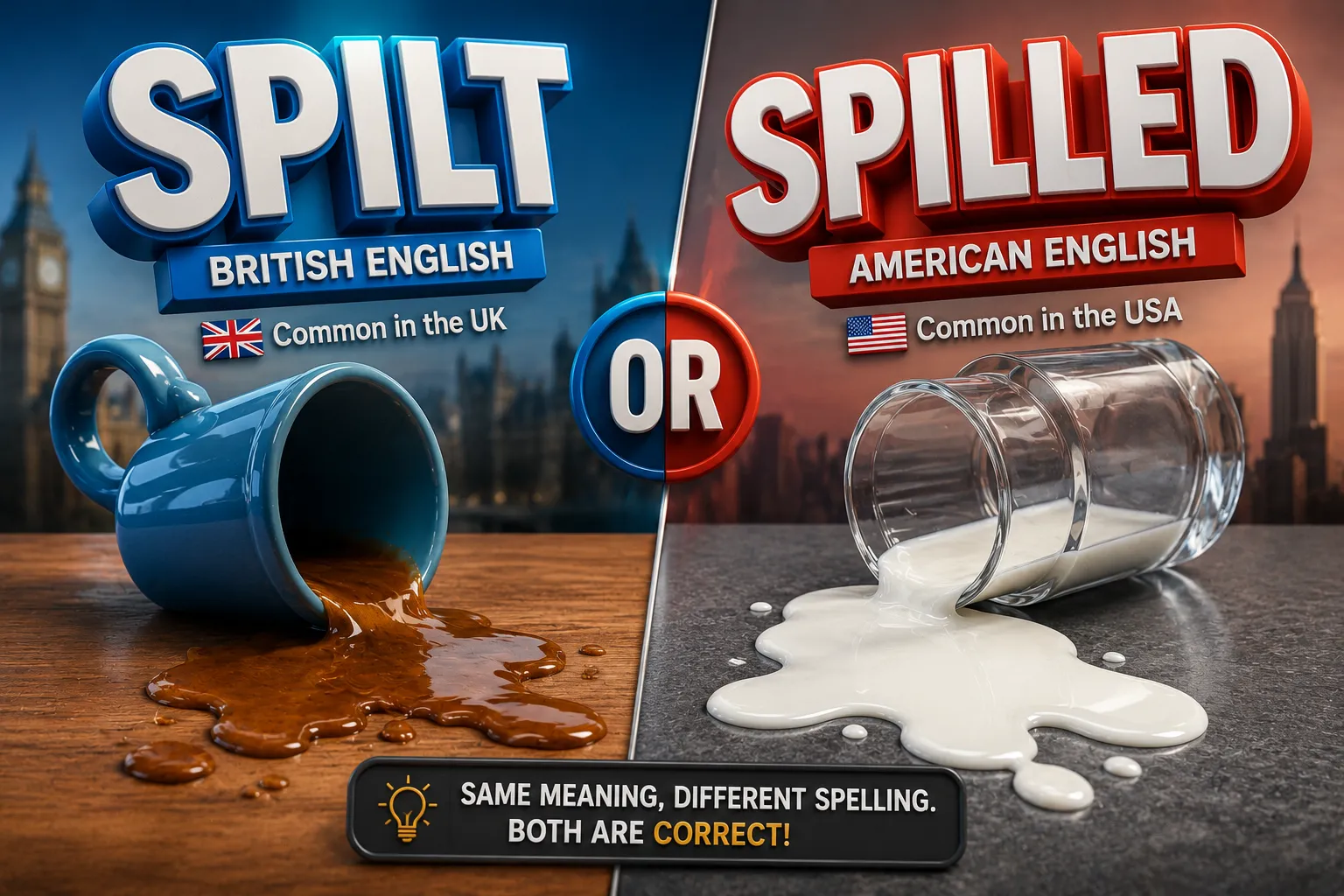
Both spilt and spilled are correct past-tense forms of spill. Spilled is more common in American English and is also widely used in British English. Spilt is especially common in British English, particularly in everyday and literary usage.
You knock over your coffee, and someone asks what happened. You might say, “I spilled my coffee.” But you may also hear, “I spilt my coffee.” So, which one is correct?
The answer is that both are correct. The difference is mainly about regional preference and style.
Spilled is the more common form internationally and is strongly preferred in American English. Spilt is also a standard form, especially in British English. Both words are the past tense and past participle of spill, meaning to accidentally cause a liquid or other substance to fall or spread.
This word pair can be confusing because English has many verbs with two accepted past forms. If you’re wondering whether to write spilt or spilled, understanding where each form is preferred will help you choose naturally and confidently.
Spilt vs Spilled at a Glance
| Word | Correct? | Common Usage |
| Spilt | ✅ Yes | Especially British English |
| Spilled | ✅ Yes | Especially American English and widely used elsewhere |
Examples
British English:
I spilt my coffee on the table.
American English:
I spilled my coffee on the table.
Both sentences are correct.
What Does Spilled Mean?
Spilled is the past tense and past participle of spill.
It means that a liquid, powder, or other substance accidentally fell out of a container or spread onto a surface.
Example 1
She spilled water on her desk.
Example 2
I accidentally spilled coffee on my shirt.
Example 3
The child spilled the juice on the floor.
Spilled can also have a figurative meaning.
He spilled the secret.
Here, spilled means revealed information that was supposed to be kept secret.
What Does Spilt Mean?
Spilt has the same basic meaning as spilled.
It is an alternative past-tense and past-participle form of spill.
Example 1
I spilt some milk on the floor.
Example 2
She spilt coffee over her notes.
Example 3
He spilt the beans about the surprise party.
The meaning does not change when you use spilt instead of spilled.
Spilt or Spilled: The Main Difference
The main difference is usage preference, not meaning.
| Feature | Spilt | Spilled |
| Correct? | ✅ | ✅ |
| Meaning | Same | Same |
| British English | Common | Common |
| American English | Less common | Very common |
| Past tense of spill | ✅ | ✅ |
| Past participle | ✅ | ✅ |
Is Spilt British or American?
Spilt is strongly associated with British English, although it isn’t exclusively British.
You may commonly see it in British writing and conversation:
She spilt her tea.
Someone has spilt water on the floor.
American English generally prefers:
She spilled her tea.
Someone has spilled water on the floor.
For an American audience, spilled is the safest choice.
Is Spilled Correct in British English?
Yes.
This is an important point. British English speakers can and do use spilled.
So it would be incorrect to say:
Spilled is American English only.
Instead, spilled is widely accepted in both varieties, while spilt has a stronger British preference.
British vs American English
The pattern can be summarized like this:
| Variety | Preferred Form |
| 🇺🇸 American English | Spilled |
| 🇬🇧 British English | Spilt / Spilled |
| 🇦🇺 Australian English | Spilt / Spilled |
| 🇨🇦 Canadian English | Spilled is common |
If you’re writing specifically for an American audience, spilled is the natural choice.
For British English, either can work, but spilt is a familiar traditional form.
Why Does English Have Two Forms?
English contains many verbs that developed more than one accepted past-tense form.
Spill is one example.
You can find similar variations in words such as:
- dreamed / dreamt
- learned / learnt
- burned / burnt
- smelled / smelt
- spelled / spelt
Some forms are strongly associated with particular regions, while others are widely used in both varieties.
Spilt belongs to this group of alternative verb forms.
When Should You Use Spilled?
Choose spilled when you want the most widely understood and generally accepted form.
It is particularly appropriate for:
- American English
- international writing
- business writing
- educational content
- general online writing
Examples
I spilled my coffee this morning.
She spilled the paint on the floor.
The bottle was spilled during transportation.
He spilled the secret.
When Should You Use Spilt?
Choose spilt when you’re following a British English style or want a traditional British form.
Examples
I spilt my tea.
She spilt milk on the carpet.
Someone has spilt water near the entrance.
He spilt the beans about the surprise.
The word can sound especially natural in British conversation.
Spilt Milk or Spilled Milk?
One familiar expression is:
Don’t cry over spilt milk.
This is a traditional British form.
You may also see:
Don’t cry over spilled milk.
This version is especially common in American English.
Both mean that it is pointless to worry about something that has already happened and cannot be changed.
British-style
There’s no use crying over spilt milk.
American-style
There’s no use crying over spilled milk.
Common Mistakes
Mistake #1: Thinking Spilt Is Wrong
❌ Spilt is incorrect.
That’s not true.
✅ Spilt is a legitimate form of spill.
Mistake #2: Thinking Spilled Is Only American
❌ British English cannot use spilled.
That’s also incorrect.
✅ Spilled is accepted in British English too.
Mistake #3: Using “Spill” for the Past
❌ I spill my coffee yesterday.
✅ I spilled my coffee yesterday.
or
✅ I spilt my coffee yesterday.
Mistake #4: Mixing Styles Without Reason
If your writing follows a particular regional style, consistency is helpful.
For example, if you’re using British forms such as learnt, spelt, and dreamt, spilt may fit naturally with that style.
Everyday Examples
Food and Drinks
I spilled my tea on the table.
I spilt my tea on the table.
Both are correct.
Paint
The children spilled paint on the floor.
The children spilt paint on the floor.
Information
She spilled the secret.
She spilt the secret.
Idiom
Don’t cry over spilled milk.
Don’t cry over spilt milk.
Spilled vs Spilt in Different Forms
The two forms can appear in the same grammatical positions.
Simple Past
He spilled the water.
He spilt the water.
Present Perfect
She has spilled the juice.
She has spilt the juice.
Past Perfect
They had spilled the paint.
They had spilt the paint.
Both forms work grammatically.
A Simple Memory Trick
Think about the regional preference:
Spilled = American English 🇺🇸
Spilt = Traditional British English 🇬🇧
Another useful connection is:
spill → spilled
This is the form you’ll most often encounter in American English.
If you’re writing for a British audience, spilt is a natural alternative.
FAQs
Is spilt or spilled correct?
Both are correct past-tense and past-participle forms of spill.
Which is more common in American English?
Spilled is the standard and much more common choice in American English.
Is spilt correct in British English?
Yes. Spilt is a common British form, although spilled is also accepted.
Is spilled wrong in British English?
No. British English uses spilled as well.
Do spilt and spilled have different meanings?
No. They have the same meaning.
Should I write spilt milk or spilled milk?
Both are correct. Spilt milk is especially associated with British English, while spilled milk is especially common in American English.
Which form should I use?
Use spilled for American English or when you want the most broadly familiar form. Use spilt when following a British style.
Final Verdict: Spilt or Spilled?
When deciding between spilt or spilled, you don’t have to worry about one being incorrect.
Both forms are grammatically correct.
Spilled is the preferred form in American English and is also perfectly acceptable in British English.
Spilt is a traditional alternative that is especially common in British English.
The easiest rule is:
🇺🇸 American English: Spilled
🇬🇧 British English: Spilt or Spilled
If you’re writing for an international audience and want to avoid uncertainty, spilled is usually the safest choice.
Traveler or Traveller: The Correct Spelling Made Easy

I’m **Rubab Naaz**, an English language content writer with over 10 years of experience creating educational and SEO-focused articles. I specialize in spelling comparisons, grammar, vocabulary, synonyms, commonly confused words, and English usage. My passion is helping students, writers, and professionals improve their language skills through accurate, well-researched, and easy-to-understand content. Every article I write is designed to make learning English simple, practical, and engaging.