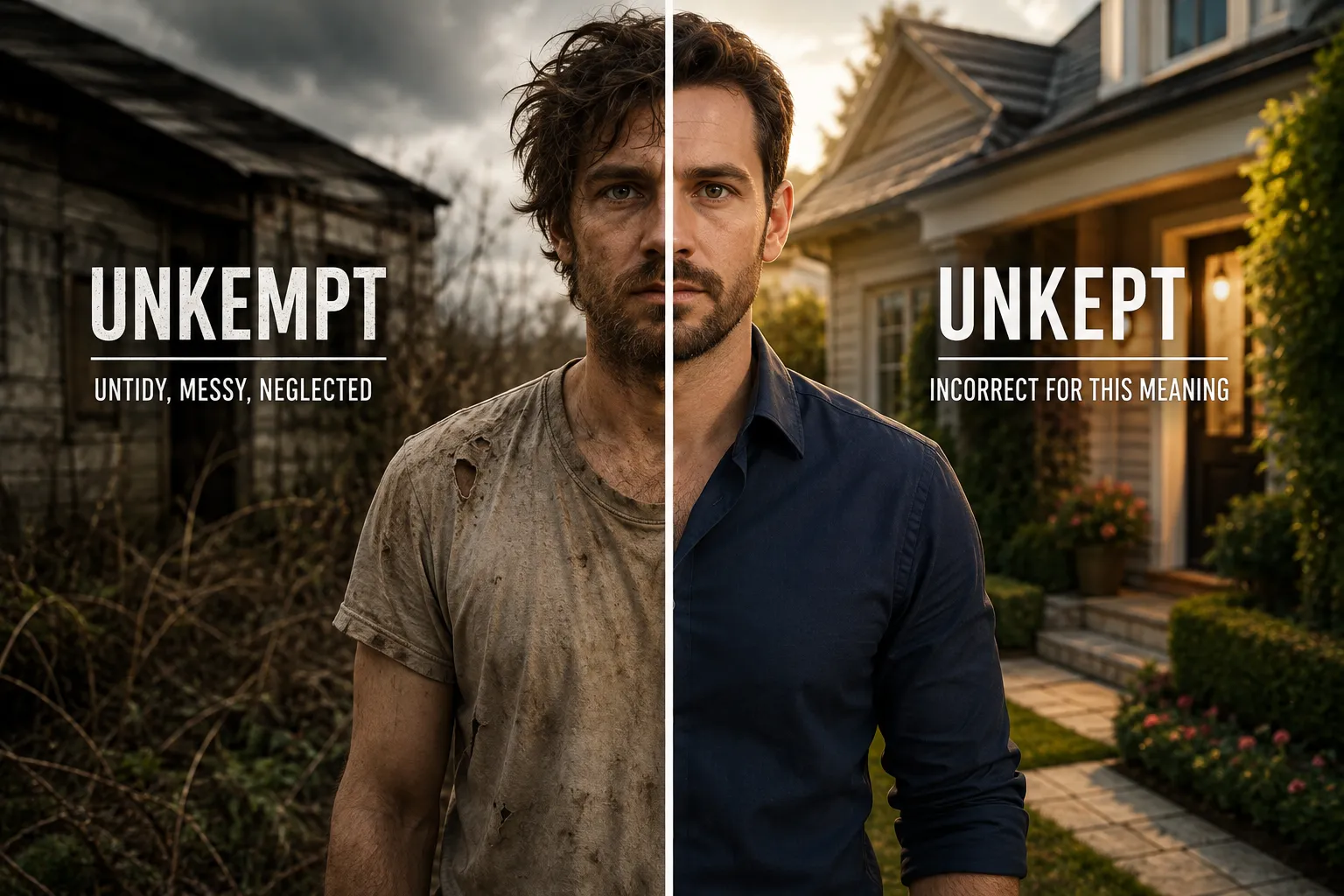
Unkempt or unkept are often confused, but “unkempt” is the correct and standard word meaning messy, untidy, or not well maintained. “Unkept” is less common and usually refers to promises or rules that have not been kept, not appearance.
Have you ever paused while writing and wondered: Should I use unkempt or unkept?
You are not alone. Many English learners and even native speakers mix up these two words because they look similar and seem like they should mean the same thing.
However, they actually have different meanings and usage rules. One is widely accepted for describing appearance, while the other is used in a more limited, formal context.
In this guide, you will learn the difference between unkempt and unkept, when to use each word, common mistakes, and simple examples that make everything clear. By the end, you will never confuse them again.
Unkempt or Unkept Quick Answer
Think of it this way:
- Unkempt = messy, untidy, disheveled appearance
- Unkept = not kept (usually promises, rules, or conditions)
Examples:
His hair looked unkempt after the long journey.
The agreement was unkept due to changing circumstances.
So, if you are talking about appearance, use unkempt.
If you are talking about something being not maintained or not fulfilled, unkept may appear but it is much less common.
Most modern dictionaries and style guides strongly prefer unkempt in everyday writing.
The Background of Unkempt or Unkept
The word unkempt has a long history in English. It comes from Middle English, where kempt meant “combed” or “neatly kept.” The prefix un- reverses the meaning, so unkempt literally means “not combed” or “not neat.”
Over time, it evolved to describe anything messy or disordered, especially appearance.
The word unkept is formed more directly from the verb to keep. It means “not kept,” but it is rarely used in modern English except in formal or legal contexts, such as:
- unkept promises
- unkept agreements
- unkept obligations
Because of this difference in usage, confusion is very common.
Linguists often note that unkempt became the dominant descriptive adjective, while unkept remained limited in scope.
Unkempt or Unkept Explained Key Differences
The easiest way to understand the difference is by meaning and usage.
| Term | Meaning | When to Use | Common Context |
| Unkempt | Messy, untidy, disheveled | Describing appearance or condition | Hair, clothes, rooms, appearance |
| Unkept | Not kept, not maintained, not fulfilled | Formal or abstract situations | Promises, rules, agreements |
| Kempt (rare) | Neat, tidy, well-groomed | Rare or literary use | Appearance (opposite of unkempt) |
When to Use Unkempt
Use unkempt when describing something that looks messy or not cared for.
Examples:
The garden looked unkempt after months of neglect.
He arrived with unkempt hair and wrinkled clothes.
The old house had an unkempt appearance.
It is the most natural and widely accepted word in modern English.
When to Use Unkept
Use unkept only when referring to something that has not been maintained, fulfilled, or honored.
Examples:
The company faced criticism for unkept promises.
There were several unkept agreements in the contract.
The rules remained unkept over time.
However, even in these cases, many writers prefer alternatives like:
- “broken promises”
- “unfulfilled agreements”
- “ignored rules”
A Simple Memory Trick
Remember this:
- Unkempt = looks messy
- Unkept = not kept (abstract things)
If you are describing people, hair, clothes, or places, always choose unkempt.
Which Version Should You Use?
In most real-world writing, the answer is simple:
For everyday English
Use unkempt almost every time.
She had an unkempt appearance after the hike.
For formal writing
You may see unkept, but it is often replaced with clearer alternatives.
The contract included several unkept promises.
(Or better: unfulfilled promises)
For academic or professional writing
Prefer clarity:
- unkempt = appearance
- unfulfilled / broken = abstract ideas
For learners
If you are unsure, choose unkempt. It is safer and more natural.
Common Mistakes with Unkempt or Unkept
Many learners confuse these words in predictable ways.
| Mistake | Correction | Why |
| His room was unkept. | His room was unkempt. | Rooms describe appearance |
| She had unkept hair. | She had unkempt hair. | Hair is physical appearance |
| The garden looked unkept. | The garden looked unkempt. | Describes condition visually |
| He made unkempt promises. | He made unkept promises. | Promises are abstract (but “unfulfilled” is better) |
| The man looked unkept and tired. | The man looked unkempt and tired. | Appearance-based description |
Mistake 1: Using “Unkept” for Appearance
This is the most common error.
Wrong:
The dog looked unkept.
Correct:
The dog looked unkempt.
Mistake 2: Overusing “Unkept” in Modern Writing
In most cases, “unkept” sounds outdated or unnatural.
Better alternatives:
- broken promises
- neglected duties
- unfulfilled expectations
Mistake 3: Assuming They Are Interchangeable
They are not synonyms. They belong to different usage categories.
Unkempt or Unkept in Real-World Examples
Everyday Description
After camping for three days, his appearance was completely unkempt.
Formal Context
The report highlighted several unkept commitments by the organization.
Story Writing
The old house stood with unkempt gardens and broken windows.
Professional Writing
The agreement included multiple unfulfilled (not unkept) obligations.
Casual Conversation
You should comb your hair—it looks unkempt!
Unkempt or Unkept Trends & Usage Insights
Exact monthly search volumes for “unkempt or unkept” vary depending on region, season, and search tools like Google Keyword Planner or Semrush. These tools provide estimates, but numbers change frequently.
However, search intent is clear: informational grammar confusion.
People searching this phrase usually want to know:
- Which word is correct
- Whether both are acceptable
- How to use them in sentences
- Differences in meaning
Language Usage Insight
Modern English shows a strong preference for unkempt in descriptive writing, while unkept appears mainly in formal or legal contexts.
This reflects a broader trend in English:
- simpler vocabulary in everyday use
- fewer archaic or formal variations
- preference for clarity over complexity
Standalone Comparison Table
| Word | Meaning | Usage Type | Best For |
| Unkempt | Messy, untidy | Descriptive adjective | Hair, clothes, appearance, places |
| Unkept | Not kept or maintained | Formal/abstract | Promises, rules, obligations |
| Neat (opposite of unkempt) | Clean and orderly | Descriptive | Appearance and organization |
| Unfulfilled (alternative) | Not completed or achieved | Formal writing | Promises, goals, expectations |
FAQ: Unkempt or Unkept
Q: What is the correct word, unkempt or unkept?
A: Unkempt is the correct and most commonly used word for describing something messy or untidy.
Q: What does unkempt mean?
A: It means messy, disheveled, or not well maintained in appearance.
Q: What does unkept mean?
A: It means not kept or not maintained, usually referring to promises, rules, or obligations.
Q: Can I use unkept for hair or clothes?
A: No. Use unkempt for physical appearance.
Q: Is unkept wrong English?
A: Not wrong, but it is rare and often replaced with clearer alternatives like “unfulfilled” or “broken.”
Q: Why do people confuse unkempt and unkept?
A: Because they look similar and both start with “un-,” but they come from different roots and meanings.
Q: What is the opposite of unkempt?
A: “Kempt” (rare) or more commonly “neat” or “well-groomed.”
Q: Is unkempt formal or informal?
A: It is neutral and can be used in both formal and informal writing.
Conclusion
Understanding unkempt or unkept becomes simple once you focus on meaning rather than spelling.
Use unkempt when describing appearance—hair, clothes, rooms, or anything messy. Use unkept only in limited formal contexts involving promises or obligations, though even then, better alternatives often exist.
If you remember one rule, make it this:
Unkempt describes how something looks. Unkept describes what was not maintained or fulfilled.
With this distinction, you can write more clearly and confidently without hesitation.

I specialize in English grammar, spelling, word choice, and language usage. My content is based on research from grammar references, style guides, dictionaries, and real-world usage to ensure it is accurate and practical.
At Spelling Comparison, I write guides that explain why words are confused, how they are used, and which form is correct in context. I also include proofreading tips, examples, and writing advice readers can apply immediately.
My goal is to publish clear, reliable content that helps readers make better writing decisions. Each guide is written for accuracy, clarity, and usefulness in school, work, business, and everyday communication.