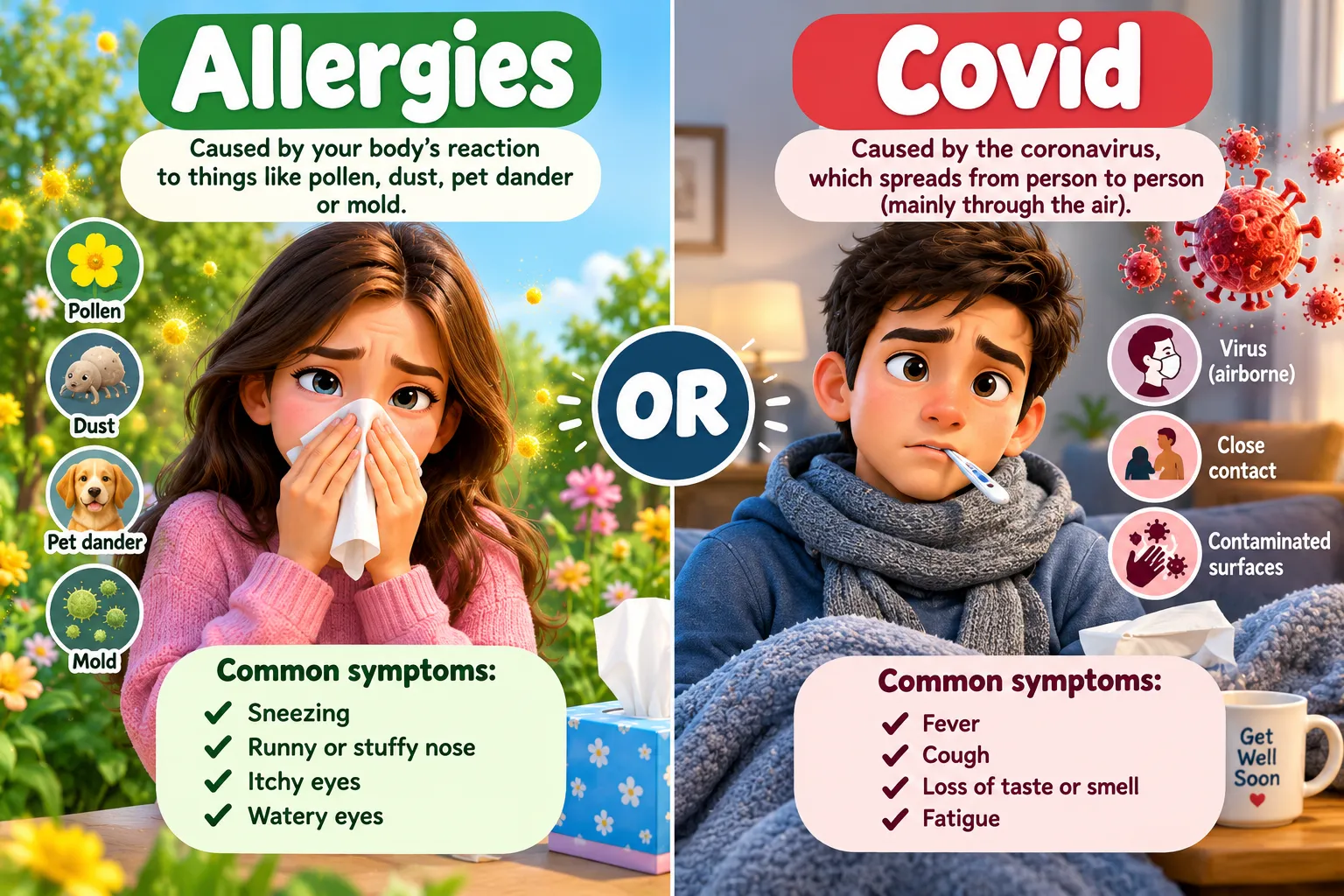
Allergies are reactions to substances such as pollen, dust, or pet dander, while COVID-19 is an infection caused by the SARS-CoV-2 virus. Itchy eyes and repeated sneezing often point to allergies, but fever, body aches, or a new cough may suggest an infection. Symptoms alone cannot reliably tell you which one you have.
I have often come across people who wake up with a runny nose, a sore throat, and a few sneezes, then wonder, “Is it allergies or COVID?” The confusion is understandable because both conditions can cause similar symptoms.
I know how confusing it can be when a blocked nose, watery eyes, or tiredness makes you question what is causing your discomfort. Allergies can trigger sneezing, itchy eyes, and nasal congestion, while COVID-19 may cause a runny nose, sore throat, cough, and fatigue. Some people experience mild COVID-19 symptoms, while others can become seriously ill.
I have found that a few clues can help you understand the difference. Itchy eyes and frequent sneezing are more common with allergies, while fever, chills, and body aches may suggest an infection such as COVID-19. However, symptoms alone cannot confirm either condition.
In this guide, I will explain the key differences between allergies and COVID, the symptoms they share, and what you should do if you feel sick. You will also learn when to take a COVID test, how to reduce the risk of spreading an infection, and when to seek medical help.
Allergies or COVID: Quick Answer
Allergies happen when your immune system reacts to a substance that is usually harmless, such as pollen or dust mites. COVID-19 happens when the SARS-CoV-2 virus infects your body.
The two conditions can affect your nose, throat, and breathing. However, itching often points more toward allergies, while fever and body aches may suggest an infection. Neither clue can confirm a diagnosis.
For example, watery eyes and sneezing that start after you clean a dusty room may fit an allergy pattern. A sore throat with chills after close contact with someone who has COVID-19 makes testing worth considering.
The symptoms of these conditions can overlap. You should not rely on one symptom alone to decide what is causing your illness.
The Main Differences Between Allergies and COVID
The biggest difference is the cause. Allergies are an immune response to an allergen. COVID-19 is a contagious viral illness.
The Centers for Disease Control and Prevention lists symptoms of COVID-19 that include fever, cough, sore throat, fatigue, headache, congestion, and body aches. Some people also have nausea, vomiting, or diarrhea.
The AAAAI explains that allergic rhinitis, also called hay fever, often causes sneezing, a runny or blocked nose, and itchy or watery eyes. These symptoms can appear after exposure to pollen, pet dander, mold, or dust mites.
| Symptom or Clue | Allergies | COVID-19 |
| Itchy eyes | Common | Less typical |
| Repeated sneezing | Common | Can happen |
| Runny or blocked nose | Common | Can happen |
| Fever or chills | Not a usual allergy symptom | Can happen |
| Body aches | Not typical | Can happen |
| Sore throat | Can happen, often from irritation or drainage | Can happen |
| Cough | Can happen, especially with asthma or throat irritation | Can happen |
| New loss of taste or smell | Possible when nasal congestion affects smell | Can happen |
| Nausea or diarrhea | Not typical of nasal allergies | Can happen |
| Contagious to others | Allergies are not contagious | COVID-19 can spread to others |
These are common patterns, not firm rules. COVID-19 symptoms can change, and not everyone with the infection develops a fever. Some people have no symptoms at all.
Why Do Allergies and COVID Feel So Similar?
Both conditions can affect the upper airways. This includes your nose, throat, and sinuses. As a result, you may have congestion, a runny nose, a cough, or a headache with either condition.
1. Both Can Cause a Runny Nose
A runny nose is common with allergies. It can also occur with COVID-19 and other respiratory infections.
Look at the full picture. If your nose starts running after you spend time near pollen and your eyes also itch, allergies may be more likely. If you also have chills, body aches, or a new sore throat, consider testing for COVID-19.
2. Both Can Cause Coughing
Allergies can cause coughing when mucus drains down the back of your throat. Allergies may also trigger asthma symptoms, including coughing or wheezing.
COVID-19 can cause a cough because it affects the respiratory system. A new cough does not tell you the cause by itself.
3. Both Can Make You Feel Tired
Allergies can affect sleep and leave you feeling worn out. COVID-19 can also cause fatigue, sometimes with muscle aches or headaches.
If your tiredness is new and comes with other signs of infection, do not assume it is just an allergy.
How to Tell Whether It Is Allergies or COVID
Pay attention to how your symptoms start, what triggers them, and whether they change over time.
Signs That May Point Toward Allergies
Allergies may be more likely if:
- Your eyes, nose, or throat feel itchy.
- You sneeze often and have clear nasal drainage.
- Symptoms appear after contact with pollen, pets, mold, or dust.
- Similar symptoms return at the same time each year.
- You have had the same pattern of symptoms before.
The NHS guide to hay fever describes sneezing, a blocked or runny nose, and itchy or watery eyes as common symptoms.
Signs That May Point Toward COVID-19
COVID-19 may be more likely if:
- You develop a fever or chills.
- You have new body aches or unusual fatigue.
- You develop a cough or sore throat after a possible exposure.
- You experience nausea, vomiting, or diarrhea.
- You test positive for COVID-19.
However, some people with COVID-19 have only mild nasal symptoms. Others may have no symptoms. A test is more useful than guessing from symptoms alone.
What If You Have Both?
It is possible to have allergies and COVID-19 at the same time. Having a known allergy does not protect you from infection.
For example, your usual spring sneezing may continue while a new infection causes fatigue and a sore throat. If your symptoms are different from your normal allergy pattern, consider testing and seek medical advice if needed.
What Should You Do If You Have Symptoms?
Your next step depends on how you feel, whether you may have been exposed to COVID-19, and your risk of severe illness.
Step 1: Check Your Symptoms
Notice when they started and whether they match your usual allergy pattern. Check for fever if you can. Think about recent contact with someone who was sick.
This information can help you decide what to do next, but it cannot confirm the cause.
Step 2: Consider a COVID-19 Test
If you have symptoms that could be COVID-19, follow current local testing guidance. A rapid antigen test can help, but a negative result may not rule out infection.
Follow the test instructions about when to test again after a negative result. You can also ask a health professional whether a different test is appropriate.
Step 3: Reduce the Risk of Spreading COVID-19
While you are sick or waiting for a result, take steps to protect other people:
- Stay home and away from others when possible.
- Improve indoor airflow and wear a well-fitting mask around others if needed.
- Avoid close contact with people at higher risk of severe illness.
- Cover coughs and sneezes, and wash your hands often.
Follow the health guidance that applies in your area. The CDC advises people with respiratory symptoms to stay home and away from others until symptoms are improving overall and they have been fever-free for at least 24 hours without fever-reducing medicine, then take added precautions for the next five days.
Step 4: Treat Allergy Symptoms Safely
If your symptoms fit your usual allergy pattern, reducing exposure to the trigger may help. Keep windows closed when pollen levels are high, wash your face after spending time outdoors, and clean areas where dust gathers.
A pharmacist or clinician can advise you about allergy medicines, such as antihistamines or nasal sprays. Check with them before starting a medicine if you have other health conditions, take other drugs, or are unsure what is safe for you.
Step 5: Seek Care Early if You Are at Higher Risk
If you may have COVID-19 and are older, have a weakened immune system, or have certain long-term health conditions, contact a healthcare professional promptly. Treatment may be available, but some options must be started early in the illness.
Common Mistakes When Comparing Allergies and COVID
A few assumptions can lead to confusion. Keep these points in mind.
1. Mistake: Assuming itchy eyes rule out COVID. Itchy eyes are more common with allergies, but one symptom cannot rule out an infection.
2. Mistake: Thinking every runny nose is an allergy. Respiratory viruses can also cause nasal symptoms. Consider the full pattern and any possible exposure.
3. Mistake: Assuming no fever means no COVID. Some people with COVID-19 do not develop a fever.
4. Mistake: Trusting one negative rapid test completely. A negative result can miss an infection. Follow the test instructions and current guidance about repeat testing.
5. Mistake: Taking allergy medicine as proof of the cause. Symptoms may improve for several reasons. Feeling better after medicine does not confirm that allergies caused the symptoms.
Allergies or COVID in Real-World Situations
Here are four examples of how the difference may matter in everyday life.
1. Professional Email
“I have developed respiratory symptoms and will work from home today while I assess whether I may have a contagious infection.”
This message avoids making an unconfirmed diagnosis while helping protect coworkers.
2. News Headline
“Health Experts Urge People With Respiratory Symptoms to Test When Appropriate”
A headline like this focuses on practical action instead of assuming every cough has the same cause.
3. Social Media Post
“Runny nose or itchy eyes? Allergies and COVID can share symptoms. Check reliable health advice and consider testing if an infection is possible.”
This is a helpful reminder without claiming that a symptom proves anything.
4. Formal Health Report
“The patient reported nasal congestion, fatigue, and a sore throat. Further assessment and testing were recommended to help identify the cause.”
This wording separates reported symptoms from a confirmed diagnosis.
Allergies or COVID: Data, Trends, and What to Know
The search for “allergies or COVID” reflects a common health question: how can you tell whether familiar symptoms are caused by an allergy or a contagious illness?
Search Intent and Trends
The search intent is mainly informational. People want to compare symptoms, understand when to test, and decide whether they need medical care.
Exact monthly search volumes and country rankings require current data from tools such as Google Keyword Planner, Semrush, or Google Trends. I cannot verify those figures here, so I will not present made-up numbers as facts.
The question remains useful because:
- Seasonal allergies can return year after year.
- COVID-19 symptoms can overlap with other respiratory illnesses.
- People need to know when to stay home, test, or seek medical advice.
- Online symptom checkers can provide general information, but they cannot confirm a diagnosis.
The CDC’s COVID-19 symptom guide is a useful source for updated symptom information. For allergy symptoms, the AAAAI’s hay fever guide explains common triggers and signs.
When to Get Emergency Help
Do not spend time trying to tell allergies from COVID if you have warning signs of a serious problem.
Seek emergency medical help for trouble breathing, persistent chest pain or pressure, new confusion, difficulty waking, or pale, gray, or blue lips or skin. Severe allergic reactions can also cause swelling of the tongue or throat, breathing problems, dizziness, or fainting. These symptoms need urgent care.
Comparison Table: Allergies, COVID, and Other Causes
Symptoms can overlap with other conditions, so it helps to keep the main possibilities in mind.
| Term or Condition | Main Cause | Common Clues | Best Next Step |
| Allergies | Immune response to an allergen | Itchy eyes, sneezing, symptoms linked to a trigger | Reduce exposure and ask a pharmacist or clinician about treatment |
| COVID-19 | SARS-CoV-2 virus | Cough, sore throat, fatigue, fever, or congestion | Consider testing and follow current health guidance |
| Common cold | Usually a respiratory virus | Runny nose, sneezing, sore throat, cough | Rest, drink fluids, and watch for worsening symptoms |
| Influenza (flu) | Influenza virus | Often sudden fever, body aches, headache, and fatigue | Seek advice about testing or treatment, especially if at higher risk |
| Asthma flare | Airway inflammation and narrowing | Wheezing, chest tightness, cough, or shortness of breath | Follow your asthma action plan and seek urgent help for severe breathing problems |
The CDC notes that COVID-19 and flu cannot always be distinguished by symptoms alone. Other respiratory infections can cause similar signs, too. Testing and clinical assessment may be needed.
FAQs About Allergies or COVID
Q1: How can I tell if I have allergies or COVID?
Itchy eyes, repeated sneezing, and symptoms linked to pollen or dust often fit allergies. Fever, body aches, or a new cough may suggest an infection, but testing is the more reliable way to check for COVID-19.
Q2: Can COVID cause itchy eyes and sneezing?
Yes. Some people with COVID-19 experience eye or nasal symptoms, including sneezing. These symptoms are also common with allergies, so they cannot confirm the cause on their own.
Q3: Does COVID always cause a fever?
No. Some people with COVID-19 never develop a fever. A lack of fever does not rule out infection, especially if you have other new symptoms or a possible exposure.
Q4: How long do allergy symptoms usually last compared with COVID?
Allergy symptoms may continue for weeks or months while you are exposed to a trigger. COVID symptoms vary from person to person and may last for different lengths of time. Duration alone cannot reliably identify the cause.
Q5: Can I have allergies and COVID at the same time?
Yes. Having allergies does not prevent you from catching COVID-19. If your symptoms change from your usual allergy pattern or you have a possible exposure, consider testing.
Q6: Should I take allergy medicine if I think I have COVID?
Allergy medicine may help allergy symptoms, but it does not treat the virus that causes COVID-19. Ask a pharmacist or healthcare professional whether the medicine is suitable for you, and do not use symptom relief as proof of a diagnosis.
Q7: When should I contact a doctor?
Contact a healthcare professional if your symptoms are severe, keep getting worse, or concern you. Seek advice promptly if you may have COVID-19 and are at higher risk of severe illness, because treatment may need to start early. Get emergency help for serious breathing problems, chest pain, or signs of a severe allergic reaction.
Conclusion: Allergies or COVID?
Allergies and COVID-19 can feel alike, but a few clues can help you decide what to do next. Itchy eyes and repeated sneezing often fit allergies, especially when they follow exposure to pollen, dust, or pets. Fever, chills, body aches, and new respiratory symptoms may point toward an infection.
Still, no single symptom can give you a sure answer. COVID-19 does not always cause a fever, and some people have only mild symptoms. A test, along with advice from a healthcare professional when needed, can help you make a safer choice.
If you think you may have COVID-19, take steps to protect others while you assess your symptoms. If allergies seem more likely, reduce exposure to known triggers and ask about suitable treatment. Seek medical advice if you are unsure, at higher risk, or getting worse.
Most of all, do not ignore severe symptoms while trying to work out the cause. Bookmark this guide and share it with someone who needs help understanding the difference between allergies and COVID.
Read More:
Freshmen or Freshman: Easy Grammar Guide

I’m **Rubab Naaz**, an English language content writer with over 10 years of experience creating educational and SEO-focused articles. I specialize in spelling comparisons, grammar, vocabulary, synonyms, commonly confused words, and English usage. My passion is helping students, writers, and professionals improve their language skills through accurate, well-researched, and easy-to-understand content. Every article I write is designed to make learning English simple, practical, and engaging.










