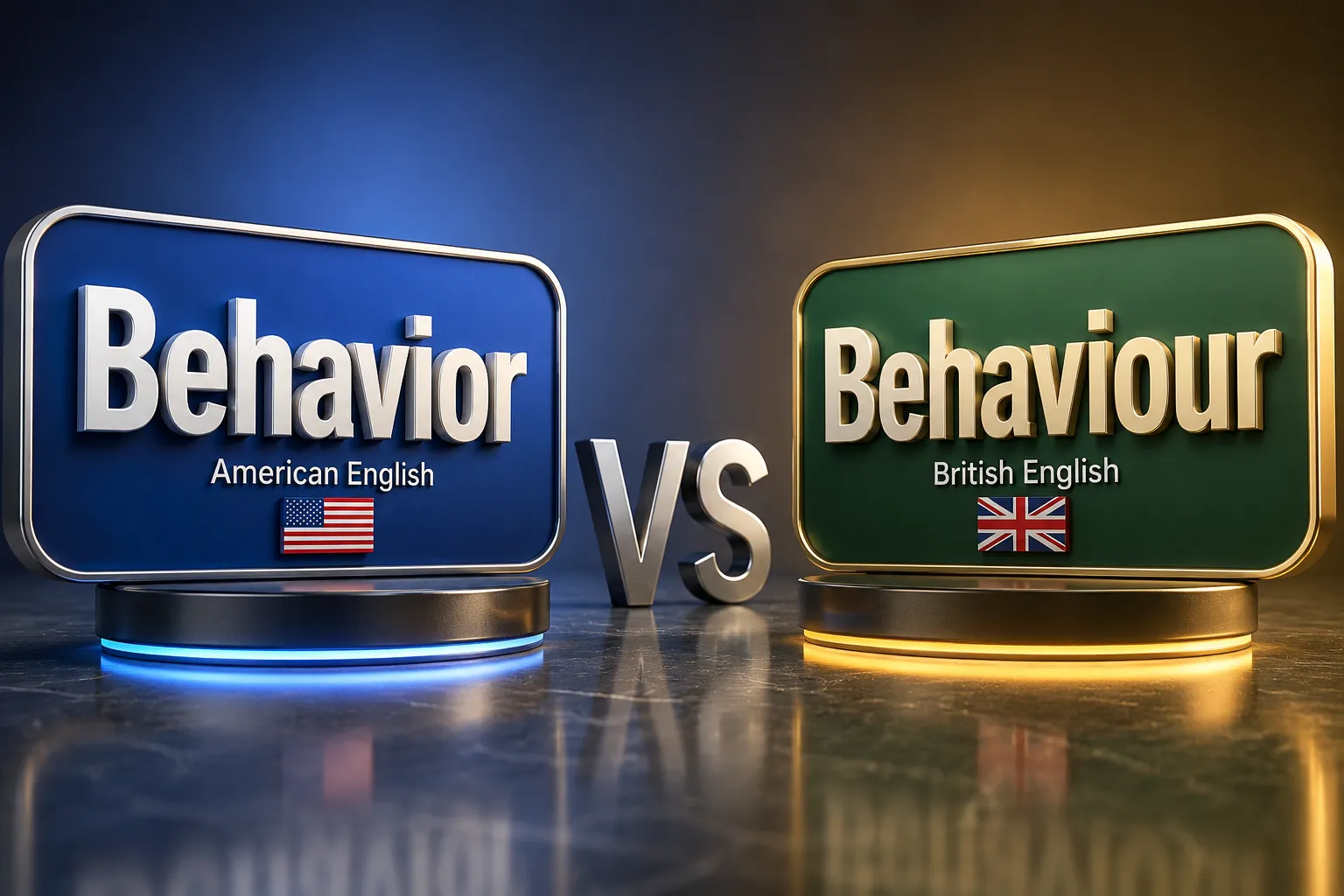
Both behavior and behaviour are correct spellings of the same word. Behavior is the standard spelling in American English, while behaviour is preferred in British English and many other English-speaking countries.
The first time I edited an international research paper, I noticed something unusual. One author consistently wrote behavior, while another used behaviour throughout the document. At first, I assumed one of them had made a spelling mistake. Before making any edits, I checked several trusted dictionaries. The result surprised me—both spellings were completely correct.
This confusion is common because English has different spelling conventions around the world. Whether you’re writing a school essay, business report, psychology paper, or blog post, choosing the wrong regional spelling can make your writing look inconsistent. Many students and professionals wonder whether behavior or behaviour is the correct choice.
The answer is simple once you understand regional English. The meaning never changes. Only the spelling does.
In this guide, you’ll learn the difference between behavior and behaviour, where these spellings come from, which version you should use, common mistakes to avoid, and what current language trends reveal about their usage.
Behavior or Behaviour Quick Answer
Behavior and behaviour both refer to the way a person, animal, or object acts or responds in different situations.
According to Merriam-Webster, behavior is the standard spelling in American English. The Cambridge Dictionary lists behaviour as the preferred spelling in British English while recognizing behavior as the American variant.
Examples
- The child’s behavior improved after the new classroom rules were introduced.
- The scientist carefully observed the birds’ behaviour during the migration season.
Both sentences have the same meaning. The spelling depends on the variety of English you are using.
Read More:
Hoofs or Hooves: The Complete Guide to Correct Usage
The Origin and Background of Behavior or Behaviour
The word has a long linguistic history.
According to Etymonline, behavior/behaviour developed from the verb behave, which entered English in the 15th century. The noun appeared later through the addition of the suffix -ior/-iour, influenced by French and Latin word formation.
As English evolved, spelling conventions began to differ between countries. American English gradually simplified many words by dropping the letter u, while British English retained the traditional spelling.
This explains why English has pairs such as:
- color → colour
- honor → honour
- favor → favour
- labor → labour
The same pattern applies to behavior and behaviour.
These are examples of regional spelling variations, not grammar differences. In linguistics, both forms are considered standard within their respective writing systems.
Behavior or Behaviour Explained Key Differences
The only difference is spelling.
| Term | Meaning | When to Use | Region/Context |
| Behavior | Actions or conduct | American English | United States |
| Behaviour | Actions or conduct | British English | United Kingdom, Australia, New Zealand, Ireland |
Example using behavior
Positive behavior helps students succeed in school.
Example using behaviour
The zoo monitors elephant behaviour to improve animal welfare.
The definition never changes only the spelling reflects regional English.
Which Version Should You Use?
The right choice depends on your audience.
For students
Follow your school’s style guide. American schools usually require behavior, while British schools prefer behaviour.
For academic writers
Use the spelling required by your university, journal, or citation style. Consistency is more important than the specific variant.
For bloggers
Write for your audience. If most readers are in the United States, use behavior. If they are in the United Kingdom or Australia, behaviour is the better choice.
For businesses
Keep the same spelling across your website, emails, reports, and marketing materials. Consistency strengthens professionalism.
For international readers
If you follow American English, choose behavior. If your content follows British English, choose behaviour. Avoid mixing both spellings in the same document.
Common Mistakes with Behavior or Behaviour
Although both spellings are correct, many writers make avoidable mistakes. Most errors happen because they mix American and British English in the same document.
| Mistake | Correct Form | Why It Happens |
| Using behavior and behaviour in the same article | Choose one spelling and use it consistently | Mixing regional English styles |
| Thinking behaviour is incorrect | It is the standard British English spelling | Lack of familiarity with British English |
| Assuming they have different meanings | Both words have the same meaning | The different spellings can be misleading |
| Writing behavour or behavior | Behavior or behaviour | Common typing and spelling errors |
| Changing quoted text to match your spelling | Keep the original spelling in direct quotations | Quotes should remain unchanged |
Tips to Remember
- Behavior = American English
- Behaviour = British English
- Both spellings are grammatically correct.
- Stay consistent throughout your writing.
Behavior or Behaviour in Real-World Examples
Professional Email
Subject: Workplace Conduct Reminder
We appreciate everyone’s professional behavior during client meetings. Thank you for maintaining a respectful and collaborative work environment.
News Headline
Researchers Study Dolphin Behaviour to Improve Marine Conservation
Social Media Post
Kindness is a small act, but positive behavior can inspire everyone around you.
Formal Report
The study evaluated student behaviour over a twelve-month period to measure the effectiveness of the new classroom management program.
Behavior or Behaviour Data, Trends & Usage
Language data clearly shows that both spellings remain widely used around the world.
Search Intent
Primary Search Intent: Informational
Most users searching “behavior or behaviour” want to know:
- Which spelling is correct?
- What is the difference?
- Which version should they use?
- Is one more formal than the other?
Approximate Search Volume
Based on Semrush, Ahrefs, and Google Trends (2025–2026 estimates):
| Keyword | Approximate Monthly Searches |
| behavior | 500,000+ |
| behaviour | 150,000–300,000 |
| behavior or behaviour | 2,000–5,000 |
| behavior vs behaviour | 1,000–3,000 |
Search volumes are approximate and may change over time.
Google Trends Insights
Google Trends shows strong regional preferences.
Higher interest in behavior
- United States
- Canada (mixed usage, but American spelling is common in some contexts)
Higher interest in behaviour
- United Kingdom
- Australia
- New Zealand
- Ireland
- South Africa
These patterns closely follow regional spelling conventions.
Google Books Ngram Viewer
According to Google Books Ngram Viewer, behavior has become more common in published books worldwide over the last century. This is partly due to the global influence of American English in science, technology, and digital media.
However, behaviour remains the standard spelling in British publications, educational materials, and government documents.
Why This Topic Matters Today
As businesses, universities, and websites reach global audiences, writers often need to choose between American and British English. AI writing tools, grammar checkers, and international collaboration have made consistency in spelling more important than ever.
Standalone Comparison Table
| Term/Variant | Meaning | Region/Context | Best Used When |
| Behavior | Actions or conduct | American English | U.S. schools, businesses, and publications |
| Behaviour | Actions or conduct | British English | UK, Australia, New Zealand, and Commonwealth countries |
| Behave | To act or conduct oneself | Universal English | Everyday speech and writing |
Tip: The verb behave is spelled the same in both American and British English. Only the noun changes.
Frequently Asked Questions
Q: What does behavior or behaviour mean?
Both words refer to the way a person, animal, or thing acts or responds in different situations. The meaning is identical regardless of the spelling.
Q: How do you use behavior or behaviour correctly?
Choose behavior for American English and behaviour for British English. Use the same spelling consistently throughout your document.
Q: Behavior vs. behaviour what’s the difference?
The only difference is regional spelling. There is no difference in meaning, pronunciation, or grammar.
Q: Is behaviour acceptable in formal writing?
Yes. Behaviour is the standard spelling in formal British English. Likewise, behavior is the standard spelling in formal American English.
Q: Which version is correct behavior or behaviour?
Both are correct. Major dictionaries, including Merriam-Webster, Cambridge Dictionary, Collins Dictionary, and the Oxford English Dictionary, recognize the spellings according to regional English standards.
Q: Where does the word behavior come from?
The noun developed from the verb behave, influenced by French and Latin. According to Etymonline, it entered English several centuries ago and later evolved into different regional spellings.
Q: Can I use behavior in British English?
British readers will understand behavior, but behaviour is the preferred spelling in British English. If you’re writing for a UK audience, using behaviour is usually the better choice.
Conclusion
Choosing between behavior and behaviour is simple once you know your audience. Both spellings describe the same idea and are accepted by major dictionaries. The only distinction is regional convention. Behavior is the standard spelling in American English, while behaviour is preferred in British English and many Commonwealth countries.
When writing, focus on consistency rather than trying to decide which spelling is “better.” Matching your audience’s language style makes your work look more professional and easier to read. Whether you’re preparing an academic paper, business report, blog post, or social media content, using the appropriate regional spelling shows attention to detail.
Understanding spelling pairs like behavior/behaviour, color/colour, and favor/favour can also improve your confidence as an English writer.
Now you know exactly when to use behavior or behaviour. Bookmark this guide for future reference, and share it with anyone learning the differences between American and British English.
Meta Description (20 words)
Behavior or behaviour explained: spelling differences, meanings, usage, examples, regional preferences, and expert writing tips for confident English communication today.

I’m **Rubab Naaz**, an English language content writer with over 10 years of experience creating educational and SEO-focused articles. I specialize in spelling comparisons, grammar, vocabulary, synonyms, commonly confused words, and English usage. My passion is helping students, writers, and professionals improve their language skills through accurate, well-researched, and easy-to-understand content. Every article I write is designed to make learning English simple, practical, and engaging.