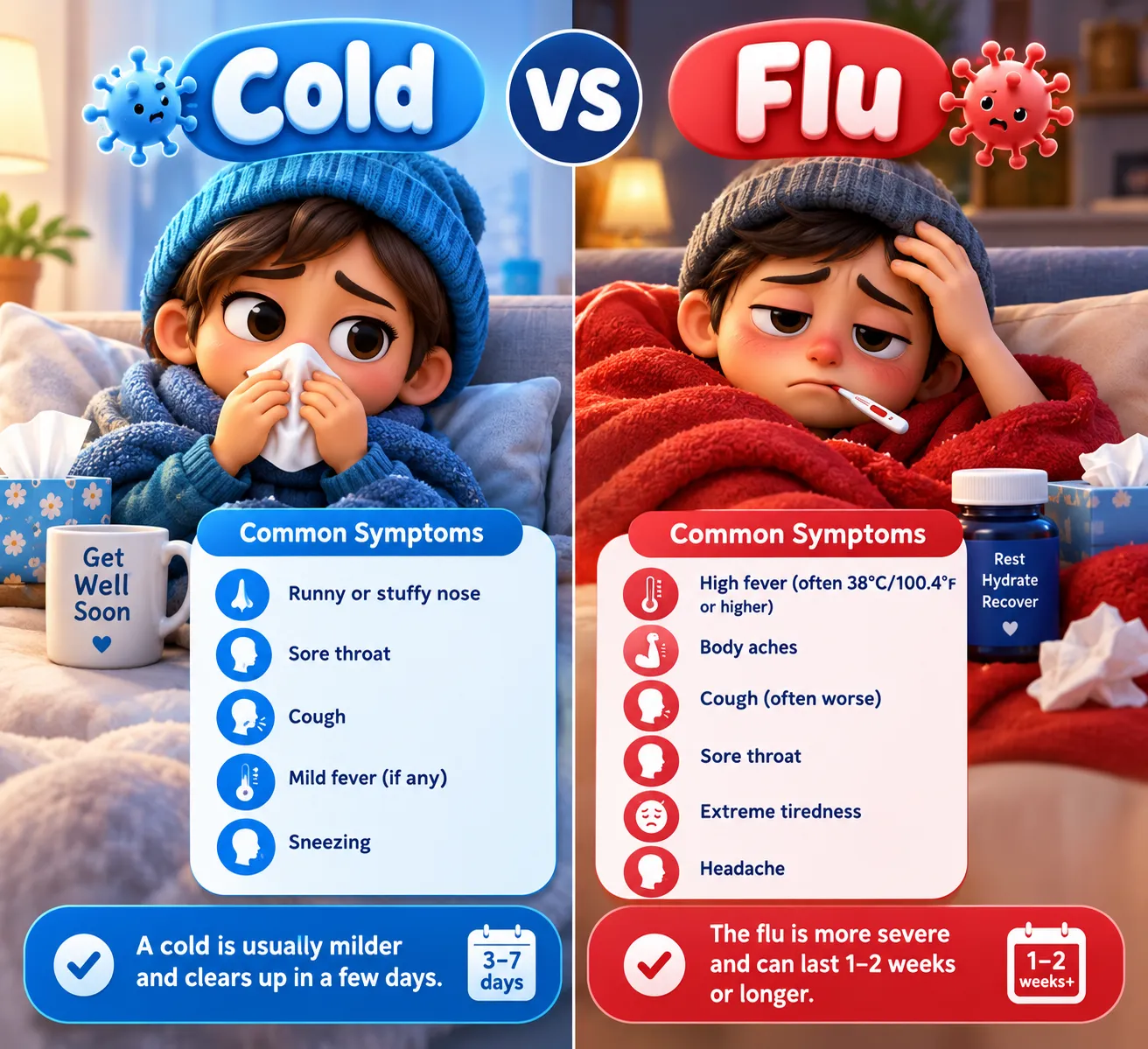
A cold is usually mild and causes a runny nose, sneezing, and a sore throat. The flu often starts suddenly and can cause fever, body aches, chills, and severe tiredness.
I have often come across people who feel confused when they wake up with a sore throat, a stuffy nose, and a heavy head. They wonder whether they have a common cold or the flu. I understand why this can be confusing because both illnesses share many symptoms.
However, there are a few key signs that can help you tell them apart. A cold usually develops slowly, while the flu often starts suddenly and causes stronger symptoms. Still, symptoms alone cannot always tell you which illness you have.
I believe knowing the difference can help you make better choices about rest, home care, and when to seek medical advice. It can also help you protect others, especially young children, older adults, and people with long-term health problems.
In this guide, I will explain the main differences between a cold and the flu in simple terms. You will learn about their symptoms, recovery times, home treatments, and warning signs. I will also explain how COVID-19 can cause similar symptoms and why it is sometimes hard to tell these illnesses apart.
Cold or Flu Quick Answer
A common cold and influenza (the flu) are both contagious illnesses caused by viruses. However, they often affect you in different ways.
- A cold usually causes sneezing, a runny nose, a stuffy nose, and a mild sore throat.
- The flu often causes sudden fever, chills, body aches, headaches, and strong fatigue.
- Both can cause a cough, sore throat, and a blocked nose.
According to the Centers for Disease Control and Prevention (CDC), flu symptoms are often more intense than cold symptoms. Still, a test may be needed to tell which illness you have.
For example, if your nose keeps running but you feel mostly well, you may have a cold. If you suddenly develop chills, muscle pain, and deep tiredness, the flu is another possibility.
The Origin and Background of Cold or Flu
The words cold and flu have different histories, even though people often use them when talking about similar symptoms.
Where does the word “cold” come from?
The word cold comes from Old English cald or ceald, which referred to a low temperature or a lack of warmth. Over time, the word became linked to the illness we call the common cold.
The name can be confusing. Feeling cold or being out in cold weather does not, by itself, cause a common cold. Viruses cause this illness.
The CDC’s guide to the common cold explains that many different respiratory viruses can cause it. Rhinoviruses are among the most common.
Where does the word “flu” come from?
Flu is a shortened form of influenza. The word influenza came into English through Italian and was linked to the idea of an influence affecting health.
Today, influenza refers to an illness caused by influenza viruses. These viruses can affect the nose, throat, and lungs.
This difference matters because a cold and the flu are not simply mild and severe forms of the same illness. They are caused by different viruses and may need different care.
Cold or Flu Explained Key Differences
The best way to compare a cold and the flu is to look at how quickly symptoms begin, how strong they feel, and which parts of your body they affect.
| Symptom | Common Cold | Flu |
| Start of illness | Usually gradual | Often sudden |
| Fever | Uncommon in adults | Common, but not always present |
| Body aches | Usually mild | Often stronger |
| Tiredness | Mild or moderate | Can be severe |
| Sneezing | Common | Sometimes |
| Runny or stuffy nose | Very common | Can occur |
| Headache | Less common | Common |
| Chills | Less common | More common |
| Cough | Common, often mild | Common and may be severe |
| Serious complications | Less common | More likely |
This comparison is based on the CDC’s cold-versus-flu symptom guide. Symptoms vary from person to person.
1. How quickly do symptoms start?
A cold often builds over a day or two. You may first notice a scratchy throat, followed by sneezing and a blocked nose.
The flu can feel very different. You may feel fine in the morning and feel very ill by the afternoon. Fever, chills, aches, and weakness may appear quickly.
2. How severe are the symptoms?
A cold may leave you uncomfortable but still able to do some daily tasks. The flu can leave you too weak to work, study, or carry out normal activities.
However, severity alone cannot confirm which virus you have. Some colds feel quite unpleasant, and some people with flu have mild symptoms.
3. How long do they last?
Most colds improve within about a week, although a cough or runny nose can last longer. The flu often improves within several days to two weeks, but tiredness and a cough may continue.
The CDC notes that many cold symptoms peak within two to three days. You can read more in its common cold overview.
4. Can both cause a fever?
Yes, but fever is more common with flu. Adults with a cold often have no fever or only a mild one.
Do not rule out flu just because you do not have a high temperature. Not everyone with influenza develops a fever.
Which Should You Suspect Based on Your Symptoms?
Use your symptoms as clues, not as a final diagnosis.
- Mostly sneezing and a runny nose: A cold may be more likely.
- Sudden body aches, chills, and heavy fatigue: Flu may be more likely.
- Fever with a cough and sore throat: Either illness is possible.
- Loss of taste or smell, breathing symptoms, or other unusual signs: COVID-19 and other illnesses may also need to be considered.
COVID-19 can look much like a cold or the flu. If you need to know which illness you have, consider testing and seek medical advice when appropriate.
Children, older adults, pregnant people, and people with certain long-term health conditions may face a higher risk of serious flu complications. If you fall into one of these groups and develop flu symptoms, contact a healthcare professional promptly.
Common Mistakes About Cold or Flu
Some common beliefs can make it harder to respond to an illness in the right way.
Mistake 1: Thinking cold weather causes a cold
Incorrect: “I went outside in cold weather, so I caught a cold.”
Correct: A virus causes a common cold. Cold weather itself is not the cause, although seasonal conditions can affect how respiratory viruses spread.
Mistake 2: Assuming every fever means flu
Incorrect: “I have a fever, so it must be the flu.”
Correct: Flu can cause fever, but other infections can do so too. Symptoms alone may not identify the cause.
Mistake 3: Believing antibiotics cure both illnesses
Incorrect: “I should take antibiotics for my cold or flu.”
Correct: Antibiotics treat bacterial infections, not the viruses that cause colds and flu. A healthcare professional may prescribe other treatment when needed.
Mistake 4: Thinking flu always causes a fever
Incorrect: “I do not have a fever, so I cannot have flu.”
Correct: Some people with influenza do not develop a fever. Other symptoms and your risk factors also matter.
Mistake 5: Returning to normal activities too soon
Incorrect: “I feel a little better, so I can ignore the rest of my symptoms.”
Correct: Rest and limit contact with others while you are ill. Return to normal activities when your symptoms are improving overall and you have been fever-free for at least 24 hours without fever-reducing medicine, following CDC guidance. Take extra precautions around others afterward.
Cold or Flu in Real-World Examples
Understanding these illnesses also helps you describe symptoms clearly in everyday writing. Here are four examples of how the terms may appear in different settings.
1. Professional email
Subject: Sick Leave Request
Hi Sarah,
I have developed flu like symptoms, including body aches and a fever. I will rest at home today and seek medical advice if needed.
Thank you for understanding.
2. News headline
Flu Cases Rise as Health Experts Urge People to Take Precautions
This headline uses flu because it refers to influenza, not just a mild cold.
3. Social media post
A runny nose and sore throat can make your day difficult. Rest, drink enough fluids, and take care of yourself. If your symptoms are severe, seek medical advice.
4. Formal report
The patient reported a sudden onset of fever, muscle aches, and fatigue. Further assessment was recommended to determine whether influenza or another respiratory infection was responsible.
These examples show how the words work in daily life. They also remind us that symptoms should be described carefully rather than used to make a firm diagnosis.
Cold or Flu Data, Trends and Usage
People often search for cold or flu when symptoms begin and they want to know what to do next. Reliable health data can help explain why the question matters.
What the health data tells us
According to the CDC’s common cold information, adults in the United States have an average of two to three colds each year, while children often have more. Colds can occur throughout the year, not only during winter.
The CDC also reports that flu symptoms often begin suddenly and that most people recover within a few days to less than two weeks. Some people develop serious complications, including pneumonia.
What about search volume?
Exact monthly search volumes for “cold or flu” vary by country, season, and keyword research tool. I do not have a verified current search-volume figure for this exact phrase, so I will not present an estimate as fact.
For an SEO article, tools such as Google Trends can help compare interest in “cold or flu,” “cold symptoms,” “flu symptoms,” and “cold vs flu.” Google Trends shows relative search interest, not the exact number of searches.
For a useful comparison, check:
- Search intent: Mainly informational. People want to compare symptoms and understand what to do.
- Related keywords: cold vs flu symptoms, common cold treatment, flu symptoms, how long does a cold last, and cold or COVID.
- Seasonal interest: Search interest may change during respiratory virus seasons, so compare the same months across different years.
- Audience needs: Readers want clear symptom comparisons, safe home care advice, and guidance on when to seek help.
The main SEO opportunity is to answer the reader’s immediate question while offering reliable health guidance. Search volume alone does not show whether an article meets that need.
Cold or Flu Standalone Comparison Table
This table adds a third possibility, COVID-19, which can cause symptoms similar to both illnesses.
| Term or Variant | Meaning | Region/Context | Best Used When |
| Common cold | A viral infection of the upper respiratory tract | Worldwide | Symptoms are mainly sneezing, congestion, or a runny nose |
| Influenza (flu) | An illness caused by influenza viruses | Worldwide | Discussing flu symptoms, prevention, testing, or treatment |
| COVID-19 | An illness caused by the SARS-CoV-2 virus | Worldwide | COVID-19 is suspected or needs to be ruled out |
| Flu-like illness | A general description of symptoms that resemble flu | Medical and everyday use | The cause has not yet been confirmed |
| Upper respiratory infection (URI) | An infection affecting areas such as the nose and throat | Medical use | Referring broadly to an infection in the upper airways |
Remember that these terms are not interchangeable. A person may have flu-like symptoms without having influenza. Testing and medical assessment can help identify the cause when needed.
How to Treat a Cold or Flu at Home
Many mild respiratory illnesses improve with time and supportive care. These steps may help you feel more comfortable.
- Rest: Give your body time to recover.
- Drink fluids: Water, soup, and other suitable drinks can help prevent dehydration.
- Ease congestion: Saline nasal spray may help clear a blocked nose.
- Manage discomfort: Ask a pharmacist or healthcare professional which medicine is suitable for your age, symptoms, and health needs.
- Limit contact: Stay home while you are ill and take steps to reduce the spread of infection.
Do not give aspirin to children or teenagers with suspected flu unless a healthcare professional specifically advises it. Follow medicine labels carefully, and check with a professional before combining products.
Can medicine cure the flu?
Prescription antiviral medicines can treat influenza. They work best when started within one or two days after symptoms begin. They may shorten the illness and help prevent complications in some people.
The CDC recommends prompt medical advice for people at higher risk of serious flu complications. Antibiotics do not treat influenza or the viruses that cause common colds.
When Should You Seek Medical Help?
Do not rely on a symptom comparison alone if you feel very unwell.
Seek urgent medical care if you or someone you care for has:
- Trouble breathing or shortness of breath.
- Persistent chest pain or pressure.
- New confusion, seizures, or difficulty waking.
- Severe weakness or signs of dehydration.
- Symptoms that improve but then return or become worse.
Seek prompt advice if you are at higher risk of complications, including during pregnancy, at an older age, or with certain long-term health conditions. Young children may also need early assessment.
A cold can sometimes lead to complications, and flu can be serious even in people who are usually healthy. If a symptom feels severe or worrying, get medical advice rather than waiting for it to pass.
Frequently Asked Questions
Q: What is the main difference between a cold and the flu?
A: A cold usually affects your nose and throat and often develops slowly. Flu tends to begin suddenly and can cause stronger body aches, fever, chills, and fatigue. However, symptoms can overlap.
Q: Can you have the flu without a fever?
A: Yes. Some people with influenza do not develop a fever. A lack of fever does not rule out the flu, especially if other symptoms are present.
Q: Is a cold less serious than the flu?
A: Usually, yes. Most colds are mild, while influenza has a greater risk of serious complications. However, either illness can sometimes cause problems, especially in people at higher risk.
Q: How can I tell whether I have a cold, flu, or COVID-19?
A: Symptoms alone may not provide a clear answer because these illnesses share many signs. Testing and advice from a healthcare professional can help you determine the cause.
Q: How many days does a cold or flu last?
A: Most colds improve within about a week, though some symptoms last longer. Many people recover from flu within a few days to two weeks, but fatigue and coughing may continue.
Q: Should I take antibiotics for a cold or flu?
A: No, not for the viral infection itself. Antibiotics treat bacterial infections, and unnecessary use can cause side effects. A healthcare professional can assess whether another problem needs treatment.
Q: Can I go to work or school with a cold or flu?
A: It is best to stay home while you are ill and avoid spreading the infection. Resume normal activities when your symptoms are improving overall and you have been fever-free for at least 24 hours without fever-reducing medicine. Take extra precautions for the next five days.
Conclusion: Cold or Flu Know the Difference
Knowing the difference between a cold and the flu can help you make better choices when you start to feel sick. A cold often brings sneezing, a runny nose, and a sore throat. The flu is more likely to cause sudden fever, chills, body aches, and deep tiredness.
Still, symptoms are only clues. COVID-19 and other respiratory infections can cause similar problems, so testing may be useful when the answer matters.
Rest, drink enough fluids, and take steps to protect others while you recover. Avoid using antibiotics unless a healthcare professional identifies a reason to take them. If you are at higher risk of flu complications, seek medical advice early because antiviral treatment works best when started promptly.
Most importantly, do not ignore severe or worsening symptoms. Getting help at the right time can make a real difference.
Now you know the key differences between a cold and the flu. Bookmark this guide, share it with someone who needs it, and use reliable health advice when symptoms appear.
Read More:
Weather or Whether: Easy Guide to the Difference

I’m an English language educator and SEO content writer having experience creating clear, accurate, and engaging English learning content. I specialize in spelling differences, grammar, vocabulary, synonyms, commonly confused words, and English usage. My goal is to publish well-researched, easy-to-understand articles that help students, writers, educators, and professionals improve their English with confidence through practical explanations and real-world examples.