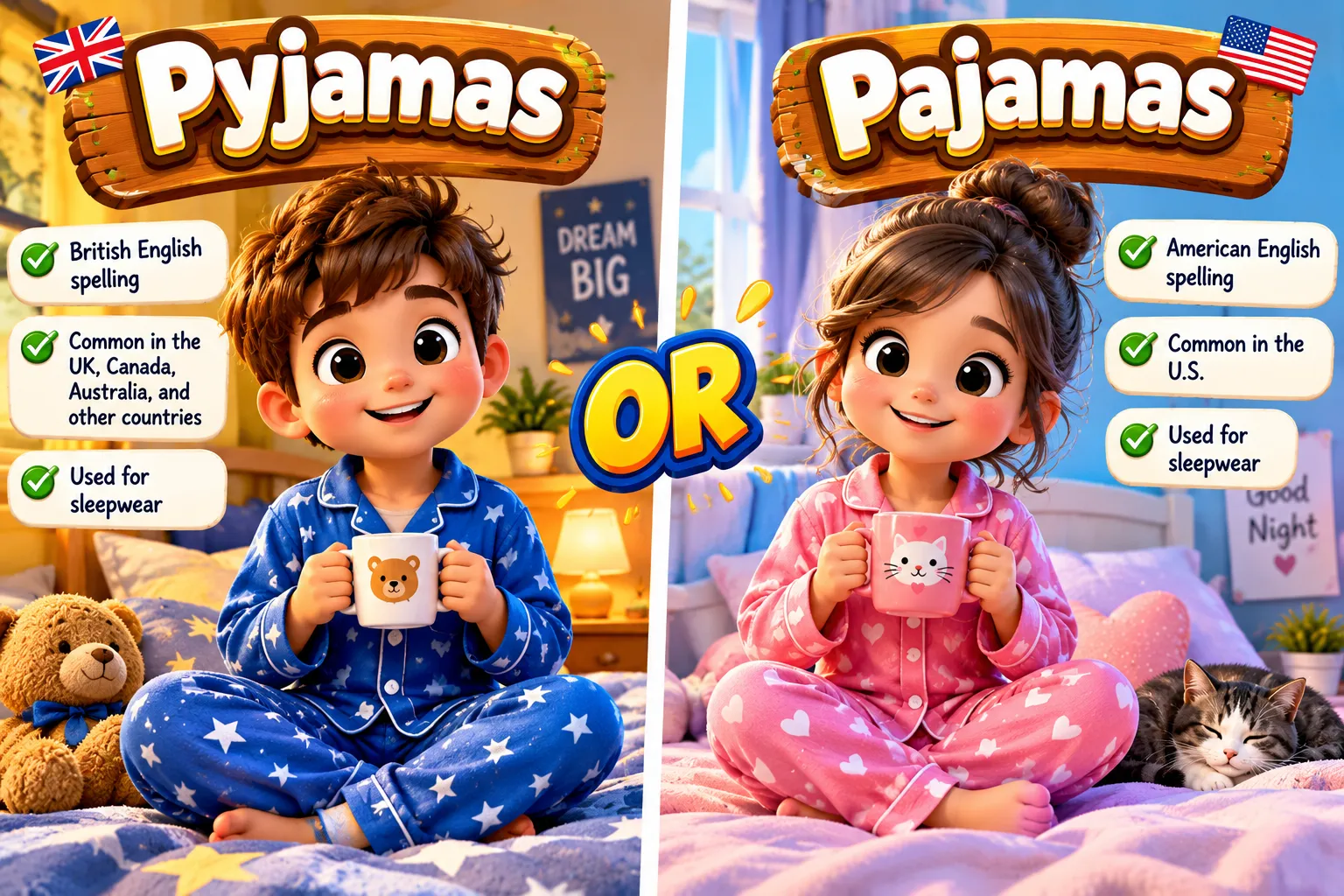
Pyjamas and pajamas are both correct spellings for clothes worn in bed. Pyjamas is mainly British English, while pajamas is the standard American English spelling.
I have often paused over pyjamas and pajamas when writing for an international audience. The difference is only one letter, but that small change can make you wonder whether one spelling is wrong. I have also noticed the same issue when reading books, websites, and messages from people in different English-speaking countries.
The good news is simple: both spellings are correct.
The choice depends mainly on the variety of English you are using. British English normally uses pyjamas, while American English uses pajamas. Cambridge Dictionary lists pyjamas as the UK form and pajamas as the US form.
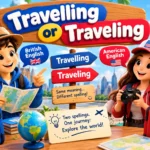
This difference is similar to other spelling pairs such as colour/color, favourite/favorite, and travelling/traveling. The meaning stays the same, but regional spelling rules change.
In this guide, I will explain pyjamas or pajamas, show which version to use in different situations, look at the word’s history, and give you simple examples so you can choose the right spelling with confidence.
Pyjamas or Pajamas Quick Answer
Pyjamas and pajamas mean the same thing: loose clothes worn for sleeping, usually made up of a top and trousers or pants. The main difference is regional spelling.
- Pyjamas → British English
- Pajamas → American English
- Pyjama → singular form in British English
- Pajama → singular form in American English
- PJs / PJ’s → informal shortened forms
For example:
I bought a new pair of pyjamas for winter.
In American English, the same sentence would normally use:
I bought a new pair of pajamas for winter.
The meaning does not change. Only the spelling and, in some varieties, the pronunciation can differ. Cambridge Dictionary identifies pajamas as the US spelling of pyjamas.
The Origin and Background of Pyjamas
The history of pyjamas/pajamas is more interesting than the spelling difference suggests.
According to the Online Etymology Dictionary, the word entered English through Hindi pajama and probably comes from the Persian paejamah, meaning roughly “leg clothing.” The word originally referred to loose trousers tied around the waist.
The word began appearing in English in forms such as pai jamahs around 1800. Over time, its meaning became closely connected with clothing worn for sleep.
Etymonline records the modern American spelling pajamas by 1845 and notes that British English tends to use pyjamas.
So, the y in pyjamas is not a sign that the word is more correct. It is simply part of the spelling that became standard in British English.
This is a good example of linguistic variation. English has several standard forms that differ by region. The same thing happens with words such as centre/center, organise/organize, and licence/license.
Pyjamas or Pajamas Explained Key Differences
The biggest difference is regional context, not meaning.
| Term | Meaning | When to Use | Region/Context |
| Pyjamas | Clothes worn for sleeping | Use in British-style English | UK and other varieties influenced by British English |
| Pajamas | Clothes worn for sleeping | Use in American-style English | United States |
| Pyjama | Singular form | Use for one item or as an adjective | Mainly British English |
| Pajama | Singular form | Use for one item or as an adjective | Mainly American English |
| PJs | Informal short form | Use in casual speech and writing | Common in informal English |
Cambridge Dictionary gives pyjamas as the UK spelling and pajamas as the US spelling. It also records pyjama and pajama as singular forms and adjectives.
British English
British English normally uses pyjamas.
Examples:
- She bought a new pair of pyjamas.
- My pyjamas are made of cotton.
- He changed into his pyjama trousers.
American English
American English normally uses pajamas.
Examples:
- I need to pack my pajamas.
- These pajamas are very comfortable.
- She bought a new pajama top.
The choice should match the variety of English used in the rest of your writing.
Which Version Should You Use?
Your audience should guide your choice.
For British English → use pyjamas
Choose pyjamas if you are writing for readers in the UK or following British English spelling conventions.
This is also a natural choice in many contexts influenced by British English.
For American English → use pajamas
Choose pajamas when your writing follows American English.
This spelling is standard in American dictionaries and publications.
For international writing → choose one style and stay consistent
If your audience is global, either spelling can work. The key is consistency.
Do not switch between pyjamas and pajamas without a reason.
For example, if your article follows British English, write:
Pyjamas are comfortable clothes for sleeping.
Do not suddenly change to:
Pajamas are available in several colors.
Consistency makes your writing look more polished.
Common Mistakes with Pyjamas or Pajamas
| Common Mistake | Better Form | Why? |
| Pajamas in a British-English article | Pyjamas | Match British spelling |
| Pyjamas in an American-English article | Pajamas | Match American spelling |
| “I bought a pyjama.” | “I bought a pair of pyjamas.” | The sleepwear is normally referred to in the plural |
| “My pajamas is new.” | “My pajamas are new.” | Pajamas is normally treated as a plural noun |
| Mixing both spellings in one article | Pick one spelling | Keep regional style consistent |
One common grammar point deserves extra attention. Pyjamas and pajamas are normally plural nouns. That is why you commonly see phrases such as a pair of pyjamas or a pair of pajamas.
Cambridge Dictionary labels pyjamas and pajamas as plural nouns.
Pyjamas or Pajamas in Real-World Examples
Professional email
Please remember to pack warm pyjamas for the overnight school trip.
News headline
Pajamas Become a Popular Choice for Comfortable Homewear
Social media post
Nothing beats putting on fresh PJs after a long day!
Formal report
Participants were asked to bring suitable sleepwear, including comfortable pyjamas, for the residential program.
Notice that PJs is much more informal than pyjamas or pajamas. In formal writing, sleepwear may be a better general term.
Pyjamas or Pajamas Data, Trends & Usage
The search intent behind “pyjamas or pajamas” is mainly informational. People who search this phrase usually want to know whether the two spellings have different meanings or which spelling is correct.
Search volume
Exact monthly search-volume numbers for “pyjamas” and “pajamas” vary by SEO platform, country, and month. Google Trends reports relative search interest, not a fixed worldwide monthly search count.
Because a reliable current Ahrefs or Semrush dataset is not available here, it would be misleading to invent exact monthly figures.
Regional spelling pattern
The dictionary evidence is much clearer.
Cambridge Dictionary identifies pyjamas as the UK form and pajamas as the US form.
That makes regional audience targeting especially useful for this keyword.
Search intent
The phrase “pyjamas or pajamas” is primarily:
- Informational — users want to learn the spelling difference.
- Language-learning focused — learners want to know which form is correct.
- Regional — users may be checking British versus American English.
This makes the topic useful for English learners, teachers, editors, bloggers, and writers who work with international audiences.
Standalone Comparison: Pyjamas vs. Pajamas
| Term/Variant | Meaning | Region/Context | Best Used When |
| Pyjamas | Night clothes | British English | Writing for UK readers |
| Pajamas | Night clothes | American English | Writing for US readers |
| Pyjama | Singular or adjective form | British English | “pyjama top,” “a pyjama” in specific contexts |
| Pajama | Singular or adjective form | American English | “pajama top,” “pajama set” |
| PJs | Short informal form | Casual English | Texts, social media, relaxed conversation |
| Sleepwear | General term for clothes worn to sleep | International/formal contexts | When you want a broader or neutral term |
This table shows an important edge case: sleepwear is not simply another spelling of pyjamas. It is a broader term that can include nightgowns, robes, sleep shirts, and other clothing used for sleeping.
FAQ: Pyjamas or Pajamas
Q: What does pyjamas mean?
A: Pyjamas means loose clothing worn for sleeping, usually consisting of a top and trousers. It is the standard British English spelling.
Q: Is pajamas or pyjamas correct?
A: Both are correct. Pyjamas is standard in British English, while pajamas is standard in American English.
Q: Which is more correct, pyjamas or pajamas?
A: Neither spelling is more correct in general. Your choice should match the regional English style you are using.
Q: Is pyjamas acceptable in formal writing?
A: Yes. Pyjamas is a standard dictionary word and is suitable for formal writing when British English is being used.
Q: Why do Americans spell it pajamas?
A: American English uses pajamas as the standard spelling. The form became established in American English by the 19th century.
Q: Where does the word pyjamas come from?
A: The word came into English through Hindi and is probably linked to the Persian paejamah, meaning “leg clothing.” Its early English use referred to loose trousers.
Q: Can I use pajamas in British English?
A: Readers will understand it, but pyjamas is the usual British spelling. If you are following British English style, pyjamas is the better choice.
Conclusion
The choice between pyjamas or pajamas is much easier once you know the regional rule. Both words describe the same type of nightwear, and neither spelling is wrong.
Use pyjamas when following British English. Choose pajamas when writing in American English. If you are creating content for a worldwide audience, pick one spelling based on your chosen style guide and use it consistently.
The word itself has an interesting history. It entered English through South Asian usage and can be traced to Hindi and probably Persian. Over time, English developed different regional spellings, with pyjamas becoming common in British English and pajamas becoming standard in American English.
You also do not need to worry about the meaning changing. Pyjamas and pajamas mean the same thing.
Once you remember British = pyjamas and American = pajamas, this spelling choice becomes simple.
Bookmark this guide so you never second-guess pyjamas or pajamas again.
Read More:
Alligator or Crocodile: Easy Guide to the Differences

I specialize in English grammar, spelling, word choice, and language usage. My content is based on research from grammar references, style guides, dictionaries, and real-world usage to ensure it is accurate and practical.
At Spelling Comparison, I write guides that explain why words are confused, how they are used, and which form is correct in context. I also include proofreading tips, examples, and writing advice readers can apply immediately.
My goal is to publish clear, reliable content that helps readers make better writing decisions. Each guide is written for accuracy, clarity, and usefulness in school, work, business, and everyday communication.