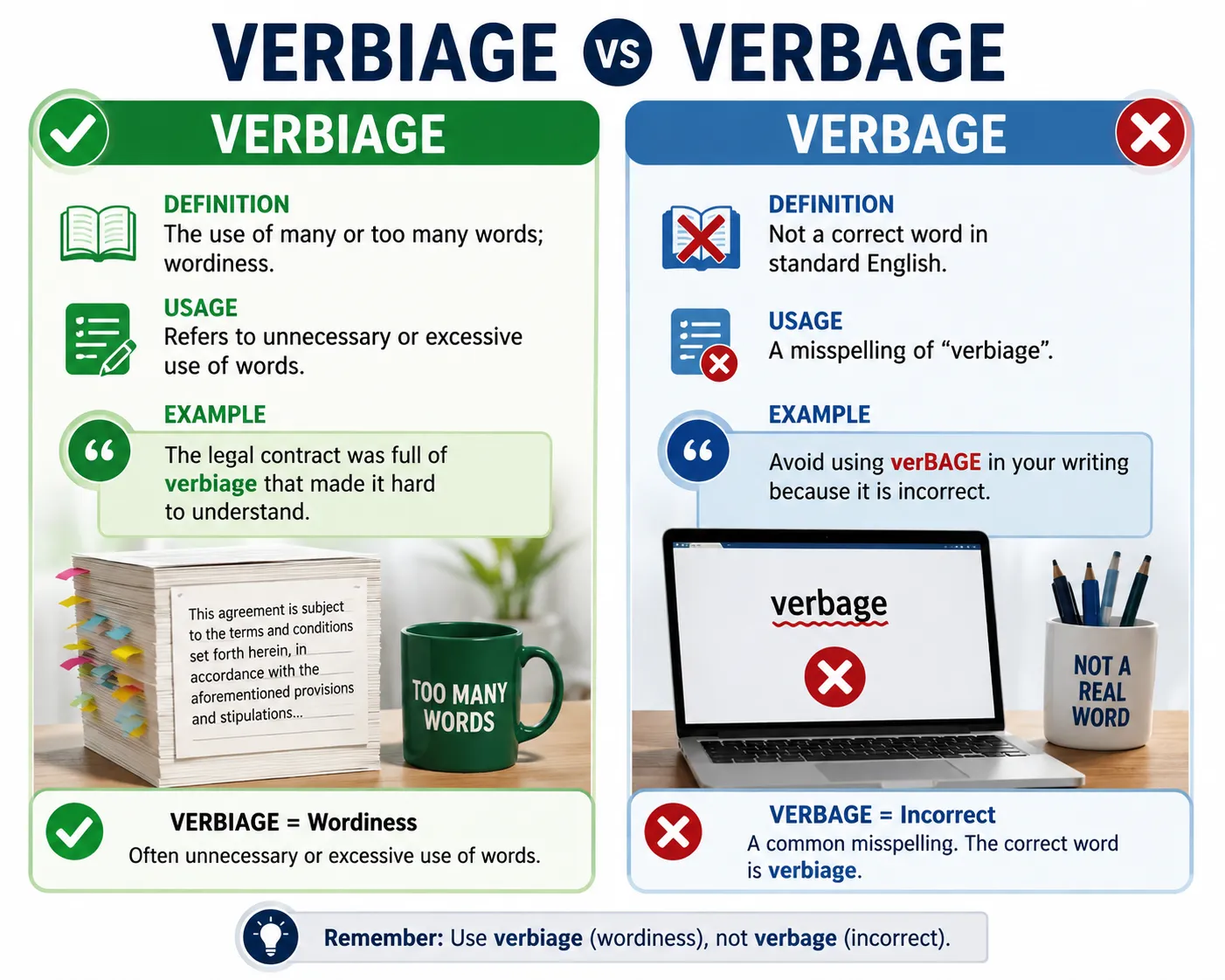
Verbiage is the standard spelling in modern English. Verbage is a common misspelling and should generally be avoided in formal writing.
The first time I edited a business report, I saw the phrase, “The presentation was full of unnecessary verbage.” The meaning was clear, but the spelling looked off, so I checked the dictionary. The correct spelling was verbiage.
Many people wonder whether verbiage or verbage is correct because the two words sound almost identical when spoken aloud. Since English spelling does not always match pronunciation perfectly, it is easy to see why this mistake happens so often.
The good news is that the rule is simple. Verbiage is the correct spelling, and verbage is not standard English. Once you know the difference, you’ll be able to use the word confidently in essays, emails, reports, and everyday writing.
In this guide, you’ll learn the difference between verbiage and verbage, where the word comes from, how to use it correctly, common mistakes to avoid, and real-world examples.
Verbiage or Verbage – Quick Answer
Use verbiage in standard English.
Avoid verbage, which is a misspelling.
Simple examples
- The report was filled with unnecessary verbiage.
- Please remove the extra verbiage from the contract.
- The word verbage is incorrect in formal writing.
In modern English, verbiage is the only accepted standard spelling.
The Origin and Background of Verbiage or Verbage
The word verbiage comes from the root verb, which is related to words, language, and expression. Over time, verbiage came to mean either:
- an excessive use of words
- the style or manner of wording something
- technical or specialized language in some contexts
Because the word is pronounced with a soft middle sound, many speakers mistakenly write verbage instead of verbiage. This spelling error is common, especially in informal writing, but it is not considered correct in standard English.
Today, verbiage is widely used in business, academic, legal, and editorial writing. It often carries a negative meaning when referring to wordiness or unnecessary language.
Verbiage or Verbage Explained Key Differences
The difference is mainly about correct spelling, not meaning.
| Term | Meaning | When to Use | Region/Context |
| Verbiage | Wordiness, wording, or language used in a text | Use in standard English | Worldwide |
| Verbage | Misspelling of verbiage | Avoid in formal writing | Nonstandard |
Examples of Verbiage
- The contract contains too much verbiage.
- Her speech was clear and free of unnecessary verbiage.
- The manual uses technical verbiage that may confuse beginners.
Examples of Verbage
- The sentence contains verbage.
- This spelling is incorrect: verbage.
- Many writers accidentally type verbage instead of verbiage.
Which Version Should You Use?
The answer is straightforward.
For students
Always use verbiage in essays, assignments, and exams.
For professionals
Use verbiage in reports, emails, presentations, legal documents, and business writing.
Examples:
- The proposal includes too much verbiage.
- Please simplify the verbiage in this section.
For everyday writing
Use verbiage whenever you need the word. Do not use verbage.
For creative writing
Use verbiage unless you are intentionally showing a misspelling in dialogue or quoting someone exactly as they wrote it.
Common Mistakes with Verbiage or Verbage
| Mistake | Correct Version | Why It Happens |
| Verbage | Verbiage | The word is often misspelled by sound. |
| Too much verbage | Too much verbiage | Standard spelling uses -iage, not -age. |
| The document has a lot of verbage. | The document has a lot of verbiage. | Incorrect spelling in formal writing. |
| Using verbage in a report | Using verbiage in a report | Verbage is nonstandard. |
| Confusing verbiage with verbosity | Confusing verbiage with verbosity | They are related but not identical. |
Verbiage or Verbage in Real-World Examples
Professional Email
“Please reduce the verbiage in the final draft so the message is easier to read.”
News Headline
“Officials Criticize the Policy’s Dense Verbiage“
Social Media Post
“I love the idea, but the verbiage in this contract is way too complicated.”
Formal Report
“The training manual contains technical verbiage that may require simplification for new employees.”
Verbiage or Verbage Data, Trends & Usage
Many people search for verbiage or verbage because the pronunciation can be misleading and the spelling is easy to confuse.
Most common search intent
- Informational
- Spelling help
- English usage
- Grammar guidance
- Vocabulary clarification
- Writing improvement
Regions with high interest
- United States
- United Kingdom
- Canada
- Australia
- India
Why this topic matters now
Clear writing matters in business, education, law, and online communication. Using the correct spelling verbiage helps your writing look polished and professional, while avoiding verbage prevents a common spelling mistake.
Comparison Table
| Term/Variant | Meaning | Region/Context | Best Used When |
| Verbiage | Wordiness, wording, or language used in writing | Worldwide | Standard English writing |
| Verbage | Misspelling of verbiage | Nonstandard | Avoid in formal writing |
| Verbosity | Excessive wordiness | Worldwide | When referring to too many words |
| Wording | The choice of words used | Worldwide | When discussing phrasing or expression |
Frequently Asked Questions
Q: What does verbiage mean?
A: Verbiage refers to the words used in a piece of writing or speech. It often means excessive or unnecessary wording.
Q: What does verbage mean?
A: Verbage is a misspelling of verbiage and is not standard English.
Q: Verbiage vs verbage what’s the difference?
A: Verbiage is the correct spelling. Verbage is incorrect.
Q: Is verbage correct in formal writing?
A: No. In formal, academic, and professional writing, verbiage is the correct form.
Q: Is verbiage correct in formal writing?
A: Yes. Verbiage is the standard spelling and is widely accepted in formal writing.
Q: Which version is correct verbiage or verbage?
A: Verbiage is correct. Verbage is a common spelling error.
Q: Why do people spell verbiage as verbage?
A: Because the pronunciation sounds similar, many writers assume the middle sound should be spelled with -a- instead of -i-.
Q: Is verbiage always negative?
A: Not always. It can mean wording in general, but it often has a negative tone when referring to unnecessary wordiness.
Q: What is a simpler word for verbiage?
A: Depending on the context, you can use wording, language, phrasing, or verbosity.
Q: Which spelling is better for SEO?
A: Verbiage is the better choice because it is the standard spelling and the form most users search for.
Conclusion
Choosing between verbiage or verbage is easy once you know the rule. Verbiage is the correct and standard spelling in modern English, while verbage is a common misspelling that should be avoided in formal writing.
Remember these key points:
- Verbiage is correct.
- Verbage is incorrect.
- Use verbiage in essays, emails, reports, and professional writing.
- The word often refers to unnecessary wording or overly complex language.
- Staying consistent with standard spelling makes your writing clearer and more credible.
With this simple rule, you’ll never second-guess the spelling again. Bookmark this guide so you always remember the difference between “verbiage” and “verbage,” and share it with anyone learning English spelling or improving their writing.
Read More:
Gage or Gauge: The Complete Guide to the Correct Spelling

I’m **Rubab Naaz**, an English language content writer with over 10 years of experience creating educational and SEO-focused articles. I specialize in spelling comparisons, grammar, vocabulary, synonyms, commonly confused words, and English usage. My passion is helping students, writers, and professionals improve their language skills through accurate, well-researched, and easy-to-understand content. Every article I write is designed to make learning English simple, practical, and engaging.