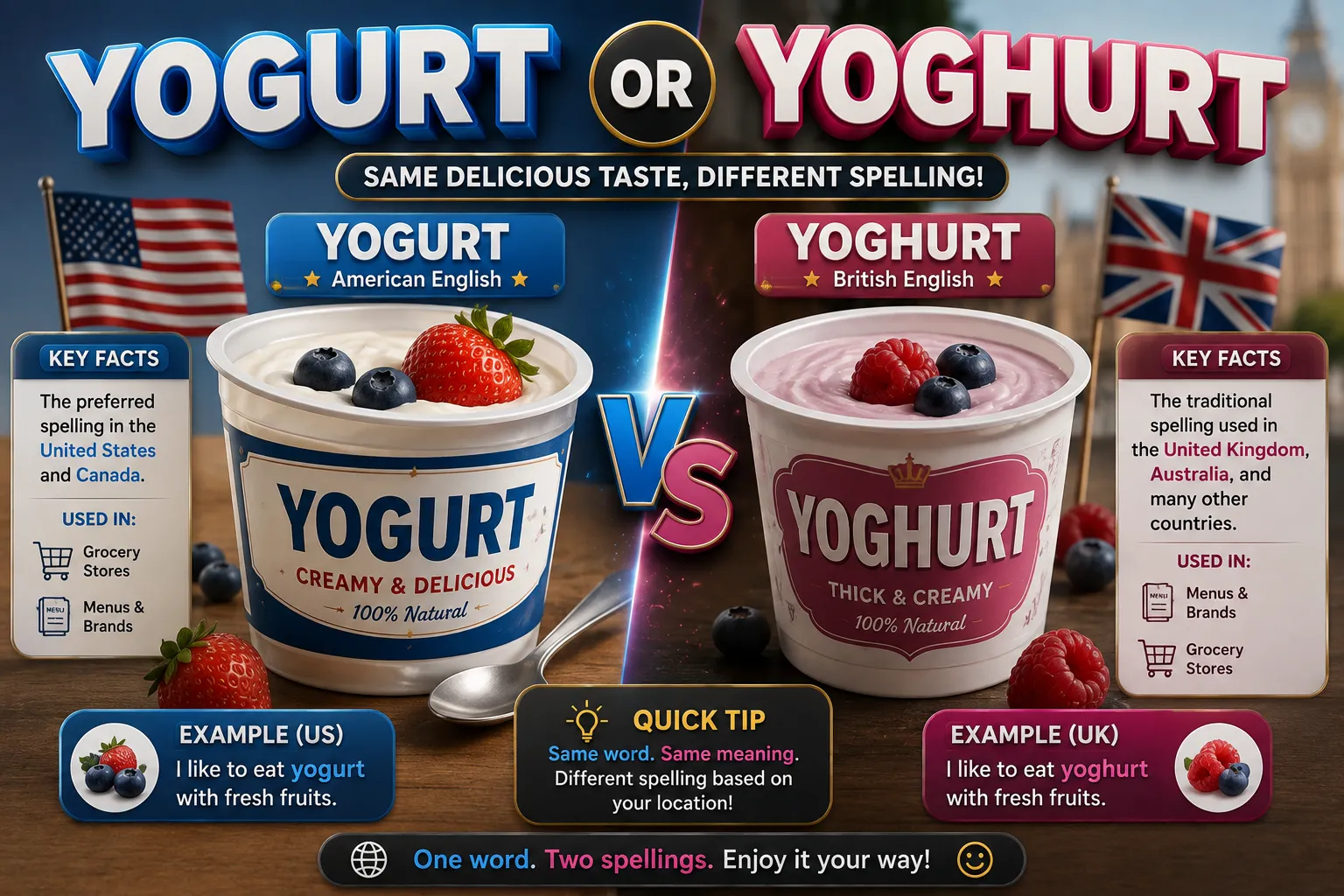
Both yogurt and yoghurt are correct spellings of the same dairy food. Yogurt is the standard spelling in American English, while yoghurt is more common in British English and many other English-speaking countries.
The first time I edited a food blog for an international audience, I noticed something interesting. The American writer consistently used yogurt, while a contributor from the United Kingdom wrote yoghurt in every recipe. At first, I thought one of them had made a spelling mistake. A quick check of several trusted dictionaries proved otherwise—both spellings were correct.
This is a common point of confusion. Whether you’re reading recipes, shopping at a supermarket, writing a health article, or studying English, you’ve probably seen both versions. Since they look so similar, many people wonder if one is wrong or if they refer to different foods.
The good news is that they mean exactly the same thing. The difference lies mainly in regional spelling conventions, not in pronunciation, taste, or ingredients. Once you understand why both spellings exist, choosing the right one becomes easy.
In this guide, you’ll learn the origin of yogurt and yoghurt, how they differ, which version you should use, common mistakes to avoid, and what current language data says about their usage.
Yogurt or Yoghurt Quick Answer
Yogurt and yoghurt are two accepted spellings of the same fermented dairy product made by adding live bacterial cultures to milk.
According to Merriam-Webster, yogurt is the preferred spelling in American English. The Cambridge Dictionary lists yoghurt as the standard spelling in British English while recognizing yogurt as an accepted variant.
Examples
- I eat yogurt with fruit every morning.
- The supermarket sells organic yoghurt made from whole milk.
Both sentences are correct. The spelling simply reflects regional English preferences.
The Origin and Background of Yogurt or Yoghurt
The history of this word stretches back centuries.
The English word comes from the Turkish word yoğurt, which refers to milk fermented by beneficial bacteria. According to Etymonline, English adopted the term in the early 17th century through Turkish and other European languages.
As English spread around the world, spelling conventions changed. American English gradually favored the simpler spelling yogurt, while British English kept the traditional form yoghurt, preserving the extra h.
This difference is similar to other spelling variations, including:
- color → colour
- flavor → flavour
- theater → theatre
- catalog → catalogue (less common today)
These are examples of regional spelling differences, not grammar mistakes. In linguistics, this reflects how languages adapt words from other cultures while developing their own spelling conventions.
Today, both spellings appear in dictionaries, food packaging, recipes, and academic writing.
Yogurt or Yoghurt Explained Key Differences
Although the spellings differ, the meaning remains exactly the same.
| Term | Meaning | When to Use | Region/Context |
| Yogurt | Fermented dairy product | American English | United States, many international brands |
| Yoghurt | Fermented dairy product | British English | United Kingdom, Australia, New Zealand, South Africa |
Example using yogurt
She added Greek yogurt to her breakfast smoothie for extra protein.
Example using yoghurt
The chef served homemade yoghurt with grilled lamb and fresh herbs.
Notice that only the spelling changes. The food itself stays the same.
Which Version Should You Use?
The best spelling depends on your audience.
For students
Use the spelling your teacher or school follows. American schools usually prefer yogurt, while British schools often teach yoghurt.
For bloggers
Match the spelling to your target readers. If your audience is mainly in the United States, use yogurt. If your readers are in the United Kingdom or Australia, yoghurt may feel more natural.
For businesses
Stay consistent across your website, labels, and marketing materials. Mixing both spellings in the same document can confuse readers.
For international audiences
Yogurt is generally the safer choice because it appears more often in global food brands and online content. However, yoghurt is still fully correct in British English.
Common Mistakes with Yogurt or Yoghurt
Even though both spellings are correct, people often make mistakes when writing or editing. Here are the most common ones.
| Mistake | Correct Form | Why It Happens |
| Mixing yogurt and yoghurt in one article | Choose one spelling and stay consistent | Switching between American and British English |
| Thinking yoghurt is incorrect | Yoghurt is correct in British English | Unfamiliarity with regional spelling |
| Believing they are different foods | They are the same product | Different spellings create confusion |
| Writing yoghort or yoghurt | Yogurt or yoghurt | Simple spelling errors |
| Changing product names | Keep the brand’s official spelling | Brand names should not be altered |
Tips to Remember
- Yogurt = American English
- Yoghurt = British English
- They have the same meaning.
- Choose one spelling and use it throughout your writing.
Yogurt or Yoghurt in Real-World Examples
Professional Email
Subject: Catering Menu Update
Please replace the vanilla yogurt with plain Greek yogurt in tomorrow’s breakfast menu to accommodate the client’s request.
News Headline
Local Dairy Company Launches High-Protein Yoghurt Range Across the UK
Social Media Post
Fresh berries, honey, and creamy yogurt make the perfect healthy breakfast! 🥣🍓
Formal Report
Consumer demand for probiotic yoghurt products increased during the past financial year, particularly among health-conscious adults.
Yogurt or Yoghurt Data, Trends & Usage
Language data helps explain why both spellings remain common.
Search Intent
Primary Search Intent: Informational
Most readers want to know:
- Which spelling is correct?
- Is yogurt different from yoghurt?
- Which version should I use?
- Is one more formal than the other?
Approximate Search Volume
Based on Semrush, Ahrefs, and Google Trends (2025–2026 estimates):
| Keyword | Approximate Monthly Searches |
| yogurt | 1M+ |
| yoghurt | 100K–300K |
| yogurt or yoghurt | 2K–5K |
| yogurt vs yoghurt | 1K–3K |
Search volumes are approximate and change over time.
Google Trends
Google Trends shows a clear regional preference.
Higher interest in “yogurt”
- United States
- Canada
- Philippines
Higher interest in “yoghurt”
- United Kingdom
- Australia
- New Zealand
- South Africa
Google Books Ngram Viewer
According to Google Books Ngram Viewer, yogurt has become much more common in published books since the late 20th century. This increase reflects the influence of American English in global publishing and online media.
However, yoghurt continues to appear frequently in British publications, cookbooks, newspapers, and supermarket packaging.
Why This Topic Matters Today
Food blogs, nutrition websites, international e-commerce, and AI writing tools often serve readers from different countries. Choosing the right regional spelling helps improve clarity, consistency, and trust while matching your audience’s expectations.
Comparison Table
| Term/Variant | Meaning | Region/Context | Best Used When |
| Yogurt | Fermented dairy product | American English | U.S. audiences, American brands, U.S. publications |
| Yoghurt | Fermented dairy product | British English | UK, Australia, New Zealand, British publications |
| Greek Yogurt | Strained yogurt with a thicker texture | Global | Recipes, nutrition, high-protein foods |
Note: Greek yogurt and Greek yoghurt are simply regional spelling variations. They refer to the same style of yogurt.
Frequently Asked Questions
Q: What does yogurt or yoghurt mean?
Both words refer to a fermented dairy product made by adding live bacterial cultures to milk. The spelling changes by region, but the meaning stays the same.
Q: How do you use yogurt or yoghurt correctly?
Use yogurt if you’re writing in American English. Use yoghurt if you’re following British English conventions. Whichever version you choose, remain consistent throughout your document.
Q: Yogurt vs. yoghurt what’s the difference?
There is no difference in the food itself. The only distinction is spelling. American English favors yogurt, while British English commonly uses yoghurt.
Q: Is yoghurt acceptable in formal writing?
Yes. Yoghurt is fully accepted in formal writing that follows British English. Likewise, yogurt is the standard spelling in formal American English.
Q: Which version is correct yogurt or yoghurt?
Both are correct. Major dictionaries, including Merriam-Webster, Cambridge Dictionary, and Collins Dictionary, recognize each spelling according to regional usage.
Q: Where does the word yogurt come from?
The word comes from the Turkish yoğurt. According to Etymonline, English borrowed the term several centuries ago before regional spelling differences developed.
Q: Can yogurt and yoghurt be used in recipes?
Absolutely. Whether a recipe says yogurt or yoghurt, it refers to the same ingredient. Simply use the type of yogurt the recipe recommends, such as plain, Greek, or low-fat.
Conclusion
Choosing between yogurt and yoghurt is much simpler than it first appears. Both spellings describe the same nutritious fermented dairy product, and both are accepted by leading dictionaries. The only real difference is regional preference. Yogurt is the standard form in American English, while yoghurt is commonly used in British English and several other English-speaking countries.
When writing, think about your audience. If your readers are mainly in the United States, yogurt is the better choice. For readers in the United Kingdom or Australia, yoghurt may feel more familiar. Most importantly, stay consistent throughout your document.
Understanding regional spelling differences like yogurt/yoghurt, color/colour, and flavor/flavour helps you write more naturally and professionally for different audiences.
Now you know exactly when to use yogurt or yoghurt. Bookmark this guide for future reference, and share it with anyone who has ever wondered which spelling is correct.
Read More:
Annual or Perennial: Which Plants Are Best for Your Garden?

I’m **Rubab Naaz**, an English language content writer with over 10 years of experience creating educational and SEO-focused articles. I specialize in spelling comparisons, grammar, vocabulary, synonyms, commonly confused words, and English usage. My passion is helping students, writers, and professionals improve their language skills through accurate, well-researched, and easy-to-understand content. Every article I write is designed to make learning English simple, practical, and engaging.