Allergies are caused by your immune system reacting to harmless triggers like pollen or dust, while a cold is a viral infection. Allergies are not contagious; colds are.
Have you ever woken up with a runny nose and started wondering, “Is this allergies or a cold?” I’ve had that same question many times, especially during spring when pollen is everywhere. One year, I thought I had a stubborn cold for nearly two weeks. It turned out to be seasonal allergies. Once I knew the difference, I treated it correctly and felt much better.
The problem is that allergies and colds share many of the same symptoms. Both can cause sneezing, a stuffy nose, and watery eyes. That makes it easy to confuse one with the other. But there are important clues that can help you tell them apart.
This guide explains the key differences in simple language. You’ll learn what causes each condition, how symptoms compare, when to seek medical care, and what treatments work best.
Allergies or Cold Quick Answer
A cold is caused by a virus and usually lasts 7–10 days. Allergies happen when your immune system reacts to allergens such as pollen, dust mites, mold, or pet dander. Allergy symptoms continue as long as you’re exposed to the trigger.
Simple Examples
- You sneeze every spring when flowers bloom → Likely allergies
- You have a sore throat, mild fever, and symptoms started after someone at work was sick → Likely a cold
The Background: Why People Confuse Allergies and Colds
Both conditions affect your nose and upper airways.
A cold develops after catching a virus from another person.
Allergies happen because your immune system overreacts to harmless substances.
Since both cause sneezing, congestion, and a runny nose, many people mistake one for the other.
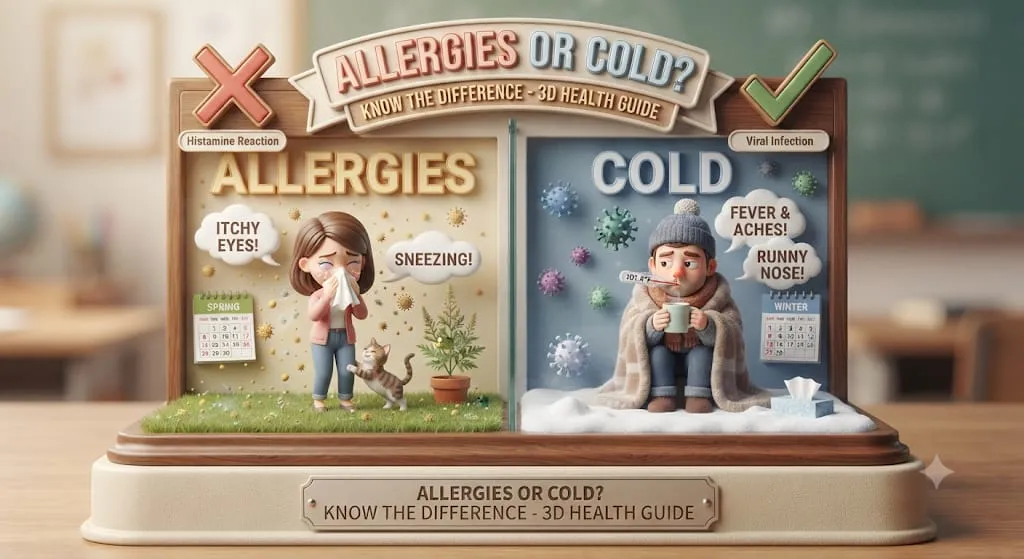
Allergies vs Cold: Key Differences
| Feature | Allergies | Cold |
| Cause | Allergens | Virus |
| Contagious | No | Yes |
| Fever | Rare | Sometimes |
| Itchy eyes | Very common | Uncommon |
| Sneezing | Frequent | Common |
| Runny nose | Clear, watery | May become thicker |
| Body aches | Rare | Mild |
| Duration | As long as exposure continues | Usually 7–10 days |
| Sore throat | Mild from drainage | Common |
Common Allergy Symptoms
- Itchy eyes
- Sneezing
- Clear runny nose
- Nasal congestion
- Itchy nose or throat
Common Cold Symptoms
- Runny or blocked nose
- Sore throat
- Cough
- Fatigue
- Mild fever
- Body aches
Which Is More Likely?
If You Have…
- Itchy eyes
- Sneezing fits
- Symptoms every spring or fall
- No fever
→ Allergies are more likely.
If You Have…
- Fever
- Sore throat
- Body aches
- Cough
- Symptoms lasting about one week
→ A cold is more likely.
Common Mistakes
| Mistake | Better Understanding |
| Thinking every runny nose is a cold | Allergies can also cause one |
| Taking antibiotics for a cold | Antibiotics don’t work on viruses |
| Assuming allergies cause fever | They usually don’t |
| Ignoring long-lasting symptoms | Persistent symptoms may be allergies |
Real-World Examples
At Work
“I’ve been sneezing all morning because of the pollen. It’s just allergies, not a cold.”
School
“My child has a mild fever and sore throat, so it’s probably a cold.”
Social Media
“Spring is here, and my allergies are back!”
Medical Note
“The patient reports seasonal allergic rhinitis with itchy eyes and frequent sneezing.”
Trends and Search Intent
People search “allergies or cold” most often during:
- Spring
- Fall
- Cold and flu season
Search Intent
Informational
Most people want to know:
- What they have
- Whether they’re contagious
- Which treatment to use
- When to see a doctor
Comparison Table
| Condition | Cause | Typical Duration | Best Clue |
| Allergies | Allergens | Until exposure ends | Itchy eyes and sneezing |
| Cold | Virus | 7–10 days | Sore throat, cough, mild fever |
Frequently Asked Questions
Q: How can I tell if it’s allergies or a cold?
A: Itchy eyes, repeated sneezing, and no fever usually suggest allergies. Fever, sore throat, and body aches are more common with a cold.
Q: Can allergies cause a fever?
A: No. Allergies generally do not cause a fever. A fever suggests an infection, such as a cold, flu, or another illness.
Q: Are allergies contagious?
A: No. You cannot catch allergies from another person.
Q: How long does a cold last?
A: Most colds improve within 7–10 days, though a cough may last a little longer.
Q: Can allergies turn into a cold?
A: No. They are different conditions. However, you can have allergies and then catch a cold separately.
Q: What medicine works for allergies?
A: Antihistamines, nasal steroid sprays, and avoiding allergens often help. Speak with a healthcare professional if symptoms are severe or persistent.
Q: When should I see a doctor?
A: Seek medical care if you have a high fever, difficulty breathing, chest pain, symptoms lasting longer than expected, or symptoms that are severe or worsening.
Conclusion
Knowing the difference between allergies and a cold helps you choose the right treatment and avoid unnecessary worry. Remember the key signs: itchy eyes and no fever usually point to allergies, while fever, sore throat, and body aches usually suggest a cold.
If your symptoms are mild, rest, stay hydrated, and monitor how you feel. If symptoms become severe, last longer than expected, or you have trouble breathing, contact a healthcare professional.
Bookmark this guide so you can quickly tell the difference between allergies and a cold whenever symptoms appear.
Read More:
Nosey or Nosy: Which Spelling Is Correct?

I am an English language specialist with over 10 years of experience writing about grammar, spelling differences, and language usage. Dedicated to helping writers communicate with confidence, my detailed guides break down complex rules into clear, real-world advice. At Spelling Comparison, my focus is on providing actionable proofreading tips and vocabulary deep-dives to ensure your writing is always accurate, clear, and impactful.